Exploding Batteries

lawrence

Hero member
Location
Idaho, USA
Boeing is getting a lot of unwelcome press for the problems emerging in the new 787 (?) airliner.  Of major concern is the failure of some lithium-ion batteries.  Is this the same technology found in the new, super light and super expensive batteries offered for motorcycle use?  If so, have there been any known instances of these batteries failing spectacularly, as were the cases in the airplanes?
I understand Yuasa was the manufacturer of those, and they certainly have a segment of the motorcycle market.  
Just wonderin'....  ::)
 
The technology in the cells is pretty much the same, but there is a shed load of extra kit in the battery units used on the 'plane. All batteries have the potential to overheat and/or explode. The exotic materials appear to have a higher risk. Wouldn't worry too much, as there is every chance your rechargeable drill, phone, toothbrush or vibrator have li-ion batteries  :P
 
Well, NASA is going to use them to upgrade the electrical storage in the International Space Station, that's a pretty good vote of confidence for me (because NASA never makes mistakes  ::). Not funny. I suspect that until Boeing and Yuasa get it sorted out NASA will put the plans on hold.
The problem with Li-ion batteries is that if they overcharge and any significant quantity of lithium metal gets produced, the lithium metal can start to burn. Remember seeing sodium metal react violently with water? Lithium's a lot worse, and also gives off toxic fumes. I haven't heard of a Li-ion motorcycle battery exploding yet, maybe Yuasa should give a bunch to Ducati single owners and see how many explode :D.

Ken
 
exploding Li batteries is nothing new. almost any laptop manufacturer had a series of battery packs that had that issue (had it on 2 of my Dell Laptops and one IBM).

The main difference between good and bad battery packs are a) the quality control and b) the quality of the balancer between the cells and c) the way they get charged.
 
Many years ago I used to race radio control cars and there was always a metal bucket full of sand at race meetings to contain the Nicads that had been pushed just a little too far. The Nicad cell packs were all high quality products with matched discharge curves. They were stored flat with a bulb across the terminals. They were then fast charged to the selected temperature which was below the level that the cells vented. Prior to the race a 7.2v pack would be peaked to about 9.6 volts and toasty then stuck in a car. If you had got it right a 1700 Mah would last for a 5 min race. They were then stuck on a resistor discharger with a fan cooler to flatten them completely. They would last well if kept just below their vent point but once they start to whistle it was time for the sand bucket and nobody ever walked to it.
Lithium ion cells were the next step and they seemed less volatile and about 70% of the weight.
Next came Lithium polymer at enormous cost and again about 70% of the weight.
I called it a day when the finals costs got up to a set of brushes, a set of tyres, a comm diamond true and part of the life of your best battery pack.
At the time some of my pals were hillclimbing full size cars on smaller budgets.
Boys and their toys!javascript:void(0);

I would imagine the quest for light weight and high performance has taken the aircraft manufacturers into the same sort of risk area.
Having seen low power nicads explode I wouldn't like to be anywhere near a larger set that tripped out.
 
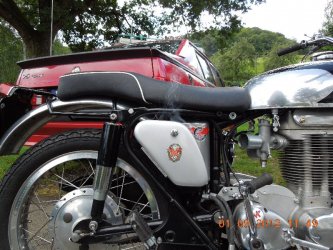
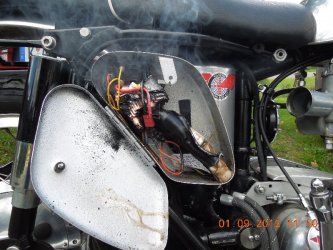
You guys mean something like this? :D :D

Was a LiFe battery pack intended for model planes/boats and stuff as well as replacing storage batteries in motorcycles, as opposed to starter batteries.

Had a Laverda 500 rectifier hooked to it in the understanding it was also a regulator... should have checked first. :-X ::)  Thought it would cope OK with the measly output of the 12V Lucas alternator.  Worked OK for a brief run up my test hill and back, but this happened after returning from the very first 5km run.  Luckily my mate had just arrived and saw the smoke billowing from the tool cum battery box as I rolled up, he also had his camera to hand.  As I opened it, a thud emitted from inside, obviously the battery exploded at that moment, probably through the sudden supply of oxygen.

Had a good laugh, replaced the 500 rectifier with a Boyer Power Box and ordered a new battery pack.  It now works a treat! :D

piet
 

Attachments

  • Neu_DSCN0358.jpg
    Neu_DSCN0358.jpg
    154.6 KB · Views: 30
  • Neu_DSCN0360.jpg
    Neu_DSCN0360.jpg
    141.5 KB · Views: 44
You can run Li Po batteries on a bike although it wouldn't be possible to charge them from an automotive charging system and there is a risk of fire attributable "it appears" to poor charging or wrong charging techniques. ON the plus side, they do charge very quickly but the voltages are not generally compatible.

The useable discharge rate is in another league compared to Lead acid, is think its something like 20 times the capacity (ie a 2.2 amp battery can be discharged at 44 amps), althought that advantage is somewhat wasted on a race track, unless you wanted to run a starter motor.

weight 220 grammes....
 
Yeah Steve, the dreaded Prince of Darkness.  Inventor of Electrical Darkness in german.

Thought I could get one over him... bloody clever bastard, Joe is!  Maybe Lucas and Bosch equipment is just not compatible? :-\

Actually working very well with the pommy Boyer stuff, quite a pleasant surprise!  I bet no Matchbox ever had lights as good as mine. :D

Now I've got the electric(k)s sorted, I only need to stem the oil leaks... ::)

Bike is a lot of fun, nonetheless.

piet
 
Robjota said:
You can run Li Po batteries on a bike although it wouldn't be possible to charge them from an automotive charging system and there is a risk of fire attributable "it appears" to poor charging or wrong charging techniques.

Really?

"SSB PowerSport Lithium Batteries are also one of the only Lithium Ion Polymer Batteries that can be charged using normal 12V car battery chargers / alternators. SSB PowerSport Lithium Batteries are also 100% organic, fully recyclable and pollution free, making them an excellent green energy source."

 
I was wondering about adding an onboard nicad pack to the Monty as I usually start it from cold with an additional
dry cell starter pack just to give the battery an easier life.

The SCR Nicad packs I have give a fairly hefty discharge rate and thought about a supplementary couple of packs
just to help keep some reserve capacity.

They normally recharge from a battery source in 14 minutes although onboard charging would not always be neccessary
as its the regular stop low speed trips that can be a bit iffy.
 
Davo said:
Robjota said:
You can run Li Po batteries on a bike although it wouldn't be possible to charge them from an automotive charging system and there is a risk of fire attributable "it appears" to poor charging or wrong charging techniques.

Really?

"SSB PowerSport Lithium Batteries are also one of the only Lithium Ion Polymer Batteries that can be charged using normal 12V car battery chargers / alternators. SSB PowerSport Lithium Batteries are also 100% organic, fully recyclable and pollution free, making them an excellent green energy source."

I'd like to know what they have inside their battery Davo, the description doesn't fit with what I know about Li Po technology.
 
Hey All

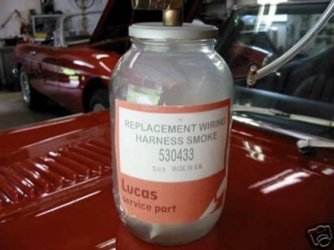
If the smoke escapes from your wiring, Joe Lucas do carry spares.

                         Cheers
                                 Matt


Attachments

  • Harness Smoke.jpg
    Harness Smoke.jpg
    29.3 KB · Views: 17
The latest technology is LiFePo4 batteries. They can?t explode any more and can be charged like a lead/acid battery.
I?m going to build my own battery with four 3,2V cells in line. I will take the "Headway 38120 SP" cells with 8000mAh.
The four cells will be around 1200 g and are easily bolted together.

Cheers H.-C.
 
Back
Top