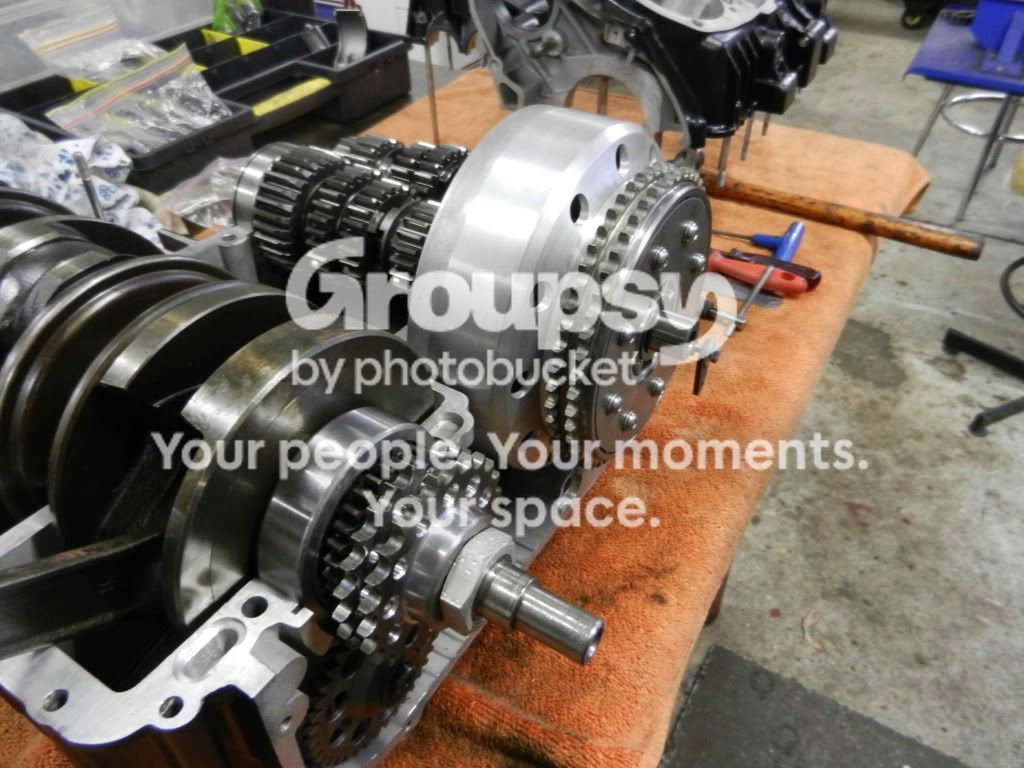
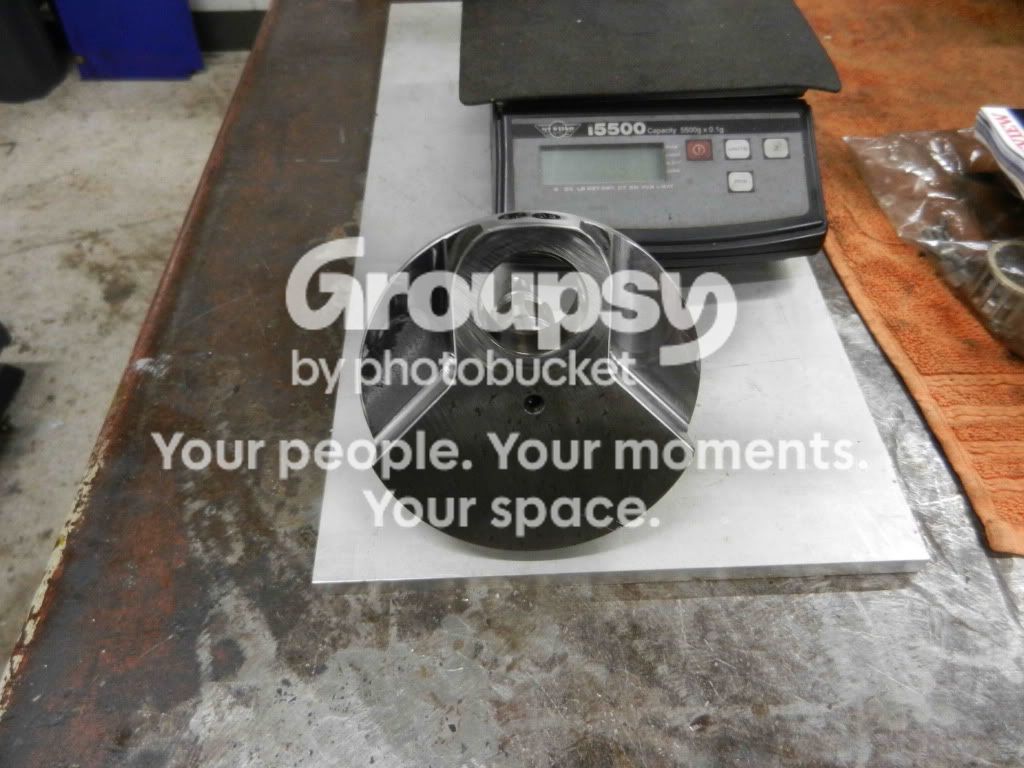
back in the day polishing was done for reliability. i suppose reduced windage was a bonus...
part would first be checked for cracks using a magnetic field ... magnaflux is what we call it in the colonies
casting marks or seams, which can become stress risers leading to component failure, were ground down
one had to mind the direction of the grinder eg; connecting rods were ground lengthwise not across the beam
until bit was reasonable smooth and free of said casting lines/marks/etc before treating to a series of flapper wheels
with coarse to finer grits until quite shiny and smooth, component would then be balanced, touched up with flapper wheel, balance checked again before the part would be shot blasted for surface hardness. a rather labor intensive operation
but one that payed dividends at the track. as the saying goes "you first have to finish"
polishing isn't limited to cast bits. eg; valve stems are routinely micropolished with scotchbrite pads and cylinder bores are planished after honing. with laverda polishing the studs where oil travels can offer some degree of flow improvement.
if you are having it done it becomes a matter of what is cost effective. likely cheaper to have carillos installed than polish std rods whereas clutch parts are very cost effective
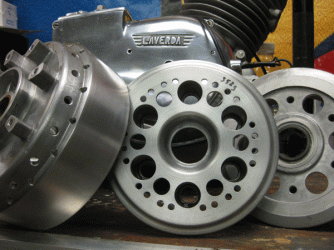
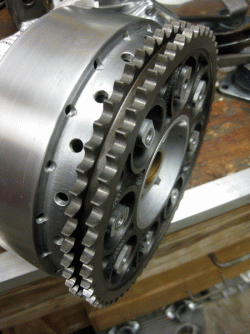
in these 750 parts you can see the OD reduced and polished. cooling holes also lighten and the cooling holes are all chamfered to reduce stress risers, same with lightening holes in drive sprocket. this one set up to use a duplex with the inner row removed for better ventilation of the 750 assy