You are using an out of date browser. It may not display this or other websites correctly.
You should upgrade or use an alternative browser.
You should upgrade or use an alternative browser.
RGS start production
- Thread starter drumbrake
- Start date

breganzane
Hero member
- Location
- NSW Australia
As I understood it the new model run always started just after the summer break, which was August I believe. So Septemberish I'd say. I have an old REVS magazine article which tested one of the pre- or early- production RGS's. I could dig it out but would take some archeology...

Correct.
Model years began in September, so production of '82 models would have started September '81. New bikes would then reach showroom floors for the new (european) season. Guess the August break would have been used to set up new tooling, etc.
piet
Model years began in September, so production of '82 models would have started September '81. New bikes would then reach showroom floors for the new (european) season. Guess the August break would have been used to set up new tooling, etc.
piet

chrisk
Hero member
- Location
- Brisbane, Australia
sfcpiet said:Correct.
Guess the August break would have been used to set up new tooling, etc.
piet
If that?s the case, there?d be a lot of pissed off workers, missing out on their August holidays. Our Italian suppliers pull the pin in August and we can?t get Jack Shit out of them.
breganzane
Hero member
- Location
- NSW Australia
sfcpiet said:Don't think it would be the gross of the production workers who set up new production lines. Mostly an assignment for a select few.
piet
I imagine setting up for the RGS would have been a comparatively big job too. It was the first new big bike they'd made in 10 years, and quite a departure from prior art what with all the bodywork, fairing and so forth. Quite an ambitiously advanced machine at the time for such a small company.
G
Grant
Guest
That's why they softened the market with the 120 Jota, to get folk used to the new engine format. So it was well over a year in the planning.
Might have been too big a leap of faith to go from a series 2 Jota (which in itself was paving the way with the new cases etc) to an RGS in one l step.
And so it seems to have turned out.
I remember a lot of flak at the time as many Laverda diehards didn't like the loss of the 180 crank, the mean edginess of the Jota, being replaced with a smooth, sanitised tourer.
But the real damage was done by proper new bikes like the GPz900R.
If only they had stuck the V6 in it.
In a conversation with Piero a few years ago I asked the question if it really was only ever going to be a racer or if there had been plans to make a roadster out of it. (I had heard both arguments previously)
His reply was that they carried out tens of thousands of kilometres of road testing without issue, and they showed it to an assembled group of Italian dealers with the question "should we produce it?" and their reply was no, as he said they were more used to single cylinder 2 strokes and feared the new technology was too much.
He went on to say that the Gold Wing ultimately proved them wrong, as the market WAS ready for high tech bikes.
Grant said:That's why they softened the market with the 120 Jota, to get folk used to the new engine format. So it was well over a year in the planning.
Might have been too big a leap of faith to go from a series 2 Jota (which in itself was paving the way with the new cases etc) to an RGS in one l step.
And so it seems to have turned out.
I remember a lot of flak at the time as many Laverda diehards didn't like the loss of the 180 crank, the mean edginess of the Jota, being replaced with a smooth, sanitised tourer.
But the real damage was done by proper new bikes like the GPz900R.
If only they had stuck the V6 in it.
In a conversation with Piero a few years ago I asked the question if it really was only ever going to be a racer or if there had been plans to make a roadster out of it. (I had heard both arguments previously)
His reply was that they carried out tens of thousands of kilometres of road testing without issue, and they showed it to an assembled group of Italian dealers with the question "should we produce it?" and their reply was no, as he said they were more used to single cylinder 2 strokes and feared the new technology was too much.
He went on to say that the Gold Wing ultimately proved them wrong, as the market WAS ready for high tech bikes.
Piero once stated that modular off-spins of the V6 were also considered, V2s and V4s. This would have given them a good presence in all markets, without having development and tooling costs go through the roof.
Yeah, if only... always cleverer with hindsight. :

piet
G
Grant
Guest
They could also have made a 500 or 600cc triple from one bank of the v6 and turning it 90? to do away with the godawful shaft contraption (and ultimate weak point).
G
Grant
Guest
I suppose while they were showing BMW how to build an off-road airhead, BM could have shown them how to build a more reliable and compact shaft drive.
Obviously before the current final drive failure fiasco afflicting Ewan/Charly-mobiles.
Obviously before the current final drive failure fiasco afflicting Ewan/Charly-mobiles.

CLEMTOG
Hero member
and the guy who rode from Lagos (Nigeria) with shortest ferry crossings possible (to the IOM TT) also suffered drive shaft failure held him up for four days, in Spain I think? BMW were on it like a shot and requesting secrecy because of the high profile eventual destination, he wasn't holding back with the truth when I saw him!
shaft drive can still fail
chains are a lot easier to predict failure (visual) and easier to change if failure happens
I still llike the shaft on my Pan though!
CLEM
shaft drive can still fail
chains are a lot easier to predict failure (visual) and easier to change if failure happens
I still llike the shaft on my Pan though!
CLEM
Grant said:I suppose while they were showing BMW how to build an off-road airhead, BM could have shown them how to build a more reliable and compact shaft drive.
Obviously before the current final drive failure fiasco afflicting Ewan/Charly-mobiles.
At the time, there were no 140+hp shaft drive bikes, Laverda were treading new ground, so failures were to be expected. Just a crying shame that it had to happen in the 24hr race. AfaIk, it wasn't even the drive itself that failed, just a fuckin' universal joint!
Reckon the Beemer drive of the time would have simply disintegrated under the load!
piet
G
Grant
Guest
The bearing on the universal joint failed because the whole shaft drive system was not developed fully.
Weakest link in the chain (excuse the pun...)
One of the worst designs I have seen.
Weakest link in the chain (excuse the pun...)
One of the worst designs I have seen.

helicopterjim
Hero member
- Location
- near Lone Butte, BC, Canada
sfcpiet said:Reckon the shaft drive would have been OK with further development, not many weak points in other shaftys.
My MGS-01 seems to be quite happy with the amount of power going through the shaft drive. Mine measures 122 hp at the rear wheel and Guarschi's big bore version was putting out almost 150 hp at the rear wheel.
Jim

Dellortoman
Hero member
- Location
- Tasmania, Australia
CLEMTOG said:I still llike the shaft on my Pan though!
Me too. You need a good solid handle when flipping pancakes with a heavy pan. Non-stick coating is helpful too.

There's nothing inherently weak about shaft drives. When was the last time you saw a muscle car with chain drive?


Andy
Hero member
- Location
- Auckland, roughly
The shaft broke on my little gold wing once. I noticed that the drive began feeling like a slightly loose chain drive, but being miles from anywhere I carried on gently but 50kms further on it let go and completely wrecked one c.v. joint. Lucky it didn't lock up I suppose, just made an awful expensive-sounding clattering noise. Anyway it meant I had to trailer home regardless, but if I had stopped when I first noticed the symptoms I may have got away with just changing the cross-piece... another lesson learned!
Dellortoman
Hero member
- Location
- Tasmania, Australia
redfox said:And in Copenhagen, where I live, we regularely see bicycles with shaft drive these days... ;(
I've never seen a shaft drive bicycle in this part of the world. Maybe all the hills around here make them impractical. You need a wide range of gears.
chrisk
Hero member
- Location
- Brisbane, Australia
Dellortoman said:I've never seen a shaft drive bicycle in this part of the world. Maybe all the hills around here make them impractical. You need a wide range of gears.
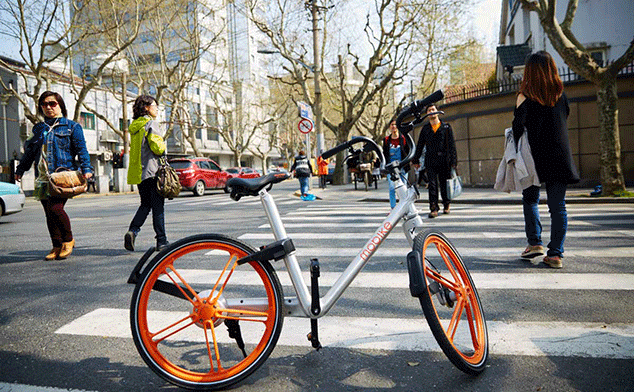
I've seen them in Brisbane CBD, Italy, Germany and China.
The ones in China have orange wheels like a Formula.