RGS Headache File

Just a silly question, because maybe you already tried it:

1/ have you Ohm'ed all wires, testing for continuity, from pickup to connector and also wires to the ignition coil affected?
I recently had a bad earth, that caused absolutely no spark on any cylinder.

2/ Carefully inspected all connectors?

3/ set the ignition bow in test mode if any?

4/ dead high Voltage cable from coil to plug? Dead connection between coil and high Voltage wire? Glued in, but can be renewed as I did.

5/ given all wires etc. a shake while idling? (for a possible intermittent drop out - bad connection)?

6/ dead or intermittent connection in spark plug cap?

Cheers,
Jacques
 
1/ have you Ohm'ed all wires, testing for continuity, from pickup to connector and also wires to the ignition coil affected?
I recently had a bad earth, that caused absolutely no spark on any cylinder.
It’s a brand-new Sachse ignition system (which I’ve borrowed, by the way); the cables are new
2/ Carefully inspected all connectors?
So I’ve now found one double-ground plug that was faulty
3/ set the ignition bow in test mode if any?
Ignition in test mode and all three spark plugs are working properly.
4/ dead high Voltage cable from coil to plug? Dead connection between coil and high Voltage wire? Glued in, but can be renewed as I did.
Replaced the ignition coils with second-hand Tec MP06s. 3.3 ohms for all three
New NGK red silicone spark plug leads and caps
5/ given all wires etc. a shake while idling? (for a possible intermittent drop out - bad connection)?
It’s a bit tricky with an RGS. The engine gets hot after the test ride and there’s not much space under the tank.😅
6/ dead or intermittent connection in spark plug cap?
Are new
Cheers,
Jacques
Thanks 😊👍
 
Hi Garry,

Okay, so more dumb questions from me:

I had an RGS for many years myself, and since then, I have my SFC.
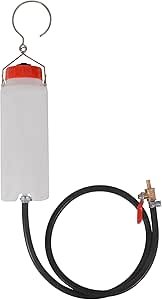
When I syncronise the carburettors, I use a small gastank on a stand, next to the bike. It contains ½ a Liter of fuel. This way all wires are exposed, so I can work on them.

With wire shaking, I meant the wires that are originally on the RGS, leading from under the seat, to the coil pack. Have you replaced those when you installed the Sachse system? Or do you still have those in place? I would look into those. An old wore can easily break inside the sheath, not being visible, and once under heat/load/vibrations/more Voltage demand (for some wires, not all of course), it gets a very bad or broken connection. So when you move them, one by one, or as a bunch, you Ohm them at the same time (with beep on). Get an extra pair of hands.
Also, some wires break exactly where they are crimped to a thin metal connector leg, and then stuffed inside a bigger hard plastic square connector, such as on Laverda RGS/SFC/any model.

a/ What plugs are you running? Brand and heat number?

b/ Which cylinder is falling out? Flip components if possible between cylinders.

c/ just another thought: On some RGS bikes, or late Jota 120, the small round engine cover that covers the ignition pickups (on original bikes or one that still retains those pickups, like my own DMC system on my SFC), there is simply missing a bit of the casting, so that there is access for water and dirt to enter via the top bolt for that little cover, which must have a bit of casting on it's backside next to the top bolt. I just had an example here in my waters of that problem. That possibly led to the DMC2 optical pickup dying. Unclear, cracked or loose wire connection inside it.
Since I don't know the Sachse system, I would in ANY case look into that too.

d/ Have you had ANY bulbs blowing on you lately?

e/ Did you measure Voltage from the rectifier?

f/ Is it the original rectifier from Nippon Denso?

g/ Is it another rectifier? I run a model built here in Denmark by an unfortunately passed electrician, who built thousands of these for all brands of bikes using Nippon Dense rectifiers, which breaks down (with guarantee) over time. First sign is usually bulbs blowing. But it could show differently.

h/ take off all 3 spark plug caps and measure them for Ohm.

i/ while running the engine at idle, then faster, then faster, move the wires, coil pack, ignition wires (HT).

j/ take off and very carefully inspect the induction rubbers, whether you have them original or changed, do it, and while having one in the hand, press them and look for cracks. When becoming hot, and under load (high revs), they can behave strangely.

k/ please describe with more words, how the cylinder falls out. Does it return immediately to sparking/running when lowered in revs? Or?

l/ What carburettors? What jets, needle and other parts? What setting? And what fuel? When I tried to run modern crap fuel, I got weird behaviour. I emptied it all out, and filled with fresh 100 Octane Shell plus a tiny bit of Castrol valvemaster additive WITH octane riser. Perfect again.

m/ Does your fuel level indicator work or show strange behavior?

n/ Did you Ohm the dead man switch? Did you take that switch block/contact apart and clean it out?

o/ Have you used a genuine electronics contact cleaner such as Contact 60 (the white can with red writing) on EVERY single connector on the bike? Then shake it all again and Ohm it all again. Measure Voltage before and after that to see if there is ANY difference in Voltage. Every single wire.

p/ I don't know the Sachse system. Does the box have a multiconnector you can investigate? If you replaced the box, did you also replace that multiwires leading to and from the box?

q/ sometimes solderings go loose, and shows up when hot, actually especially when vibratingmore/hotter. Inspect any soldering anywhere you can. Sachse box/ instrumentation, ignition switch, all over. I had an ignition switch die on my former RGS. Cracked soldering are sometimes very hard to spot. Resolder-clean with flux, resolder if ANY doubt.

r/ On any pcb, such as inside the instrumentation cluster or on ANY other pcb, for example an ignition box, switch etc, any via-s (tiny cylinders going through the pcb from one side to the other, leading current), can go bad. More so when hot, more voltage, vibrations, coldness etc. Inspect that as well.

s/ Ohm your ignition switch.

t/ And just another dumb question: have you had your carbs apart? Inspected the cables? Inspected the pins/cables that pulls the gas valves (60/2?)?

u/ ANY ground cable can have a lot of green corrosion (on copper) or other corrosion underneath the protection sheath. And it can actually crawl up inside it and reach pretty far. Seen that many times. So off they go, inspect, cut up, inspect, clean, replace, all of them..

Cheers,
Jacques
 
Last edited:
There are no stupid questions, Jacques, only stupid answers – and those come from me.😉
First of all, I’d like to thank you for your detailed analysis, which should help me get on the right track. Thanks also to Rob and everyone else.👍
I’m going to start by buying one of those separate petrol tanks. All that faff with the separate original RGS tank is a right pain.
1000001848.jpg
It’s too hot for me right now, but I’ll give that idea of shaking the wires a go.
The spark plugs are new – Champion N3C type.
I reckon the middle cylinder is playing up because the rev counter starts acting up too. I’m also going to try Rob’s idea and disconnect the rev counter.
The ignition housing is dry and in good condition. I’d even made a gasket to ensure the cover seals properly.
I don’t have any blown bulbs or anything like that. I measured the voltage directly at the battery and the rectifier is still the original one. I have, however, connected it directly rather than via the light switch.
As I said, until a cylinder cuts out, it runs really well and smoothly.
I’ll take your points on board and aim to set aside some time this week to go through everything properly.
To be continued.
Regards, Garry
 
Last edited:
the rectifier is still the original one
Now that you have connected all three phases to the original reg/rect it will be overstressed. I've never found a rating for it, but that was the rationale for looping one phase through the light switch (turning it on with headlight on). Do you ride with headlight on always? If yes, then carry on and ignore my red herring comment (but I'd still recommend replacing the reg/rect - that 12.3v reading ain't right!
came across a forgotten two-pin earth plug in the cockpit that was quite badly corroded.
Could that???
Yes, it could! I think that provides the earth connection for instruments and lights. Make sure you follow the dark green wire to the frame earth and check that too. I'm struggling to remember where it is located atm...
 
I sanded the ground plug really well, checked the wiring and gave it a good shake during the test run. Everything is working as it should.
Fastened the multimeter to the tank and off we went.
Measurements taken from the battery whilst riding: a constant reading of 14.15 V above 3000 rpm, and around 14.3 V below 3000 rpm. On the +coils while riding, the voltage fluctuated between 12.8 V and 13.6 V, with the lower voltage at higher rpm. Whilst shutting down the cylinder, the voltage went up slightly, but fluctuated the whole time.
I disconnected the rev counter but the problem still remains.
I do feel it’s improved a bit, though…
I think I’ll have to look further into the wiring after all. Question: do the ignition coils need to be properly earthed to the mounting plate and the frame? I had the frame powder-coated, but to ensure good earth connections, I protected it at the time with bolts and washers; only the mounting plate is grounded via an M5 bolt. Is that enough?
I’m also now suspecting my homemade ground cables. They’re probably a bit too thin. I thought they were 16 mm², but they turn out to be a bit thinner after all.
New 16 mm² ones are on their way.
 
Last edited:
My story: heading home, I pulled up for fuel 300ks from home, and the bike wouldn't start. No spark at all.Tried bump starting, no. Pulled the luggage and the tank and fiddled, nothing. As a last resort, I tightened the coil mounting plate bolts and tried the button, and it started and ran fine all the way home. I asked the EI guru and never got a definitive answer. That's my experience; good luck. BTW 3c with the Wilson EI back then; those bolts were not loose; it was probably 20 years ago, but I did get a tiny bit more turn out of them. My guess is it lost an earth connection? I was just happy I fixed it.
 
FWIW Vince, reads like the original iis supplied independent harness Grey wire under/attached to the coils mounting plate. This wire provided the return current from the coils back to the ignition module proper, ie it connected the coil driver transistor Source ( completed the circuit back to the battery negative post ). Did this to isolate the vulnerable semiconductors from the terrific electrical noise when a coil is fired to produce a spark, many times.

Christiane had this early iis harness as well for her solo epic round Australia RGS ride, a feat that remains to this day, astounding. Took some little time to discover the Grey wire terminal spade became loose, a constant issue on any motorcycle.... The Grey wire was deleted post field reports as iis gained a world wide best design progression. Ditto the black return to battery negative wire had internal fatigue problem, matter of what started as a design application and needed to be made more robust. j
 
Good to know, John. I was 100 km south of Nowra at an isolated Petrol Station, heading home alone from a Snowy Ride. My fix was total arse; one last Hail Mary before looking for a tow. My head almost exploded when the spark came back.
 
Intelligent Ignition System, Ric... yet another Laverda ancillary functionary fading ( actually faded ) into the old bike setting sun... ever resourceful you Vince. Various times i offered a spare module to take with a group of iis fitted Laverda, Ducati, Moto Guzzi on tour.... a short TA120 and long box would "plug a ride" a 180 or a 120, the box worked out what it was plugged into. j
 
One of the first Snowy Rides I did, maybe 2002-ish, you might remember me arriving at your place stupid early. For some odd reason, I didnt get the meeting time at Liverpool; I arrived hours early, and after waiting for ages, I thought everybody was gone. Nope, they all arrived 30 minutes after I left. Anyway, the point was I think Chris or someone had one of your spare boxes on that ride. Scary to remember how long ago that was.
 
Question: do the ignition coils need to be properly earthed to the mounting plate and the frame?

Hi Garry, no they don’t need to be earthed. For reasons I don’t remember I mounted the split coil of my SF2 on silent blocks. Been that way for more than 30 years without issues.

Marnix
 
Question: do the ignition coils need to be properly earthed to the mounting plate and the frame?

Hi Garry, no they don’t need to be earthed. For reasons I don’t remember I mounted the split coil of my SF2 on silent blocks. Been that way for more than 30 years without issues.

Marnix
They have a + and a - anyway.
Paul
 
Spot on Piet, or at least now I know. That fix was a complete one-off for my specific bike and EI back then. My go-to for lack-of-spark issues roadside: check fuses, wiggle wires, and tighten bolts. Best advice: ride with smart people who carry multimeters and know how to use them.
 
I’m also now suspecting my homemade ground cables. They’re probably a bit too thin. I thought they were 16 mm², but they turn out to be a bit thinner after all.
New 16 mm² ones are on their way.
Provided the cables have been properly crimped with correct size lug and tool they won't be causing problems during running. High current / volt drop issues mainly confined to starting.16mm2 will be perfect tho'.

Voltages you measured at the coils are what I'd expect with volt drop /current draw (rises when coil is off/lower revs).

So 'everything' changed but problem remains. 😑

Did the problem occur when you had a direct connection of ignition and coils to battery (bypassing ignition and kill switches)?

Where/how are you earthing the Sasche box?

How does this differ from DMC?
 
Back
Top