Francois 180/120
New member
- Location
- USA
Clutch is not disengaging, or doesn't seem to be. I can go thru the gears not running but when running, shift to first and and bam! In gear like i'm not pulling on the clutch at all. Any thoughts?


Stuck clutch plates then.It's a 180 and yes a lot easier on the 120. Bike's been sitting a while

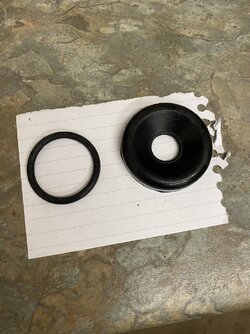
first of all: the ball in the slave piston looks dead.I would replace the whole piston and the ball bearing along with a new O-Ring of the RIGHT size and grease the ball properly. Measure the length of the rods and see if the ball between the rods has given up, too. Many people do engage first gear with pulled clutch at traffic stops. this is no good for the mechanism, as it is under pressure and one side can't move while the other is moving at significant speed, causing friction in the system and with that heat. Even worse: if you pull the clutch at high speed and keep it pulled until you fully stop. This kills the mechanism (like on a dyno). Guess how I know...It's a 180 and yes a lot easier on the 120. Bike's been sitting a while
Found, dependent on actual clutch actuation adjustment setup, only need to take the initial pressure off the clutch plates to maintain an easy to release clutch. My case only a third of the clutch lever travel is maintained in storage, as a strap retain/restrain device. HTH j.If I leave the bike (cable operation) for any length of time like over the winter, I cable tie the lever to the bar. plates don't stick
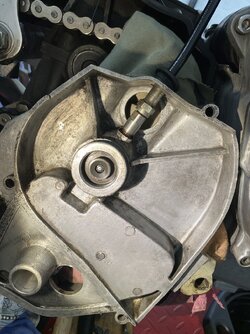
I only have the right side off right now(no time) the ball bearing doesn't seem to be damaged but did need a good cleaning telling me a good cleaning is in order. Never been this deep into this 180, little intimidating. Is the Laverda tool necessary to access the clutch and if so who sells it ? thanksfirst of all: the ball in the slave piston looks dead.I would replace the whole piston and the ball bearing along with a new O-Ring of the RIGHT size and grease the ball properly. Measure the length of the rods and see if the ball between the rods has given up, too. Many people do engage first gear with pulled clutch at traffic stops. this is no good for the mechanism, as it is under pressure and one side can't move while the other is moving at significant speed, causing friction in the system and with that heat. Even worse: if you pull the clutch at high speed and keep it pulled until you fully stop. This kills the mechanism (like on a dyno). Guess how I know...
After that, I would use an engine cleaner (f.e. the one from Louis), use it as described and your clutch will free up soon if nothing else mechanically is wrong.
HTH

no special tool is necessary to get access to the clutch.I only have the right side off right now(no time) the ball bearing doesn't seem to be damaged but did need a good cleaning telling me a good cleaning is in order. Never been this deep into this 180, little intimidating. Is the Laverda tool necessary to access the clutch and if so who sells it ? thanks
You'll need to find a way to undo the crank end nut if that's what you're referring to as needing a Laverda tool.I only have the right side off right now(no time) the ball bearing doesn't seem to be damaged but did need a good cleaning telling me a good cleaning is in order. Never been this deep into this 180, little intimidating. Is the Laverda tool necessary to access the clutch and if so who sells it ? thanks
exactly the difference! With a triple chain (or even a double chain), chains are to stiff to get the big one off the clutch without the small one, too.I can remove the big primary sprocket at the clutch without removing the small one on the crankshaft. But my 120* engines have to chains not the tripple chain…?
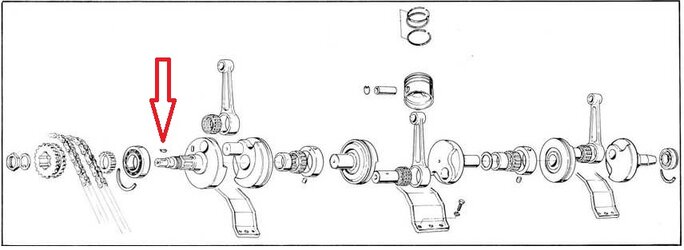
If you have screws rather than rivets to hold on the clutch sprocket.I can remove the big primary sprocket at the clutch without removing the small one on the crankshaft. But my 120* engines have to chains not the tripple chain…?
My 180 series 2 3CL had rivets on the clutch.This looks like a 3CL in Francois's avatar. If that's the bike in question, I think they do not have rivets ever on the clutch sprocket. 120's for sure never had (not even 180° Series two engines)

I would expect that technique to lead to premature clutch spring failure ... but maybe not? Just can't imagine it's a good idea to have the springs compressed and bound for ages at a time without some loss of spring tension?If I leave the bike (cable operation) for any length of time like over the winter, I cable tie the lever to the bar. plates don't stick

Some of your valve springs are compressed whenever the motor isn’t running. Does that lead to premature failure?I would expect that technique to lead to premature clutch spring failure ... but maybe not? Just can't imagine it's a good idea to have the springs compressed and bound for ages at a time without some loss of spring tension?