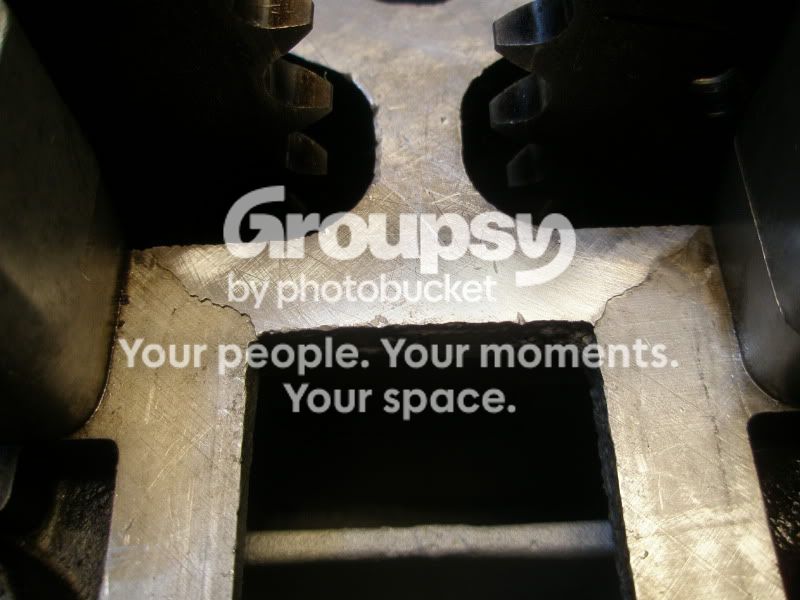
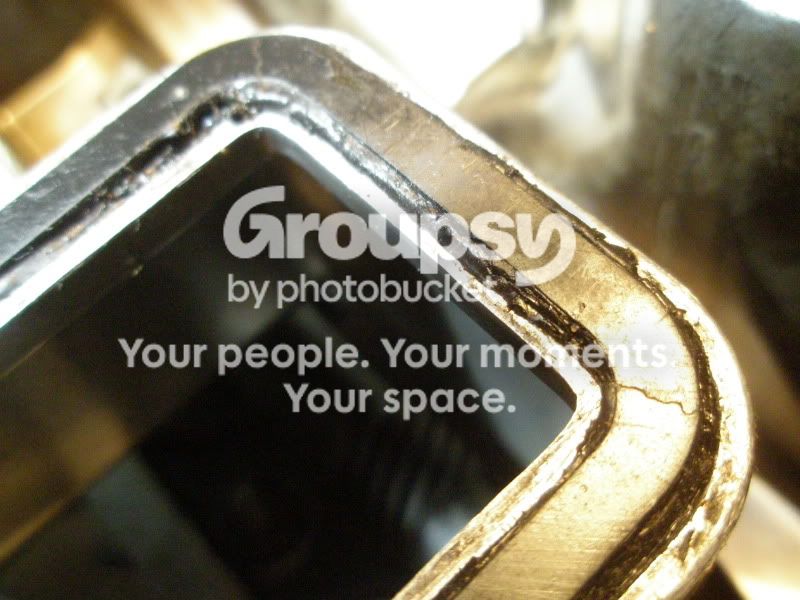
3CL oil seep in head gasket around the the stud area

ghwallice

Hero member
Location
Ipswich
I had put the bike off the road to pull the motor and replace the head gasket. It's only done about 42,000 klm. But, club run in a couple of days. What is the tension this nut should be pulled to without causing warpage of the head and barrel? And are there any other short term fixes?

Regards, Greg
 
There are 4 different sets of nuts to be tightened on the head and all need different torque settings.
Your input is our output.
 
There are 4 different sets of nuts to be tightened on the head and all need different torque settings.
Your input is our output.

Ah, GIGO then.  Plenty of that around...
 
Sorry. Neglected to say that the head gasket is leaking from the timing chain cavity near the little upside down stud at the front. It may only be (but I fear not) that this nut has lost it's tension over the years, and I was going to nip it up to see what happened with the leak.

I was just after the tension for that one stud/nut.

Regards, Greg
 
ghwallice said:
I was going to nip it up to see what happened with the leak.

I'd suggest you nip it up to see what happens with the leak then :D

I don't bother with the torque wrench on these little studs. Can't recall a torque figure being quoted for them. Workshop manual says they should be "tightened by hand".
 
ghwallice said:
Sorry. Neglected to say that the head gasket is leaking from the timing chain cavity near the little upside down stud at the front. It may only be (but I fear not) that this nut has lost it's tension over the years, and I was going to nip it up to see what happened with the leak.

I was just after the tension for that one stud/nut.

Regards, Greg

Greg, have a close look at the barrel casting around the stud boss.  Quite common to find cracks there.  Nipping up the nut might only make matters worse.

Slight oil weep, nut is nipped up.  Weeping gets worse, gasket starts spreading, more oil, more torque, casting bends, casting cracks... :o  Must be a reason for later barrels being reinforced in this area. :D

piet
 
sfcpiet said:
Greg, have a close look at the barrel casting around the stud boss.  Quite common to find cracks there.  Nipping up the nut might only make matters worse.

Slight oil weep, nut is nipped up.  Weeping gets worse, gasket starts spreading, more oil, more torque, casting bends, casting cracks... :o  Must be a reason for later barrels being reinforced in this area. :D

piet

Yeh Piet, that was my fear about over tightening.

I've been chasing it all day. degrease, run the bike, ride 60 klm, no oil leaks. slightly weeping around the timing chain cavity.

Let it cool, ride from the front to the back of the house and let it idle for a while, oil near the centre exhaust flange. degrease, ride 60klm, no oil.

Let it cool, ride it to the pub, have 2 beers, ride home (9klm round trip) oil on the right and top right of the exhaust collar.

Obviously it's one of those bugs that will become very apparent with time. I guess I should be thankful, at least I can ride it without having to pull the motor now.. :-\

Regards, Greg
 
Hi Greg -  Oil weeping from the area of the front stud can be a crack in the top face of the head near where the "U" shaped areas are joined by a central spar. Oil then naturally runs forward and drips off the lowest point - I.E. - the stud you mention - worth a check - Regards - Phil
 
Are you sure that the leak is coming from the head gasket and not elsewhere?

I've had a leak in this area and the oil originated from a hairline crack in the head. 
The crack was visible on the cam cover face, in the centre cylinder area. 
Oil leaks from the crack onto the top of the head, runs out of the small drainage hole and shows up at the front stud.

Tom
 
?1 on the central crack, dripping down into the middle plug void, then down and out of the tiny cast water drain hole at the front of the spark plug void.  Bodging technique.... I now pack the central plug area with tissue paper. UK to breganze is 3 tissue paper changes. Will get it fixed properly. Oil path is crack - plug area - front of head - around head joint under wind pressure - left leg.

Paul H
 
This will be the fucker! Blamed that same stud for the oil leak for years.
This crack only really became noticeable after having the head worked on, new guides and ceramic coatings. Maybe be heat applied to remove the guides made it much worst as after I got the head back there was a noticeable step across the crack. Ended up scrapping the head due to other issues.
The head was off a 1980 1200

P3230956.jpg


And a tell tail sign on the cam cover gasket as well

P3230952.jpg
 
Isn't there a red dye that shows up cracks in metal? If so, can someone tell me the name/brand sold here in Oz. I'll lift the cam cover and check the top of the head with the dye?

Regards, Greg
 
you will not need the dye generally to see the crack

I have the crack tester dyes here in stock, brand is Rocal or something like that
buy from most bearing stores, or Blackwoods, places like that


Hi Greg

As Piet said, cracks in the head will most likely be visible without dye check, but if you want to buy the stuff, it's available from Blackwoods. It's called Dye-Mark and comes in a 4-part kit (4 pressure pack spray cans)
The 4-step process is: spray with pre-cleaner, spray with dye, spray with dye remover (to remove it from all surface areas) then spray with developer to show up any dye remaining in cracks.

The developer is like a white matt paint and the cracks show up as red against the white background.

I used to use it to detect cracks in the front stub axles of Euclid trucks when I worked in the mines a lifetime ago. The bloody things had a habit of breaking stub axles, so it paid to remove the wheels and bearings and check for cracks whenever they were in for a service. It wasn't unusual to have a front wheel fall off in service, especially when the truck was loaded. Not an easy job to recover one from a narrow haulage road half-way up an open cut mine pit when it has 40 ton of ore in it and only 3 wheels. Must be scary for the drivers when a wheel falls off and the truck lurches towards the drop down the pit. Sometimes the escaping wheel would bounce all the way down to the bottom of the pit. Those were the good old days  :D
 
Back
Top