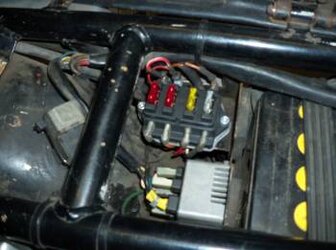
750SF wiring loom and fuses queries

TeddyG

Hero member
Location
Portland Oregon
Greetings,

While examining the 74 750SF I recently acquired, I see that the wiring loom plastic box has broken tabs and is held together w/ a zip tie. It's also not mounted on anything and merely perched as shown. I see no mounting tabs on the frame for it, nor can it be moved much, so my question is if this normal or should it be mounted elsewhere. I looked thru my Green book and there's no pictures showing it.

On the fuse block, the electrode on the one w/ the white body is extremely thin in the center- is this normal or is it ready to burn away? So far I see no bodged/damaged or taped wires which is good. I plan on applying dielectric grease to the various snap in/spade fittings, and any other electrical preventative tips are appreciated.

Thank you all!
 

Attachments

  • electrical.png
    electrical.png
    980 KB · Views: 72
A little smear of grease on any connection is a good idea. Any grease will do (it's only 12v) but dielectric grease is best. Also on the wire itself before crimping any new terminals.
Those torpedo/festoon/bullet fuses can be a bit finnicky, prone to corrosion and becoming loose, a few here have replaced with a blade type fusebox. But checking regularly is good too (y)
 
Normal for the little knobs to snap off the electrical block cover over the course of the years. Mine is tied with a bit of wire so I don't need to cut a cable tie every time. Yes it just sits there without any mounts, but the wires harness bits are supported by cable ties. Many of us have replaced those fuse blocks with the spade fuse type, but I have seen some of these old ones soda blasted and look like new, however they also are getting brittle at this age.
I guess you are checking out the SF in the For Sale section that you enquired about.
Remember that the bike is almost 50 years old, and mechanical/chassis condition is far more important than finicky stuff like this.
 
I should add that the white fuse is an 8 amp item and that it's on the main feed to the fuse box for the whole bike.
You need 16 on there.
Paul
 
The bike came from the factory with 4 x white 8 amp fuses. If the electrics are healthy it should not blow these.

Modern fuses are made of plastic instead of porcelain, the porcelain ones are much more reliable.

Marnix
 
Thanks for the helpful information guys- I'm trying to prevent electrical issues down the road. Paul, I'll try to replace that white fuse w/ a new 16 amp and hopefully I can find that same type stateside. I've never seen that type of fuse, just the more modern type that snaps in. What are those fuses called so I can find them?
 
Last edited:
Normal for the little knobs to snap off the electrical block cover over the course of the years. Mine is tied with a bit of wire so I don't need to cut a cable tie every time. Yes it just sits there without any mounts, but the wires harness bits are supported by cable ties. Many of us have replaced those fuse blocks with the spade fuse type, but I have seen some of these old ones soda blasted and look like new, however they also are getting brittle at this age.
I guess you are checking out the SF in the For Sale section that you enquired about.
Remember that the bike is almost 50 years old, and mechanical/chassis condition is far more important than finicky stuff like this.
I bought this 74 stateside from BAT
 
Thanks for the helpful information guys- I'm trying to prevent electrical issues down the road. Paul, I'll try to replace that white fuse w/ a new 16 amp and hopefully I can find that same type stateside. I've never seen that type of fuse, just the more modern type that snaps in. What are those fuses called so I can find them?
Do as Tippie says, replace the whole lot with a blade fuse box.
As Marnix points out, the old ceramic fuses are fine, the modern plastic equivalents are crap.
Paul
 
The bike came from the factory with 4 x white 8 amp fuses. If the electrics are healthy it should not blow these.

Modern fuses are made of plastic instead of porcelain, the porcelain ones are much more reliable.

Marnix
You're no doubt right but I wouldn't trust an 8amp fuse with 45 watts up front, 21 watts at the rear, 5 watt brake light and 200 watt Fiamm horns every 30 seconds.

Paul
 
If you stick with the stock fuse box....I can still get the stock fuses in Canada from autoparts stores...I think some old imported cars must use them. I'm sure Wolfgang could supply if needed.
 
Teddy,

I to am rebuilding a 74 SF2.

Our bike looked quite good, but had lived close to the coast here in AUS and suffered from that, with light surface corrosion evident on alloy and chrome.
I found that as I checked the electrics, all sorts of gremlins appeared.
The two major issues:

The connections in the double decker connection box under the rear of the fuel tank vary from no corrosion to extreme.
Some will clean up with care, others will need replacement.
Rerouting some of the wiring around that connection box will also take out some of the stress on the wires.

The wires to the ignition switch, lhs and rhs switchblocks and the instruments had all been fiddled with at some time.
Continuity checks found that some were open circuit - so wires broken/unattached. A resistance check found that many wires/joints were heavily corroded and need replacing. Not something I was expecting.
A mixture of soldered joints, small spade conncectors and even a couple of mini bullet connectors were found, all well hidden in the looms, and usually covered by heatshrink.

I would say that a thorough check is required on all of the wiring. The dreaded previous owner (DPO) could be alive and present !
Even though the SF's do not seem to suffer the ignition cable failure the later triples do, it is worth checking the cable/wires to the points in the same manner.

Marnix has rightly pointed out that the older ceramic fuses are superior to the later plastic fuses. Bob has also pointed out that fueses have characteristics which are not readily known to correspond with their rating.

I routinely replace the fuse boxes when rejuvinating any LAVERDA we own with the later blade fuse type. Saves the grief that usually strikes when it is dark. The original fuses in the twins have been known to spin around at prolonged high revs and create an open circuit.

It should be said, that our other SF2 owned since new (16/06/1974) does not have any of the above problems, other than I have replaced the fuse box with a blade fuse type for peace of mind.....

An SF2 is a fine machine, one or two up, loaded for touring, or unloaded for cruising or going for it.
Good luck
 
Ted, it's not hard to improver on the factory loom - you can certainly bypass the ignition switch by using a relay. It's fine to run wires up and back and through fuses if all they're going to do is power a relay, but if you want to avoid voltage drop for lights and coils, relays are your friend ... never had one fail, but they're easy to bypass if one ever does, with both poer from and mower to connectors right there on the relay.
 
although not a twin here is how I did the blade type swap on TOG (1200TS) (protective cover removed)
 

Attachments

  • resize fuses.jpg
    resize fuses.jpg
    45.7 KB · Views: 38
Back
Top