
Alzero
Hero member
- Location
- DaNang Vietnam
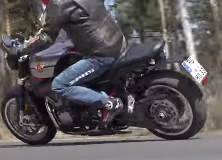
I just got a look at this in MCN: https://www.horex.com/en/technology/ it’s a narrow angle V-6 with three cam! Sort of like the VW car engine.

Sort of been around a few years I believe.I just got a look at this in MCN: https://www.horex.com/en/technology/ it’s a narrow angle V-6 with three cam! Sort of like the VW car engine.

I used to ride one of these.... super boring engine, chassis wobbling..It’s news to me. I need to get out more I guess.


Well, the modern bikes look like solid, but the frame is usually still aluminum. Anyway, it is not easy to make a chassis working from the scratch. The Horex is verry heavy, the CoG is somewhere, Maybe it is not wobbling like a Kawa H1, but it is a feeling not verry solid. The suspention is soft, so it feels worse. They say that the new generation is much better, but I think it cannot be, since the basic is still the same.I trust your words and experience but am wondering if it really was the chassis or maybe wrong suspension setting (rebound)? I would assume that modern chasis are normally rigid and solid as a rock - no? Haven't done testrides of other bikes in the past 10 years though, just assuming here really...
 anyway, it will find its buyers, if somebody is happy with it....
help a blind man to see, please - what exactly do you refer to?
The only bike I ever wheelied was an iron engined Sporster.With a Ratio like that even a Harley do wheelis...
Torque=Power x LeverThe only bike I ever wheelied was an iron engined Sporster.
Talk about torque.
Paul


And flop over onto it's sideYou don't necessarily need power or torque to do a wheelie. I've done wheelies on a 1969 BMW R60/5, which doesn't have enough grunt to pull a power wheelie. The engine is a gutless thing but it has a massive flywheel. From a standing start, rev it up to about 6000 and drop the clutch. It'll wheelie on the energy stored in the spinning flywheel, even if you close the throttle.


