Advice on getting alloy cover welded

stivesvelo

Junior member
Location
Cambridgeshire
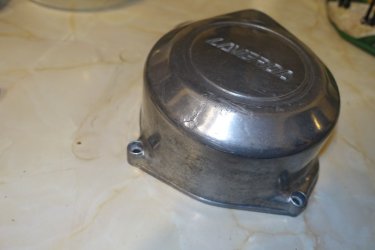
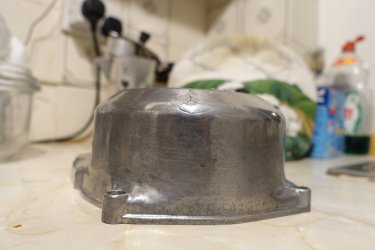
Hi, I had a dent in the generator cover which was cracked internally & made an attempt at removing it by annealing then gradually knocking it out, well it sort of worked and I got rid of most of the dent but the crack has now gone right through to the outside and needs welding to return it to it's original state. Spoke to a welder yesterday & he's expressed his worry that it may just blow a hole in it due to impure casting with various invisible inclusions.

Would I be right in thinking Laverda produced good quality castings and used good materials & I shouldn't worry and go ahead ? Any idea of the alloy composition etc.?
An alternative that occurred to me was these low temperature alloy welding kits advertised on YouTube etc., has anyone tried them or is SNAKE OIL in evidence, I'm thinking low temperature may mean low risk of screwing up my cover & worth a go.

All advice welcome and anybody know of a decent alloy welder in Cambridgeshire area (I'm in St Ives near Huntingdon) ?

Rob

DSC01387.JPGDSC01391.JPGDSC01409.JPGDSC01411.JPGDSC01407.JPG
 
Found this little beauty when I first got my Jota remnants of a previous owner it seems.......welded up just fine by a competent welder (not me) and now good as new.
 

Attachments

  • LAV 409 - Copy (2).JPG
    LAV 409 - Copy (2).JPG
    116.3 KB · Views: 18
Easy peasy repair with laser welding. A minimum of re-working necessary if done correctly and no distortion to be expected.

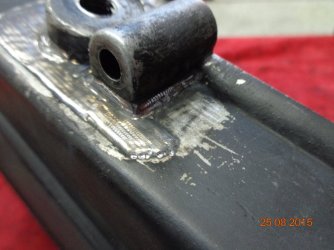
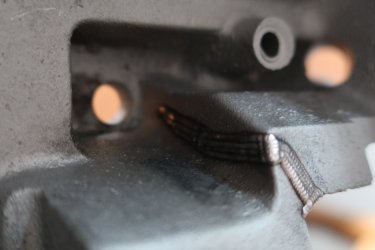
Pics are of a previously (crappy) weld that leaked. Laser made a pretty good job of it. MkI triple primary cover.DSC03075.JPGDSC03078.JPG

piet
 
The welder you spoke to was correct to express his concerns regarding possible poor quality casting, they are out there. In all fairness they are 45 or so old and he didn't make them. The reality is these laverda castings are good quality and the alloy composition is nothing exotic and therefore easily repaired by Tig, MIG, laser. If it were mine I would Tig weld using 5% magnesium wire which Aluminium welders would likely have at hand.
I built up the ball ends on my levers that were broken off and missing using Tig welding. So get it welded by someone who knows what their doing and once dressed back to original you won't even see it.

Ps. I am in Ausie land so can't recommend anyone to do it for you there.🙃
 

Attachments

  • 20240501_090339.jpg
    20240501_090339.jpg
    90.6 KB · Views: 21
Last edited:
The welder you spoke to was correct to express his concerns regarding possible poor quality casting, they are out there. In all fairness they are 45 or so old and he didn't make them. The reality is these laverda castings are good quality and the alloy composition is nothing exotic and therefore easily repaired by Tig, MIG, laser. If it were mine I would Tig weld using 5% magnesium wire which Aluminium welders would likely have at hand.
I built up the ball ends on my levers that were broken off and missing using Tig welding. So get it welded by someone who knows what their doing and once dressed back to original you won't even see it.

Ps. I am in Ausie land so can't recommend anyone to do it for you there.🙃
Nice Job (y)
 
I tried the AlumiWeld type sticks. Whilst I did get to deposit some aluminium 'stuff' in the cracks and get a reasonable bond, the required pre-heating of the cover caused all sorts of eruptions on the surface. I suspect impurities in the base material, but who knows. Cover ended up all pimlpy looking, like a teenager's face.
Also, the material in the stick was a lot brighter silver that the cover material. All in all - a disaster for me.
 
Thanks for all the feedback, just looking at Haggis' comment I'm meeting a mate tomorrow & he's lending me a similar aluminium weld kit (I'll have a play on some alloy bits and bobs), but he also thinks it will be difficult to get the heat into it as the rest of the casting is such a great heatsink, also he didn't have brilliant results practicing on alloy sheet & in the end had his welding done by someone he knew in one of the race teams through his son in law (lost touch with welder since).

Like the look of Pauls impressive laser welds (is this handheld looking at the consistency?) so will keep looking for a decent local welder, just slightly nervous I could get same as Piets' earlier job.
 
Thanks for all the feedback, just looking at Haggis' comment I'm meeting a mate tomorrow & he's lending me a similar aluminium weld kit (I'll have a play on some alloy bits and bobs), but he also thinks it will be difficult to get the heat into it as the rest of the casting is such a great heatsink, also he didn't have brilliant results practicing on alloy sheet & in the end had his welding done by someone he knew in one of the race teams through his son in law (lost touch with welder since).

Like the look of Pauls impressive laser welds (is this handheld looking at the consistency?) so will keep looking for a decent local welder, just slightly nervous I could get same as Piets' earlier job.
It's not me that did it, promise.
As far as I understand, it's some sort of expensive robot welder.

The alloy on my burnt 3C did react on some covers by bubbling.

Paul
 
I tried the AlumiWeld type sticks. Whilst I did get to deposit some aluminium 'stuff' in the cracks and get a reasonable bond, the required pre-heating of the cover caused all sorts of eruptions on the surface. I suspect impurities in the base material, but who knows. Cover ended up all pimlpy looking, like a teenager's face.
Also, the material in the stick was a lot brighter silver that the cover material. All in all - a disaster for me.
There's simply too much oily residue in the cracks in this case, this will tend to spoil any attempts with this type of "weld". The process does not involve enough heat to completely get rid of the oil.

While my laser welder always expresses concerns over this, he does admit the laser simply evaporates any oil that should appear from the cracks, it has next to no effect on the quality of the weld or penetration.

I've had some excellent results with LumiWeld, restoring a badly damaged and bodged Amal GP float bowl which was simply unobtanium pre-www.

piet
 
Thanks for all the feedback, just looking at Haggis' comment I'm meeting a mate tomorrow & he's lending me a similar aluminium weld kit (I'll have a play on some alloy bits and bobs), but he also thinks it will be difficult to get the heat into it as the rest of the casting is such a great heatsink, also he didn't have brilliant results practicing on alloy sheet & in the end had his welding done by someone he knew in one of the race teams through his son in law (lost touch with welder since).

Like the look of Pauls impressive laser welds (is this handheld looking at the consistency?) so will keep looking for a decent local welder, just slightly nervous I could get same as Piets' earlier job.
If you mess up the repair using this lumiweld kit, Piet is on the money regarding oil residue contamination, you are only making it more difficult for someone who would have done it correctly in the first place.
All the foreign material you brazed into the crack will have to be ground out back to original casing to Tig weld it.
 
Last edited:
Yep, agree with that... Best avoid the lumiweld. When I tried it, I went to great lengths to degrease, but to no avail. Oil wasn't just in the crack, the whole general surface seemed to suffer. Porosity seems pretty high in these castings. Pre-heating just boils up any impurities and brings them out. Small heat affected zone of focused high temps is certainly what you need, laser /tig.
 
Correct, you can't get the cracked area to be repaired clean with solvent alone. The crack surfaces will have also oxidised soon after it formed and will have to be ground out back to shiny aluminium to do any form of welding repairs successfully. The surface Aluminium oxide must be removed mechanically first to weld, braze, or however you do it. It is a relatively easy repair if done by an experienced welder using proven techniques and procedures. But is so much easier to fuck it up, for the untrained.
 
Last edited:
I have had the same cover welded. First put the cover in a container of Acetone and let it sit for days, moving it around on occasion to get fresh acetone in to the crack. After that get the cover really hot and see if any oil seeps out. If it does, back in to the acetone.

All the oil needs to be out of the crack or you will end up with a bigger mess. Just spraying some solvent in to the crack won't clean it enough.

My welder is my brother who has a welding and fabrication shop and has been welding for over 40 years.
 
Cut the corner of at 45degrees and have flat plate welded to it. You’ll be gaining browny points with the go fast crowd when you explain you needed more ground clearance.
 
Cut the corner of at 45degrees and have flat plate welded to it. You’ll be gaining browny points with the go fast crowd when you explain you needed more ground clearance.
Not unless you get the flat bastard file out and make it look like you grounded that flat with your knee and elbow on the deck!
 
Back
Top