Alpino camshafts, ignition timing and other mods

Hi all and especially Paul,
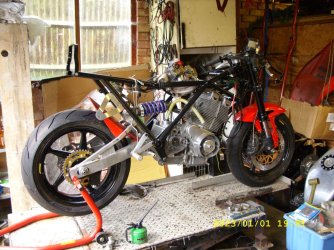
I built my Binnion framed 578cc engine based on a total loss electrical system. I have used this setup since the mid 1980's and never had a issue with the crankcases cracking on the right hand side where the alternator is attached. I once calculated that the
centrifugal force acting on the alternator spinning was measuring out in tons!
Therefore for short circuit racing remove the alternator, also you'll notice a big improvement on pick up. Yes my engine is revved to 9500/10000, and last time on dyno put 68bhp out at 9500. Round a circuit like Mallory park can lap a spirited rider on a triple twice in a 18m in period, the point its used!
I would argue even welding wouldn't stop the cracks eventually appearing, your just moving the problem further down the road. Then the actual welding I dare say would distort the cases.
If I had needed to do an endurance race on a 500, I would have reduced weight, set a rev limit of 9000, optimize the exhaust for torque not bhp, etc. To me this welding of the cases is a patch, your not fixing the problem.

Just my opinion ,
Andy
 

Attachments
  • 285.JPG
    285.JPG
    210.8 KB · Views: 27
Last edited:
Hi all and especially Paul,
I built my Binnion framed 578cc engine based on a total loss electrical system. I have used this setup since the mid 1980's and never had a issue with the crankcases cracking on the right hand side where the alternator is attached. I once calculated that the
centrifugal force acting on the alternator spinning was measuring out in tons!
Therefore for short circuit racing remove the alternator, also you'll notice a big improvement on pick up. Yes my engine is revved to 9500/10000, and last time on dyno put 68bhp out at 9500. Round a circuit like Mallory park can lap a spirited rider on a triple twice in a 18m in period, the point its used!
I would argue even welding wouldn't stop the cracks eventually appearing, your just moving the problem further down the road. Then the actual welding I dare say would distort the cases.
If I had needed to do an endurance race on a 500, I would have reduced weight, set a rev limit of 9000, optimize the exhaust for torque not bhp, etc. To me this welding of the cases is a patch, your not fixing the problem.

Just my opinion ,
Andy
Andy,

While that certainly sounds plausible, crankcases that ran without alternators have also experienced cracking.

In the case of the two Brettoni-tuned Harris 580 campaigned in the german BoT championship in the mid-80s, Augusto had simply cut off the entire right end of the crank journal, the bike that ended up with Tim Parker shat its crankcase at Daytona. The cases were duely replaced and the bike has apparently run fine since then. The sister bike completed 2 seasons of BoT competition without issues.

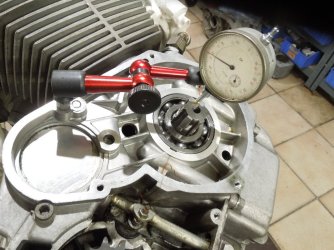
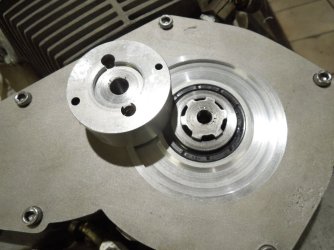
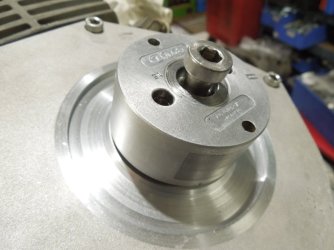
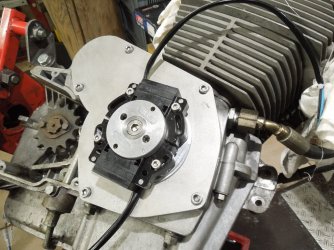
These bikes both ran the original ignition on constant-loss with a battery in the seat hump, a very much less-than-favourable solution in regard to battery placement/weight distribution, especially with the poorly sealed wet lead-acid batteries of the time. On the Harris 580 I'm currently working on, we've replaced the OE system with a PVL magneto, the rotor of which is only 60mm in diametre and a lot lighter than the original flywheel. Mind you, the fitting of the rotor was not without its challenges, but I'm rather confident it'll work out fine. Compared to the original, the crank journal to which the rotor is atached is now a good 60mm shorter than stock, the ensuing forces should be considerably lower.

piet

DSCN1719.JPGDSCN1728.JPGDSCN1727.JPGDSCN1724.JPG
 
Hi all and especially Paul,
I built my Binnion framed 578cc engine based on a total loss electrical system. I have used this setup since the mid 1980's and never had a issue with the crankcases cracking on the right hand side where the alternator is attached. I once calculated that the
centrifugal force acting on the alternator spinning was measuring out in tons!
Therefore for short circuit racing remove the alternator, also you'll notice a big improvement on pick up. Yes my engine is revved to 9500/10000, and last time on dyno put 68bhp out at 9500. Round a circuit like Mallory park can lap a spirited rider on a triple twice in a 18m in period, the point its used!
I would argue even welding wouldn't stop the cracks eventually appearing, your just moving the problem further down the road. Then the actual welding I dare say would distort the cases.
If I had needed to do an endurance race on a 500, I would have reduced weight, set a rev limit of 9000, optimize the exhaust for torque not bhp, etc. To me this welding of the cases is a patch, your not fixing the problem.

Just my opinion ,
Andy
All that I can say is that I've seen 3 cracked cases out of 4 sets I've seen.
I'm no 500 expert you see.
Phil Todd also agreed that 500s cracked their cases front right hand side.
My TT2, built by a semi official factory team; of course had no alternator and even less starter and freewheel.

Maurice Ogier didn't have a set of cases made for nothing.

Paul
 
Back
Top