
You are using an out of date browser. It may not display this or other websites correctly.
You should upgrade or use an alternative browser.
You should upgrade or use an alternative browser.
Electrical connections
- Thread starter ozijotati
- Start date



Gerald
Hero member
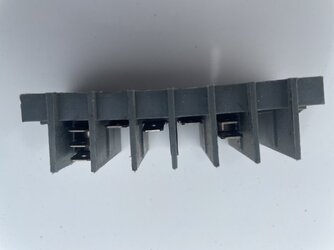
Apparently Bosch Item, German buzz words are Anschlussblock Flachstecker ( connecting block spade connector)
I found an example on fleabay, HTH Gerald
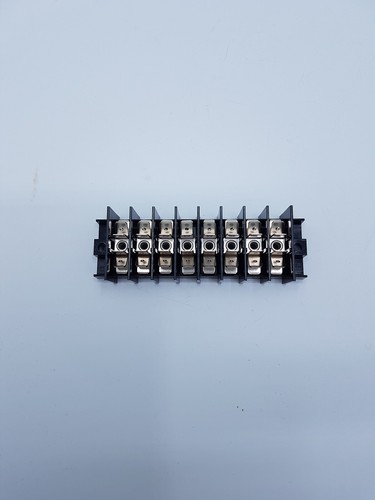
I found an example on fleabay, HTH Gerald
Weco Flachsteckerleiste 8-fach Leiste Flachstecker Anschlußblock P088 | eBay
Entdecken Sie Weco Flachsteckerleiste 8-fach Leiste Flachstecker Anschlußblock P088 in der großen Auswahl bei eBay. Kostenlose Lieferung für viele Artikel!
www.ebay.de

Spider Wales
Hero member
- Location
- Newport South Wales
Just use fully insulated, crimped bullet connectors, (not those awful blue/red plastic and aluminium things either!) it will mean you don't expose the connection between the cables and they will be waterproof.
Keep the smoke in the wires where it belongs!
Keep the smoke in the wires where it belongs!

pf1
Hero member
- Location
- Portsmouth UK
Hello Tom, Grant took some stuff out of my 200mm headlamp when he rewired my 3C, I'll have a look and see if those parts are among them. Might be the weekend though.
pf1
Hero member
- Location
- Portsmouth UK
I should be so lucky, lucky, lucky, lucky
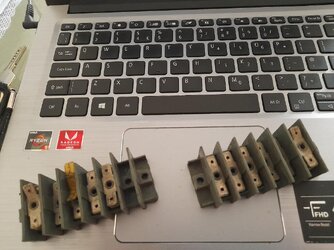

Basic termination system in low cost washing machines in days if not decades past. Main aspect in mass production is cost of parts. There is no bottom, a factory uses what is low cost to get an item working, ready for sale and works to warranty period. Most assuredly it is rarely a matter of what is best for engineering. All the same, these types of blocks can work for long periods, are neat and tidy, show all the connections visibly at a glance, did obviate the need for insulation covering of individual flying crimp lugs.
As a repair or restoration you can use anything you like, cost for one off is not the most important, best part for the job is.
As an aside, you get a handle on cost and processes, my apprenticeship was in mass production technology, sitting at a foot operated ( Manual not pneumatic ) press, hand feeding 55,000 crimp terminations, you come to understand all the dynamics or boredom, even to a 16 year old boy.... j
As a repair or restoration you can use anything you like, cost for one off is not the most important, best part for the job is.
As an aside, you get a handle on cost and processes, my apprenticeship was in mass production technology, sitting at a foot operated ( Manual not pneumatic ) press, hand feeding 55,000 crimp terminations, you come to understand all the dynamics or boredom, even to a 16 year old boy.... j
pf1
Hero member
- Location
- Portsmouth UK
For anyone else looking for these, they are marked WECO 307N 380V 4(with a square symbol next to it).
The measurements match the drawing below.

The measurements match the drawing below.


Dellortoman
Hero member
- Location
- Tasmania, Australia
As a repair or restoration you can use anything you like, cost for one off is not the most important, best part for the job is.
What would be your preference for a strip type connector, John?
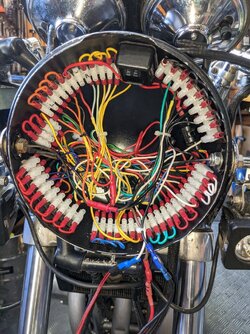
Personally, I can't see much wrong with the chocolate block type (for want of a better name), especially if the ends of the cables are tinned. They take up a little less space than these WECO strips. I did a wiring job on an old BMW a while back and it had chocolate block connectors inside the headlight. I'm not sure whether they were original or not.


Dellortoman
Hero member
- Location
- Tasmania, Australia
Neat 

Legs
Hero member
- Location
- Adelaide Hills
Bloody Hell, me bike's a vampire!

piranha-bro2
Hero member
- Location
- Melbourne
Ouch!!Just a suggestion, before and after. I drew a schematic to keep on the bike.
 Glad the SF lets it all hang out.
Nice job with a difficult problemo by the way.
Slow is me Cam, tinning ends of wires prior to screw clamp is one of the more "not a good idea" from industry practice. Solder if used cold flows under compression ( including pre tin before compression lug setting, you can heat solder post compression, sort of ok ). The best electrical connection for say copper is to use lugs, "bootlace" lugs for terminal application ie has a straight wire like spigot for termination, into tunnel screw terminal strips. Bare wire into a tunnel for a large switchboard or distribution board will be a sign of trouble ahead also, again compression set just like Orings, pressure point flow happens. Hope i make sense. Yes its a Dandy Warhol song on the cardboard sing a long. The fast on connector is for high temperature application like electric cooking elements. The flat furrule with end tang kick is to stop the terminal dislodging from the tunnel prior to mass screw down in large boards. j
Attachments
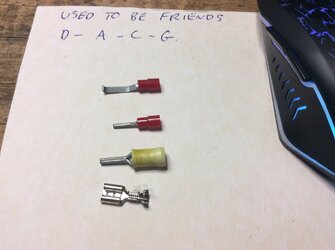
Last edited:
Dellortoman
Hero member
- Location
- Tasmania, Australia
I agree entirely John. Tinning of wires for screw-clamped connectors may not be a perfect solution for a number of reasons, but I think it's at least better than bare multi-strand copper wire, if only to stop it fraying and falling apart when disconnected and re-connected a bunch of times. I think it actually has some advantages over bootlace terminals. The primary one being that it takes up less space than a crimped terminal. That can be a useful attribute in a headlight shell crammed full of electrical spaghetti.
I did all the connections in the switchboard and various electrical fittings in my boat that way around 35 years ago because I didn't know any better back then. Even if I had known better, I didn't have the crimping tools to put bootlace terminals on everything. What I did have was a soldering iron. So far, I've not yet had a problem with any of those connections.
I've subsequently learned that PbSn solder will indeed creep (flow) significantly over the life of a clamped electrical joint if sufficient stress is applied to it. But having (inadvertently) done a 35-year experiment with boat wiring, I'm forced to come up with a couple of conclusions to rationalise the reliability of those joints:
1. It seems logical to me that as the metal creeps, it relieves the stress upon itself, reducing the rate of creep. I reckon it must eventually get to a point where the creep rate becomes negligible. At this stage it seems that the joint is still tight enough to make good electrical contact and, for all practical purposes, won't loosen any further.
2. The solder is only a minor component of a tinned copper cable (unless you're lousy at tinning wires and put a big thick blob of solder on the end of a frayed wire). The structure of the tinned wire is primarily made up of tightly packed strands of copper conductor. The solder is only a thin surface coating and a filler that displaces the air gaps between the strands of copper. So, when a screw connector is tightened onto a tinned cable, it's the copper that takes the lion's share of the clamping load. The solder can squish about as much as it likes, so long as the copper is clamped tightly. That leads me to question whether it's the creep rate of the copper rather than the solder that's more relevant in determining how long the joint will last. While copper is also a relatively soft metal in the scheme of things, its creep rate is orders of magnitude less than solder. It has pretty much negligible creep in the life of an electrical component.
I did all the connections in the switchboard and various electrical fittings in my boat that way around 35 years ago because I didn't know any better back then. Even if I had known better, I didn't have the crimping tools to put bootlace terminals on everything. What I did have was a soldering iron. So far, I've not yet had a problem with any of those connections.
I've subsequently learned that PbSn solder will indeed creep (flow) significantly over the life of a clamped electrical joint if sufficient stress is applied to it. But having (inadvertently) done a 35-year experiment with boat wiring, I'm forced to come up with a couple of conclusions to rationalise the reliability of those joints:
1. It seems logical to me that as the metal creeps, it relieves the stress upon itself, reducing the rate of creep. I reckon it must eventually get to a point where the creep rate becomes negligible. At this stage it seems that the joint is still tight enough to make good electrical contact and, for all practical purposes, won't loosen any further.
2. The solder is only a minor component of a tinned copper cable (unless you're lousy at tinning wires and put a big thick blob of solder on the end of a frayed wire). The structure of the tinned wire is primarily made up of tightly packed strands of copper conductor. The solder is only a thin surface coating and a filler that displaces the air gaps between the strands of copper. So, when a screw connector is tightened onto a tinned cable, it's the copper that takes the lion's share of the clamping load. The solder can squish about as much as it likes, so long as the copper is clamped tightly. That leads me to question whether it's the creep rate of the copper rather than the solder that's more relevant in determining how long the joint will last. While copper is also a relatively soft metal in the scheme of things, its creep rate is orders of magnitude less than solder. It has pretty much negligible creep in the life of an electrical component.

Tippie
Hero member
- Location
- Dr?bak, Norway
My experience with tinned wires straight into screw connectors is that they tend to snap off from vibration far easier than just copper wire into the terminal. I like those bootlace types, they were what we used on transport refrigeration units which also vibrate and are exposed to the weather. Worth looking at for bike wiring.
Dellortoman
Hero member
- Location
- Tasmania, Australia
I find that using plenty of cable ties to anchor electrical cables mitigates any vibration fatigue failures in those cables.
I've also found that spade connectors seem to loosen over time when subject to vibration (such as at the horn connections). I'm not sure what the mechanical process is that causes them to come loose, but pulling the female connectors off the spade terminals and giving them a squeeze with pliers to tighten them up is a regular maintenance job.
I've also found that spade connectors seem to loosen over time when subject to vibration (such as at the horn connections). I'm not sure what the mechanical process is that causes them to come loose, but pulling the female connectors off the spade terminals and giving them a squeeze with pliers to tighten them up is a regular maintenance job.