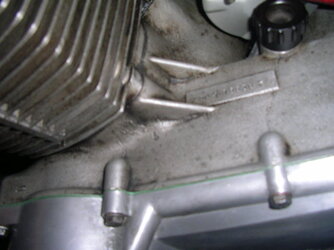
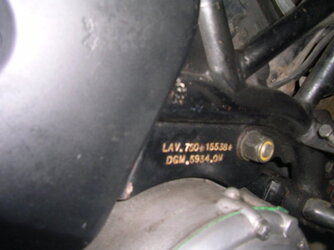
Engine 15538 Gt Rebuilt Head

Evan

Full member
Location
Texas
I put on a rebuilt head. I fired it up Monday 4/3/2023 @ 5:22 pm. After 15 miles noticed slight oil leaks @ the exhaust flanges. Does this mean a cracked head. I tightened the cam covers evenly on a warm day. Cam should be even in between. No oil leaks up there.
And the wires to points are bare meaning no reinforced solder. The springs grip the wires tight in their holes. I went up a gauge to 16 but I'm worried the vibration can cause the connection to bite through.
& the carbs were not leaned. Runs beautifully. But the carbs were set for a maxed out bore where as this engine is 2nd over bore. I guess I'll leave it & check plugs later.
I was also worried about timing. I posted about a month ago that the teeth on the oil pump gear & crank were lined but the top cam gear & engine mark were slightly off. Timed it w/ a light @ points plate after. Fired right up. Had no effect on the way it runs...Runs beautifully!
There are other issues. I'll get back...
The engine & frame #s match...
 

Attachments

  • IMGP0364.JPG
    IMGP0364.JPG
    105.8 KB · Views: 35
  • IMGP0365.JPG
    IMGP0365.JPG
    95.8 KB · Views: 34
  • IMGP0366.JPG
    IMGP0366.JPG
    98 KB · Views: 33
  • IMGP0367.JPG
    IMGP0367.JPG
    94 KB · Views: 34
I've been told that on triples if the exhaust collars are not tightened sufficiently it can suck oil down the exhaust valve guides.
 
I'll throw my two cents in...
Congats on the fire up, always an exciting moment. Cracked head is possible I guess but unlikely. Oil leaks at the exhaust header are usually to do with a leaking exhaust flange gasket, often combined with worn exhaust guides (draws a vacuum and pulls oil down). Bear in mind they didn't have valve stem seals on the exhausts and the guides are quite short, so if something is not right oil can get down there. In fact they even had chamfers at the top of the exhaust guides to pool a bit of oil there for lubrication of the stem.
Points wires, not sure but I wouldn't be too fussed, just monitor their condition after some use.
Jetting is always totally dependent on individual machine setup, factory numbers are just a starting point and it should be tested using normal methods. Second overbore is unlikely to change it by much and general consensus of most folks is that they need leaner than original jetting to work with the fuels these days.
Timing marks on the oil pump are for setting up the ignition timing, on the right for the cam timing. Either way, confirm ignition timing throughout the rev range (particularly max advance) with a timing light and cam timing by degree wheel and dial gauge if you're concerned. Cam timing is rarely - if ever - spot on the factory numbers without being dialled in (requiring custom cam sprocket parts) but as long as everything is per factory specs and it's on the right tooth that usually means it's going to run just fine..
 
First cause of oil from the exhaust in the head on start up is using a bit of grease to hold the copper gaskets in whilst mounting the exhaust.
They'll need tightening a couple of times after first use as the copper crushes and the exhaust finds it's cosy place.
Don't worry about the points wires.
Strobe your ignition to check the auto advance unit and then forget until the middle of the 21st century. Time it statically.

You cannot fine tune carbs by plug reading with modern fuels.

Paul
 
Don't worry about the points wires.
Strobe your ignition to check the auto advance unit and then forget until the middle of the 21st century. Time it statically.

Paul
Check the timing periodically, not infrequently, with points systems.
The cam end covers can also sweat oil and it can be hard to see it making its way to the exhaust where it can look like the leak is. Worth a check.
 
Back
Top