Improving a Clutch

I'm going to strip out the clutch today and investigate properly. It a known entity, I built it up new with new steel plates and Reds Kevlar plates approx 2 years ago, that 2 years of abuse not just regular road riding, 25 track days, and 50 standing quarters.

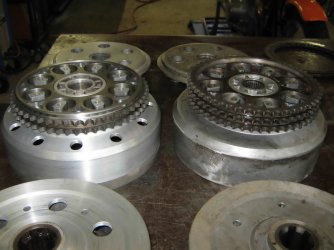
Phil, the basket is drilled but not the back plate, I'd be interested if someone could post a picture of a drilled back plate please.
I'm familiar with burning out plates, I got through several standard sets when I used to sprint the Jota, my technique was poor and the weight of the bike meant I buckled the steel plates prematurely. As you are all no doubt aware, when even one of them buckles, thats it slip...until it is put right or things just get worse.

Oil hasn't changed and isn't going to, I use as below and have done for the life of this bike.
COMP 4 20W-50
Particularly suitable for use with tuned racing engines or high performance units being used in hot climates. Has excellent high temperature-viscosity characteristics to help protect highly stressed components and maintain consistent oil pressure and shear stability. Also offers excellent ?stay-in-grade? performance and long lasting corrosion resistance, even during periods of intermittent use. Suitable for many vintage and classic engines where monograde oils were originally specified. Also ideal for larger air-cooled V-Twin engines and in roller bearing engines.

Specifications
API SG, SH & SJ
JASO MA & MA2


Keith thanks for the offer to supply matvhing plates, I think I have the extra one but I'll contact you for a price if I need some more.

Thanks for the advice people, will come back with something !
 
here you go Rob
get that drill press back into action

not as many holes as Phil used to drill but end result for oil flow is the same.
 

Attachments

  • Clutch basket.jpg
    Clutch basket.jpg
    167.7 KB · Views: 58
PT's basket...
rgs%20drilled%20clutch%20todd.jpg


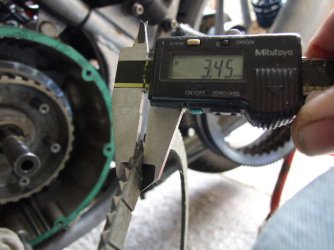
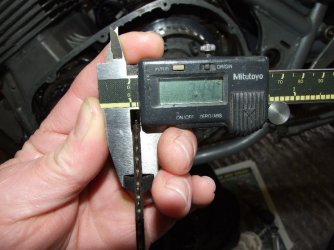
Heres the Redax supplied friction plate from May 2008 and Mar 2011, no wear on them !

Thanks for those pictures guys !
 

Attachments

  • Friction plate new May 2008.JPG
    Friction plate new May 2008.JPG
    64 KB · Views: 33
  • Friction plate 3.44mm Mar 2011.JPG
    Friction plate 3.44mm Mar 2011.JPG
    101 KB · Views: 28
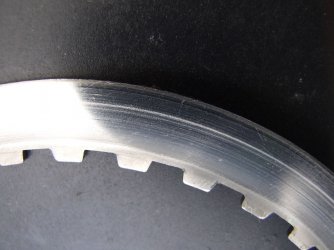
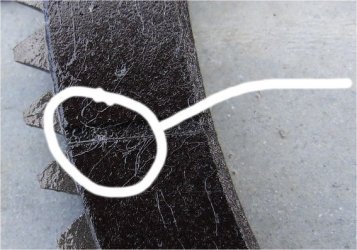
I did find a continuous score on one steel plate and a roughly corresponding tiny piece of debri on the friction material, now trapped on one of the grooves. Unfortunately I wiped it with a cloth hence its covered in fibres and then I lost it. Something scored the plate and would explain a lot. If it's intrusive enough and hard enough to score it, it's enough to hold them apart yes ?  ???

I'll clean it all up, check the Springs, I' pretty sure Im running Heavier wire springs, drill some holes and put it back together.
 

Attachments

  • Steel plate scored Mar 2011.JPG
    Steel plate scored Mar 2011.JPG
    85.6 KB · Views: 19
  • DSCF6628.JPG
    DSCF6628.JPG
    70.8 KB · Views: 34
G?day Rob

I don?t reckon the little lump of grit would have made much difference. May even have improved matters!

As long as your clutch mechanism is operating properly, there are only two variables that can affect clutch grip. Other things such number of plates, area and diameter are not variable. The two variables are:
Friction between the plates, and
The force clamping them together.

If the clutch was originally gripping, then started to slip, the obvious conclusion is that there has been a change to one or both of those parameters.

Friction can be compromised if the plates are glazed or burnt. Check the appearance and smell of the friction material to make sure the plates haven?t been overheated. Over cooking them can change some of the polymer components in the friction material to carbon, which has a low coefficient of friction. If they?re black and smell cooked, then they?re probably buggered, in which case new friction plates is the only cure.
It might also be useful to give the steel plates a rub with fine emery to take the shine off them

The clamping force can reduce in two ways. Wear in the plates is taken up by the springs extending which reduces their preload, and the springs themselves can weaken over time.
You?ve eliminated plate wear as a problem, so I?d suggest you measure the free length and compression rate of the springs. I think the workshop manual gives the spring specs, but you might want to go a bit heavier with your up-rated engine. Either stronger springs or standard springs with extra pre-load (spacer washers).

Cheers
Cam
 
The first time a had my bike on a Dyno years ago the clutch would slip when it hit 6000,the dyno bloke said any warping of plates or variation in spring tenion between individual spring would start the plates to flutter.
So maybe check each spring by load and measuring there sag,got to say I love Reds plates and the holes he does,my clutch is butter smooth
 
Hi Rob,

Just a thought regarding the semi synthetic oil. I used Comp 4 in the B52 when I was parading, found the I couldn't bump start the engine when hot as the clutch would not bite, just slip. Got my license for race and practice days and the clutch would slip in forth and fifth (?). Have now changed to a mineral oil and have no such problems.

Maitland.
 
Dellortoman said:
G?day Rob

I don?t reckon the little lump of grit would have made much difference. May even have improved matters!

As long as your clutch mechanism is operating properly, there are only two variables that can affect clutch grip. Other things such number of plates, area and diameter are not variable. The two variables are:
Friction between the plates, and
The force clamping them together.

If the clutch was originally gripping, then started to slip, the obvious conclusion is that there has been a change to one or both of those parameters.

Friction can be compromised if the plates are glazed or burnt. Check the appearance and smell of the friction material to make sure the plates haven?t been overheated. Over cooking them can change some of the polymer components in the friction material to carbon, which has a low coefficient of friction. If they?re black and smell cooked, then they?re probably buggered, in which case new friction plates is the only cure.
It might also be useful to give the steel plates a rub with fine emery to take the shine off them

The clamping force can reduce in two ways. Wear in the plates is taken up by the springs extending which reduces their preload, and the springs themselves can weaken over time.
You?ve eliminated plate wear as a problem, so I?d suggest you measure the free length and compression rate of the springs. I think the workshop manual gives the spring specs, but you might want to go a bit heavier with your up-rated engine. Either stronger springs or standard springs with extra pre-load (spacer washers).

Cheers
Cam

Good Logic Cam, sadly I've buttoned it back up together now. However I did find something along your lines....... I was running a mix of springs, alternate 3 heavier wire 2.45mm and 3 x  2.35 up until last year. Must have decided when putting it together last month that my hand could cope with 6 of the heavier gauge springs.

The heavier ones were 1.5 or 2mm shorter ( I think 45 instead of 47) THe clutch pack width os not standard nor is the width of the alloy pressure plate remember.Careful use of scales and a vernier revealed the lighter springs had more pressure at the same compressed length as the heavier ones. So I swapped round..

Put in the holes to the back plate and pressure plate now to match the hub and a light skim on the back of the splined back plate, like Reds, F ME, if I remarked how the big driving drum is out of round, when I trued it up in 2008, well the back plate isn't any better, good for a casting but about 15 thou  thicker on one side with a chamfer running 16th " eccentric.  Got that....? Good  :D

Rob  :)

ps thanks for all your inputs !

 
Romeo.D said:
Use Total Bol Dor (as recomended by factory) mineral now 19000km since rebuild , original cluch no problems at all .

You might want to think about dropping that oil Romeo, it must be well overdue an oil change by now.... :D
 
bob said:
Romeo.D said:
Use Total Bol Dor (as recomended by factory) mineral now 19000km since rebuild , original cluch no problems at all .

You might want to think about dropping that oil Romeo, it must be well overdue an oil change by now.... :D
This one is with lifetime guarantee ;)
Previus owner was using Castrol syntetic and pusching hard on cold engine , result was not good . My ex worker is now representative for Total in my area , i order this oil in box of 12 litres from him 1l cost about 4? , and i change it evry 1500km aprox .
 
Back
Top