Indian rope trick

AndyW

Hero member
On the recent trip down to Curdie Vale and back (~1400km all up) on the recently rebuilt Mirage I managed to get through about 3 litres of oil. Plugs checked at Curdie vale were nice and dry and showed the new Mikunis to be working well (v good colour plugs). The bike was also seen to be smoking on the overrun: not too much (like a worn triumph triple or BMC Mini might) but obviously enough to draw down a lot of oil through the (exhaust) valve guides.

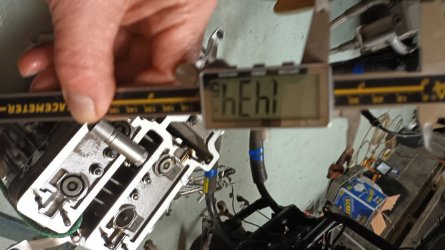
Due to the unavailability of NOS exhaust guides inlet ones were installed (thanks Piet) and, due to the forewarned problems associated with using inlet guides in exhaust fitment applications I recall asking the machine shop to either reduce/eliminate the flat/dished top of the guide (as per a typical exhaust guide profile) or fit valve guide seals. Alas, neither was done and so I'm contemplating the 'Indian rope trick' to block the valves from falling in whilst I release the springs and fit the guide seals.

Before i get stuck into it I was wondering if anyone has done this with the motor still in the frame and how they went about it: any pitfalls to overcome, special tools required or just a decent sized ring spanner and a heavy boot...?

thx in advance..

Andy W
 
I blew the upper ring land off a piston on the inlet side, and that under power was like a Navy Destroyer smoke screen, an insane amount of smoke, but at idle sitting or closed throtle no smoke.
 
I've done it on individual cylinders on my triple and across the whole lot of an xs1100.
Did it last week again ln my laverda.
I used a bungee cord , previously a USB type cable ( not saying its better, just what I chose).

I have a lot of money invested in pistons and head and was gentle, no hard wrenching.

Pushed the spring cap down by hand using the double ended socket that comes with a valve spring compressor. Hooked Collets out with stick magnet.
To refit, place collets either side of exposed stem, eventually theyll drop into place.

Make of this what you want. I'm pretty dextrous and have 46 years practice. W@**** ?probably.

Why are you certain the inlet guides are not drawing oil? It just takes one score line, broached hole.

It's a fact, I had oil running down the outside of an inlet guide, it took me a long time to discover it, with the throttle closed on overrun, there's a real pull on all valve sealing, inside and outside of guides.

Suggest. With cam cover and cams off, followers out. Carbs and exhaust down pipes off. Spray copious brake cleaner into each follower bore in the head. With torch, observe carefully through each respective port. It may well pinpoint your problem if its guide related.
 

Attachments

  • Screenshot_20260220_141454_eBay.jpg
    Screenshot_20260220_141454_eBay.jpg
    71.4 KB · Views: 36
  • 20260204_165018.jpg
    20260204_165018.jpg
    100.3 KB · Views: 36
Last edited:
...or make sure the seal(s) between head exhaust ports are 100% gas tight to the headers, fit new proper quality crush style copper gaskets. Pulled an engine out for excessive overun smoking and in the end, it was still the same smoker. Reused copper crush seals were the problem. Easy things first. HTH j.

*** its the negative pressure exhaust valve guides to leaking header gasket that only happens on throttle overun, pulling oil into the headers, never did quantise the physics though it is real as, trap for young riders...
 
On the recent trip down to Curdie Vale and back (~1400km all up) on the recently rebuilt Mirage I managed to get through about 3 litres of oil. Plugs checked at Curdie vale were nice and dry and showed the new Mikunis to be working well (v good colour plugs). The bike was also seen to be smoking on the overrun: not too much (like a worn triumph triple or BMC Mini might) but obviously enough to draw down a lot of oil through the (exhaust) valve guides.

Due to the unavailability of NOS exhaust guides inlet ones were installed (thanks Piet) and, due to the forewarned problems associated with using inlet guides in exhaust fitment applications I recall asking the machine shop to either reduce/eliminate the flat/dished top of the guide (as per a typical exhaust guide profile) or fit valve guide seals. Alas, neither was done and so I'm contemplating the 'Indian rope trick' to block the valves from falling in whilst I release the springs and fit the guide seals.

Before i get stuck into it I was wondering if anyone has done this with the motor still in the frame and how they went about it: any pitfalls to overcome, special tools required or just a decent sized ring spanner and a heavy boot...?

thx in advance..

Andy W
Hi Andy, I do remember Piet telling me once why fitting valve seals to the exhaust valves on the Laverda is not a very good Idea. Not sure if the combination of using inlet valve guides with the seals on the exhaust valve would cure it, but best talk to Piet for that.

Have the inlet side seals been replaced? That cured it actually on my Jota years ago. (wasn't consuming 2 Liters/1000km though, more like maybe 0,8/1000km). Roger (OCT) did that while even the engine was in the bike by using a wire with a bent tip to hold the inlet valve up, piston on OT.

Exhaust valve have a conical top to keep some oil there for lubrification and cooling of the exhaust valve I think to remember. Piet told me that he shortens that conical part of the exhaust valve guide to have less oil standing there, which also seems to help on the oil consumption.
 
Using (semi) synthetic oil on a newly built engine can lead to glazed bores and serious oil consumption... DAMHIK
Had exactly this on new Triumphs- advice from Triumphs technical dept was “ give it a good birching! “
Most manafacturers recomend running in for 500 miles- take it too easy and you’ve got a smoker.
BMW’s that were smoking we would put on a diet of Shell Four Seasons which was a mineral 20w/50 and that would sort them out.
 
totally depends on what material the Valve guides are made from, I have mine made by AV&V in Canada and they are made from Manganese Bronze alloy which is self lubricating so I install Valve Guide seals on both Exhaust and Inlet sides
After around 300 Cylinder heads reconditioned never had an issue

AV&V stands for Advanced Valves and Valve trains, my mate that works mainly on Harley engines put me on to them many years ago as he used them for all his custom made stuff
 
totally depends on what material the Valve guides are made from, I have mine made by AV&V in Canada and they are made from Manganese Bronze alloy which is self lubricating so I install Valve Guide seals on both Exhaust and Inlet sides
After around 300 Cylinder heads reconditioned never had an issue

AV&V stands for Advanced Valves and Valve trains, my mate that works mainly on Harley engines put me on to them many years ago as he used them for all his custom made stuff
Running the same AV&V's supplied as blanks by Red in the SFQ, with stainless valves. Also have seals on both in and ex and no issues.
 
..I think it may need to come apart for a proper look, sadly. You know about head gasket issues? So if not correct eg width of main crush washer, the seals on the studs. Inset into the head gasket itself. Can be subjected to the blow by,melt and then you get oil sucked in to the chamber. I had this as did others with gaskets used by Keith Nairn. Then Keith designed a new type with copper crush washers built in to the gasket. So no dodgy o rings which can be misplaced on assembly easily. Problem sorted. Oh,and Keith fitted valve stem seals to my new RGS head which lives on my 180 s1 Jota and although I cannot claim high mileage ,seems fine. Certainly no smoking now.Good luck with it and keep us posted?
 
Back
Top