
You are using an out of date browser. It may not display this or other websites correctly.
You should upgrade or use an alternative browser.
You should upgrade or use an alternative browser.
Intermittent fault
- Thread starter cbertozz
- Start date


hooksey
Hero member
- Location
- Vic , Australia
She's rubber ducked.....

cbertozz said:Fark another journey of discovery. WTF is going on here!?!?
I'd be a little cautious there, Carlo. I leave it to to others who see this kind of thing more frequently than I do to comment further. But that kind of melt down is evidence of heavy and sustained current draw. And that suggests some dodgy connections (or an overload) somewhere ...
Hopefully it was just crap and wear in the switch itself - it normally is - and a new switch will cure it (well, for the next 20+ years, that is
 ).
D
Davo
Guest
New headlights drawing high current? Did run them through a relay? What else has changed/been added to your electrickery?

Simonr501
Hero member
- Location
- Lympne, Kent. UK
I can't see the photo, my employer filters third party stuff out!
Sounds like a short circuit to me though!
Try bypassing the switch and if the cables get hot it's something else!
Sounds like a short circuit to me though!
Try bypassing the switch and if the cables get hot it's something else!
Giggling the keys would kill my engine in the past on Laverda and Pantah.I had an intermediate fault in the last couple of years, 2 actually but what was a pisser was it would go fine for a couple of months and then just stop, and then go 5 minutes later and continue for another couple of months. First one was one wire in a 4 wire plastic connector,high resistance in the power wire as the ears were damaged and it wasn't clicking fully in. The second was a loose battery earth connector that was broken 20mm down the wire. You couldn't pick that easy and a few tries. These keyed switches get plenty of work over the years and some hang plenty of crap on there key ring and that doesn't help swinging about. I am not good at this stuff but that burning cannot be good,here is another catch phrase, high resistance joint. Bandy that about and you sound like your smart at this.

Tippie
Hero member
- Location
- Dr?bak, Norway
They should look nice and un-melted. You can bend the tabs straight and remove the plastic bit to have a look at the contacts inside, puny little brass things that carry all the current you use. It doesn?t take much amps-wise to create heat in a loose contact that can cause huge voltage drop. What are all the "many bloody" relays for on your bike? I have one to bypass the ignition switch, and one each for high and low beam to avoid relying on headlight power going through the LH switch (of course other than the starter relay). Vince also mentioned that direct earth is VIP, the return circuit to the battery is just as important as the power out to the item.
Tippie said:They should look nice and un-melted. You can bend the tabs straight and remove the plastic bit to have a look at the contacts inside, puny little brass things that carry all the current you use. It doesn?t take much amps-wise to create heat in a loose contact that can cause huge voltage drop. What are all the "many bloody" relays for on your bike? I have one to bypass the ignition switch, and one each for high and low beam to avoid relying on headlight power going through the LH switch (of course other than the starter relay). Vince also mentioned that direct earth is VIP, the return circuit to the battery is just as important as the power out to the item.
At one stage everything was wired through a relay but now it's just lights/indixators. There's at least one spare on there.
The switch could be ancient and may have taken some abuse previously so not 100% sure it's something that's changed with the lights vs an old component starting to fail.
Assume I coukd tell using a multimeter what amps are travelling through there with lights on?


Andy
Hero member
- Location
- Auckland, roughly
cbertozz said:Assume I coukd tell using a multimeter what amps are travelling through there with lights on?
Yes, if your meter is rated for enough amps.
If you trace the circuit then you can just calculate it (You know, the old volts x amps = watts) so a 60watt headlight will use 5 amps.
But don't then use a 5 Amp rated switch, because wear and corrosion will de-rate everything. Use the highest rated switchgear you can fit and it will last better against the ravages of time, unlike the faces of riders who like open helmets...
By the way, looking at the photo, apart from the melted plastic which is a dead giveaway, if you see copper connections that colour then you know it's been subject to too much heat, usually because the connection is worn out or corroded and causing that 'high resistance' mentioned earlier. Sometimes you can polish it up before it fails bit usually, like now, it serves as a marker as in: "there's the problem!"

chrisk
Hero member
- Location
- Brisbane, Australia
I?d be looking for a loose connection further down the track. Loose
connections can lead to hot spots further upstream. Perhaps your earlier bad earth was the culprit, and took out the ignition switch terminals, as per above.
connections can lead to hot spots further upstream. Perhaps your earlier bad earth was the culprit, and took out the ignition switch terminals, as per above.

Dellortoman
Hero member
- Location
- Tasmania, Australia
I don't follow your reasoning Chris. How can a loose connection create a hot spot in another part of the circuit?
A poor connection, either loose or high resistance can't increase the load on other components. It can only reduce the current flowing through the circuit, which actually takes load off the rest of the circuit rather than overloading it.
A short circuit can sometimes damage other parts of the circuit, but the part damaged in normally a fuse. That's what it's there for.
It seems to me that Carlo has found his problem. Replacing the switch should fix it.
If there's a dodgy connection elsewhere in the circuit, it may become apparent (and get hot) when the ignition switch is sorted and full power is restored. Maybe this is what you're thinking of Chris.
Think yourself lucky it's not a Pantah, my keyed switch was intermittently killing the engine so I bought a replacement one. It seems the only ones are now were order by Ian Gowanloch and the manufactured made the internal connections different to original.So that meant the only way to connect it with the original wiring had the park circuit activated all the time the engine was on, or I could completely rewire that circuit to make it correct. Got the original switch refurbed by that local switch fixer eventually.He built the contacts up a bit I think. Buying a new correct switch is so easy.
chrisk
Hero member
- Location
- Brisbane, Australia
Dellortoman said:I don't follow your reasoning Chris. How can a loose connection create a hot spot in another part of the circuit?
I have had machines where, say for example: a loose terminal on the power out side of a 3 phase invertor, powering a motor, was dicky, this then burnt out the wiring terminal in the motor it was driving. I can't explain how this happens, I just know it happened.

Yogi
Hero member
- Location
- Bellingen NSW Australia
chrisk said:I have had machines where, say for example: a loose terminal on the power out side of a 3 phase invertor, powering a motor, was dicky, this then burnt out the wiring terminal in the motor it was driving. I can't explain how this happens, I just know it happened.
Magic...
Dellortoman
Hero member
- Location
- Tasmania, Australia
OK, electric motors are a slightly different kettle of fish to moptorcycle wiring. Although anyone who puts fish in their kettle is in for a nasty cup of tea.
Motors can actually be cooked by an under-voltage supply. The motor will draw as much current as it can, but won't spin fast enough (if it spins at all) for the cooling fan to be effective. It then gets hot and the insulation breaks down, causing short circuits in the windings, which draws more current which makes it hotter, which breaks down the insulation, which draws more current, etc ...
Starter motors are not particularly vulnerable to this sort of failure because they don't usually run long enough to overheat. If everything is OK, a quick stab of the starter button is all that's required.
However, a poor battery might have excessive voltage drop when cranking the engine so that there's not enough juice left to make a decent spark. If the engine is reluctant to start because of a weak spark, you could end up cranking on the starter motor for long enough for it to overheat. I suspect this is how my Jota's starter motor died a couple of years ago. The insulation in the stator windings broke down after a couple of months of difficult starting with an ageing battery.
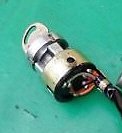
cbertozz said:Would be nice to have a photo of what they normally look like.
A bit like this, Carlo.
Basically, they were Suzuki switches made, I believe, by Nippon Denso. Do a Google search under Suzuki GT 750/550 (possibly GS 750?). Genuine ones (if available) will cost you a fair sum, knock-offs considerably less.
Attachments
Tippie
Hero member
- Location
- Dr?bak, Norway
And have it just switch a relay that only draws milliamps instead of all the bike?s power, it will then last "forever".