michipons
Hero member
- Location
- Palma de Mallorca
Dear all,
My name is Miguel, from Palma de Mallorca, Spain. Almost none of you know me, however I do know some of you, may be from ordering parts, or asking some technical questions, sometimes I feel I know some of you already after having read hundreds of messages of you.
I am an amateur mechanic, started with classic bikes a few years ago, an exception in my generation, I am 34. I have a BMW R100RS, Ducati 748R, Le Mans 1, Vespa '55, and a Laverda SF3 that I am now restoring from bottom to top. Today I visited a Laverda 1000 from '74 that I will probably buy.
I have to say that I am extremely thankful to this forum, the level is amazing, a knowledge that no book can probably give. I spend hours and hours reading topics that exceed from far my skills, so I apologize already for some stupid questions that I will post from now on, and ask for your patience.
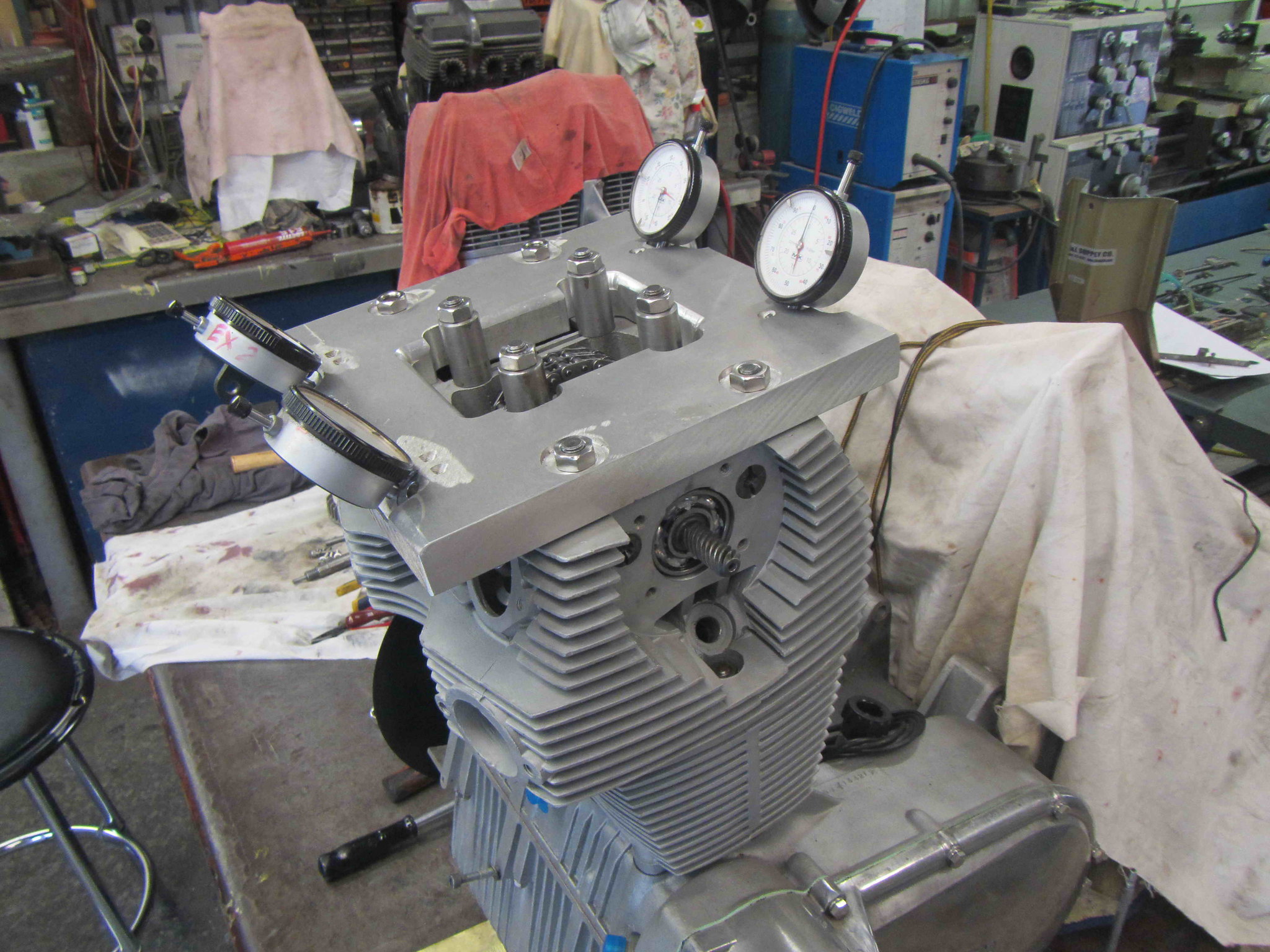
Yesterday I spent part of the night reading the topic about the cam timing, from 2011 I believe. All explanations and photos were for the triples, so I couldn't figure out how to translate the system to the 750, do somebody have some photos of the process? like how to measure the valve movement on the cylinder head? Another thing I didn't understand was the reason of drilling so many holes in the timing sprocket when you actually need just a few degrees to one side or another? is it not enough to file the existing bolt hole to both sides in order to have lets say 2 mm of movement to each side?
Thank you very much for your time and sorry for my english, I hope it is understandable.
Regards,
Miguel.
My name is Miguel, from Palma de Mallorca, Spain. Almost none of you know me, however I do know some of you, may be from ordering parts, or asking some technical questions, sometimes I feel I know some of you already after having read hundreds of messages of you.
I am an amateur mechanic, started with classic bikes a few years ago, an exception in my generation, I am 34. I have a BMW R100RS, Ducati 748R, Le Mans 1, Vespa '55, and a Laverda SF3 that I am now restoring from bottom to top. Today I visited a Laverda 1000 from '74 that I will probably buy.
I have to say that I am extremely thankful to this forum, the level is amazing, a knowledge that no book can probably give. I spend hours and hours reading topics that exceed from far my skills, so I apologize already for some stupid questions that I will post from now on, and ask for your patience.
Yesterday I spent part of the night reading the topic about the cam timing, from 2011 I believe. All explanations and photos were for the triples, so I couldn't figure out how to translate the system to the 750, do somebody have some photos of the process? like how to measure the valve movement on the cylinder head? Another thing I didn't understand was the reason of drilling so many holes in the timing sprocket when you actually need just a few degrees to one side or another? is it not enough to file the existing bolt hole to both sides in order to have lets say 2 mm of movement to each side?
Thank you very much for your time and sorry for my english, I hope it is understandable.
Regards,
Miguel.