Grant has done some installations I think and some others, too. For sure they will tell you (not sure though if Grant is back on the forum, but you might ask him via facebook).
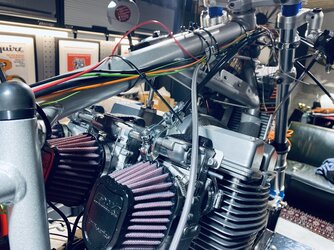
As far as Grant's bike (the one he calls POP) is concerned, I can fill you in on a few details. I hope he doesn't mind me sharing some of his technical details.
I designed the wiring system for his bike back in 2010, and yes, it uses a Motogadget M-Unit as the heart of the system. As far as I'm aware, it's still wired that way, although he could have made some minor changes.
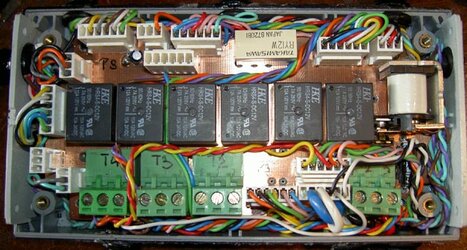
Basically, the M-Unit box is just a bunch of electronic relays all built into one unit. Its main advantage is that all the power circuits go through the box. It has a heavy power feed cable from the battery to the box and it supplies power to all the electrical loads on the bike. Those loads include lighting, horn, indicators, ignition, starter relay, a couple of auxiliary circuits and perhaps one or two things I haven't thought of. It also eliminates the need for fuses because each output is protected by an auto-reclosing circuit breaker. Auto-reclosing means the CB will automatically reinstate power to the circuit when the fault is rectified.
It does remove all the jumble of wires from the headlight shell. Well, most of them anyway. Obviously you still need wires going to the headlight itself and the indicators.
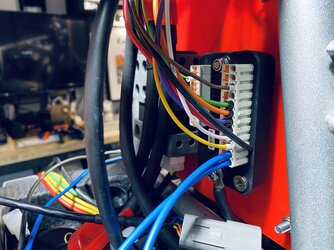
A significant advantage of the unit is that all the electrical loads go through the M-Unit box, so all the heavy(ish) load carrying cables run from there to the various loads. The cables that tell the M-Unit what to do (inputs from the handlebar switches, etc) can be light comms cable like telephone wire. So there's no big thick wiring harnesses jammed into the handlebars or terminating at rows of connector blocks inside the headlight. You could do all the switching functions with a CAT5 telephone cable to each of the handlebar switch blocks. The handlebar switches only have to handle milliamp loads, so their contacts will pretty much last forever, at least until they get dirt or corrosion in them. No more overheated switch contacts or melted wires in the switch harnesses.
On Grant's bike, the M-Unit didn't allow for headlights to be switched off, just toggled between high and low beam (headlights on all the time is a requirement of most countries). Grant wanted to be able to switch his headlight off, so it needed a couple of extra relays external to the M-Unit to achieve that.
His M-Unit was a 2010 model. The units on sale now have evolved some additional features and are now called "mo.unit". They have a built-in alarm system and a bunch of other smart functions. They can also connect your smartphone via bluetooth and the associated phone App can do a whole lot of stuff like keyless ignition, alarm monitoring, event logging, etc. Too much to list here, so go to their website for more info.
The motogadget product family Analog Gauges Digital Instruments mo.hub Kits mo.ride app Electrics Rear View Mirrors for Handlebars Turn Signals Product The production of the mo.view motorcycle mirrors Glassless Mirrors Product The new mo.unit blue and mo.ride App Make your bike smart Service...

www.motogadget.com
I still don't think they let you switch the headlights off though.
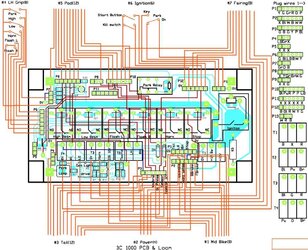
I could upload a copy of Grant's wiring diagram to the library if anyone is interested. It has a few quirks requested by Grant (such as the ability to switch off the headlights) and he used some late model Suzuki handlebar switches, Sachse ignition, Shindengen RR, etc. I don't think he'll mind me sharing it for the benefit of the community. I did it for him as a favour (not a paid consultancy), so I reckon I retain the intellectual property rights anyway.


 or at least for my private collection.