
You are using an out of date browser. It may not display this or other websites correctly.
You should upgrade or use an alternative browser.
You should upgrade or use an alternative browser.
Milano Taranto
- Thread starter Paul Marx
- Start date


chrisk
Hero member
- Location
- Brisbane, Australia
Pass on our regards, a heatwave (heard it was 43c yesterday on the ABC Radio New, somewhere over there) is a good excuse for drinking lots of beer. Although, I seem to recall Piet enjoying white wine, no matter.

Adventure is over, but I brought a little C-19 souvenir back with me... 
Start at midnight in Milano:
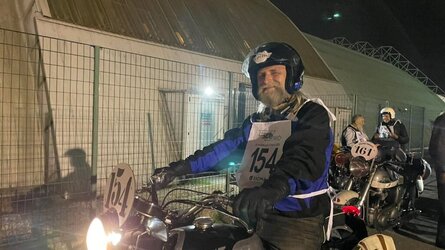
Apparently, several participants thought the event would be a leisurely Sunday morning jaunt, they were in for a big surprise. Temps ranged from 29°C to 38°C, with a couple of thunderstorms thrown in for good measure!
The old Matchy held up surprisingly well, the only maintenance necessary was a single adjustment of the drive chain. No oil used, very little dropped!
More pics at https://www.milanotaranto.com/
Unfortunately, I buggered up my own iPhone photos and cannot upload them here. Steve Jobs' ghost keeps on haunting me...
piet
Start at midnight in Milano:
Apparently, several participants thought the event would be a leisurely Sunday morning jaunt, they were in for a big surprise. Temps ranged from 29°C to 38°C, with a couple of thunderstorms thrown in for good measure!
The old Matchy held up surprisingly well, the only maintenance necessary was a single adjustment of the drive chain. No oil used, very little dropped!
More pics at https://www.milanotaranto.com/
Unfortunately, I buggered up my own iPhone photos and cannot upload them here. Steve Jobs' ghost keeps on haunting me...
piet
Lovely.Adventure is over, but I brought a little C-19 souvenir back with me...
Start at midnight in Milano:
View attachment 64750
Apparently, several participants thought the event would be a leisurely Sunday morning jaunt, they were in for a big surprise. Temps ranged from 29°C to 38°C, with a couple of thunderstorms thrown in for good measure!
The old Matchy held up surprisingly well, the only maintenance necessary was a single adjustment of the drive chain. No oil used, very little dropped!
More pics at https://www.milanotaranto.com/
Unfortunately, I buggered up my own iPhone photos and cannot upload them here. Steve Jobs' ghost keeps on haunting me...
piet
I still plan doing it in 24 or 25 for my 70th, God willing, inch Allah.
Paul
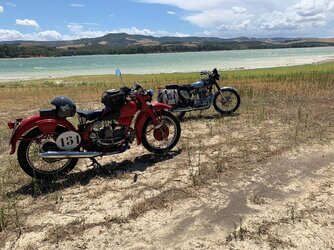
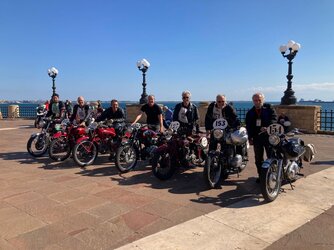


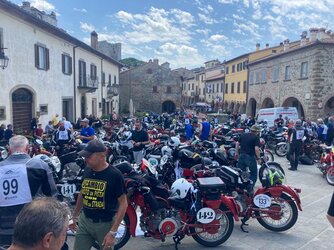
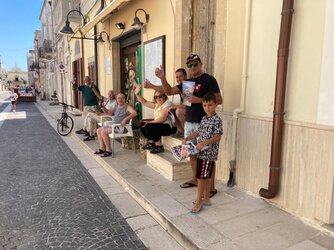

Cosi
Hero member
- Location
- Kingscliff
Look worthwhile just for the lunch


chris78jota
Senior member
- Location
- England
Great effort again Piet, Did you find it more or less enjoyable than when you did it on the 100?
Hope the C19 clears up quickly,
Chris R
Hope the C19 clears up quickly,
Chris R

Tippie
Hero member
- Location
- Dr?bak, Norway
Well done Piet. Great adventure. How many times have you done it now?
That bloody virus has worn out its welcome.
That bloody virus has worn out its welcome.


Jo
Hero member
- Location
- Cologne, NRW Germany
Thanks for the pics and report from my side too Piet!
I don't imagine it being easy with getting C19 and being with a bike in southern Italy. My friend, who had to cancel our tour of the Alps because of this, was quite weakened in terms of strength. How to return home with a motorcycle such a distance across multiple borders and possible isolation regulations? How did you master that?
Cheers,
Jo
I don't imagine it being easy with getting C19 and being with a bike in southern Italy. My friend, who had to cancel our tour of the Alps because of this, was quite weakened in terms of strength. How to return home with a motorcycle such a distance across multiple borders and possible isolation regulations? How did you master that?
Cheers,
Jo
I'll try to answer all questions at once...
This was my 2nd. participation, the first being 2015 on the 100 Laverda Tourismo. As the route changes every year, its character can be very different. 2015 included many twisty stretches through mountainous forests, this year had long straight stretches between cities, probably more akin to what was done in the original 1950's races. So, on a whole, 2015 was more fun, but that's not saying 2022 was bad. In fact, the food was better this time 'round!
Required is a bike manufactured before 1967, roadworthy and registered/taxed. Machines of the types that took part in the original races are priveleged and have their own class. Minimum technical requirement at scrutiny are working lights front AND rear, along with a working horn. The condition of some of the bikes that turned up was, imho, simply atrocious. This showed up quickly with numerous bikes stranded by the roadside within 2 km after the start. It pays off to have a thouroughly sorted and tested bike, my Matchless already had a good 17000km on the clock after the resto, the last 10000 of these were absolutely reliable after initial teething problems were attended to. The 100 also underwent a 2500km test before entering, it too was absolutely reliable, apart from a defective (borrowed!) silencer that I fitted almost at the last minute (I should have known better...).
For the paltry fee of about €1600 (possibly more next year) you get accomodation for 6 nights in 4- or 5-star hotels, breakfast and dinners included, along with catering at the check points along the route. Only extras are your own fuel costs and your consumption at the bar . There is a €50 refundable fee for the GPS transponder and a further €15 or €25 for a weeks membership in the hosting italian motorcycle club to cover insurances. Medical services are provided, as are bike pick-up and rundimentary repair services. In case of a total failure, the bike is transported to Taranto or Bari, where return services to Milano are provided, all at very reasonable cost.
The event is a competition! But not a race. Check points have to be left at exactly defined schedules, the average speed works out to 35km for the entire route. This sounds easy, and actually is, if nothing goes wrong. A repair of a clutch or brake cable can throw a big spanner in the works. One usually has about a 30-50 minutes wait at each check point (with lots of food and refeshments to keep you happy), this can quickly be used up if you need to stop for a repair or if you miss an arrow and leave the route. Navigation is solely by a "scorecard" with road denominations and locations noted along the way, with arrow marks on road signs showing the way. Miss an arrow and you could be in trouble.
Then there is the "assagiori" or "taster" class. This can be entered on a modern bike, even with passenger. The riders do not participate in the competition but are required to award points to the various food outlets along the way, the cities and clubs providing these are in competition with each other!
Booking usually opens in November for the event of the following year, previous participants have the luxury of being notified and able to book in October. Enrollment is quickly full, so the decision needs to be quick. Apart from bike details, a medical bill of health needs to be provided. All details can be found on the Mi-Ta homepage https://www.milanotaranto.com/
Unfortunately, I missed the booking deadline for return transport of the bike, but was able to arrange this before the start in Milano, very lucky, as allotments are limited! The bike was loaded, very professionally, after the event on Sunday in Bari and transported to Milano, where I collected it Monday afternoon. I travelled with a couple of friends in a rental car, another woefull tale, to Milano. I then rode to Mandello del Lario where my trusty Skoda and trailer were parked. Spent another very enjoyable night in the Hotel Al Verde before meeting up with a friend who had taken the train to Lecco where he had bought a Ducati 450 Scrambler. After loading the Ducati, we had a nice lunch in Mandello with the vendor before doing all the paperwork at an export agency.
The return home was uneventful, apart from a minor hiccup with the Skoda. Cooling liquid was disappearing and needed frequent topping up. This was to be a challenge on the way to the San Gottardo tunnel with a good 60km uphill run in 35°+ ambient temps. Turned out the stupid little o-ring seal of the over-flow canister had given up. I only found this after the second stop with steaming liquid gushing out the canister about 10km before entering the tunnel (you definitely do NOT want to have to stop in this 17km long tunnel!) and the broken o-ring falling on my shoe. A makeshift seal made from paper handkerchiefs got the canister sealed quite OK, at least enough to make it through the tunnel safely. Ordered a new canister cap by phone at a dealer in the village where had booked accomodation just over the swiss-german border and picked it up the following morning. Heavy traffic hindered a quick return, we needed almost 10 hours for the remaining 500km. I felt a bit tired so had my friend Marcus do the driving, but I put that down to the numerous beers and grappa we enjoyed the evneing before. When we unloaded his Ducati, I felt well and truely knackered, but had another 20km to get home. Arriving home, I had the feeling something was amiss, so I self-tested for Covid, which turned out positive...
Leaving home on July 1st with my mates Gilera Saturno Sport on the trailer.
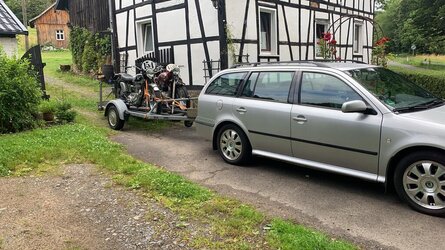
Al Verde

Breakfast view
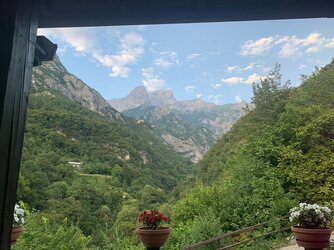
Arriving home
piet
This was my 2nd. participation, the first being 2015 on the 100 Laverda Tourismo. As the route changes every year, its character can be very different. 2015 included many twisty stretches through mountainous forests, this year had long straight stretches between cities, probably more akin to what was done in the original 1950's races. So, on a whole, 2015 was more fun, but that's not saying 2022 was bad. In fact, the food was better this time 'round!
Required is a bike manufactured before 1967, roadworthy and registered/taxed. Machines of the types that took part in the original races are priveleged and have their own class. Minimum technical requirement at scrutiny are working lights front AND rear, along with a working horn. The condition of some of the bikes that turned up was, imho, simply atrocious. This showed up quickly with numerous bikes stranded by the roadside within 2 km after the start. It pays off to have a thouroughly sorted and tested bike, my Matchless already had a good 17000km on the clock after the resto, the last 10000 of these were absolutely reliable after initial teething problems were attended to. The 100 also underwent a 2500km test before entering, it too was absolutely reliable, apart from a defective (borrowed!) silencer that I fitted almost at the last minute (I should have known better...).
For the paltry fee of about €1600 (possibly more next year) you get accomodation for 6 nights in 4- or 5-star hotels, breakfast and dinners included, along with catering at the check points along the route. Only extras are your own fuel costs and your consumption at the bar
. There is a €50 refundable fee for the GPS transponder and a further €15 or €25 for a weeks membership in the hosting italian motorcycle club to cover insurances. Medical services are provided, as are bike pick-up and rundimentary repair services. In case of a total failure, the bike is transported to Taranto or Bari, where return services to Milano are provided, all at very reasonable cost.The event is a competition! But not a race. Check points have to be left at exactly defined schedules, the average speed works out to 35km for the entire route. This sounds easy, and actually is, if nothing goes wrong. A repair of a clutch or brake cable can throw a big spanner in the works. One usually has about a 30-50 minutes wait at each check point (with lots of food and refeshments to keep you happy), this can quickly be used up if you need to stop for a repair or if you miss an arrow and leave the route. Navigation is solely by a "scorecard" with road denominations and locations noted along the way, with arrow marks on road signs showing the way. Miss an arrow and you could be in trouble.
Then there is the "assagiori" or "taster" class. This can be entered on a modern bike, even with passenger. The riders do not participate in the competition but are required to award points to the various food outlets along the way, the cities and clubs providing these are in competition with each other!
Booking usually opens in November for the event of the following year, previous participants have the luxury of being notified and able to book in October. Enrollment is quickly full, so the decision needs to be quick. Apart from bike details, a medical bill of health needs to be provided. All details can be found on the Mi-Ta homepage https://www.milanotaranto.com/
Unfortunately, I missed the booking deadline for return transport of the bike, but was able to arrange this before the start in Milano, very lucky, as allotments are limited! The bike was loaded, very professionally, after the event on Sunday in Bari and transported to Milano, where I collected it Monday afternoon. I travelled with a couple of friends in a rental car, another woefull tale, to Milano. I then rode to Mandello del Lario where my trusty Skoda and trailer were parked. Spent another very enjoyable night in the Hotel Al Verde before meeting up with a friend who had taken the train to Lecco where he had bought a Ducati 450 Scrambler. After loading the Ducati, we had a nice lunch in Mandello with the vendor before doing all the paperwork at an export agency.
The return home was uneventful, apart from a minor hiccup with the Skoda. Cooling liquid was disappearing and needed frequent topping up. This was to be a challenge on the way to the San Gottardo tunnel with a good 60km uphill run in 35°+ ambient temps. Turned out the stupid little o-ring seal of the over-flow canister had given up. I only found this after the second stop with steaming liquid gushing out the canister about 10km before entering the tunnel (you definitely do NOT want to have to stop in this 17km long tunnel!) and the broken o-ring falling on my shoe. A makeshift seal made from paper handkerchiefs got the canister sealed quite OK, at least enough to make it through the tunnel safely. Ordered a new canister cap by phone at a dealer in the village where had booked accomodation just over the swiss-german border and picked it up the following morning. Heavy traffic hindered a quick return, we needed almost 10 hours for the remaining 500km. I felt a bit tired so had my friend Marcus do the driving, but I put that down to the numerous beers and grappa we enjoyed the evneing before. When we unloaded his Ducati, I felt well and truely knackered, but had another 20km to get home. Arriving home, I had the feeling something was amiss, so I self-tested for Covid, which turned out positive...
Leaving home on July 1st with my mates Gilera Saturno Sport on the trailer.
Al Verde
Breakfast view
Arriving home
piet
Attachments

Picking up the bike in Milano and attaching the Garmin bracket to get me to Mandello... hell-minor if not using trunk roads or the autostrada! I chose neither and it took me over 3 hours for the 60-odd km!

Arrival at the Al Verde
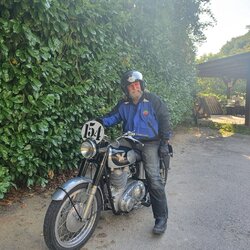
The sign of the victor...

Arrival at the Al Verde
The sign of the victor...



piranha-bro2
Hero member
- Location
- Melbourne
Great review of the trip and ride Piet. Bummer to come down with the dreaded Rona, but hopefully if you've been multi-vaxxed you'll get off very lightly as I did. Not so the fukn flu - knocked me for six like a 20lb sledgehammer. Still not fully recovered 4 weeks on.
The Matchy looks very funky!
The Matchy looks very funky!
chrisk
Hero member
- Location
- Brisbane, Australia
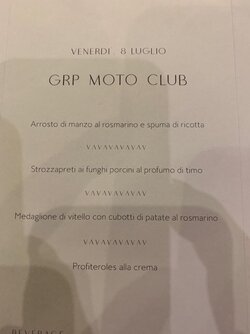
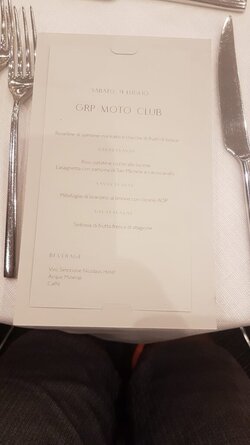
The food and wine looks great 
Sounds like a fat old time, good on ya mate.
Sounds like a fat old time, good on ya mate.