New ignition system being pushed

You might think the manufacturers might have a fail-safe concept, square peg in a round hole, maybe. Hoses only fitting into tanks they're made for. To Complcated?
Yes Vince , you couldn't mix up an LPG connector with a diesel/petrol dispenser but you can drive off with the lpg hose still attached to your jeep and motorcycles on trailer. Least it was only 3 metres of whipping hose beside me, the rest I subsequently learned shuts off courtesy of the ESV so at least I didn't burn down the entire filling station.🤨
 
Last edited:
In former days we had winter Diesel (Gasoline) here in Germany and maybe also in other countries with low temps. Usually Diesel would freeze at lower temps so Petrol was added, I think up to 30 %. Today maybe there are other additives.
 
I too am guilty of filling my diesel family car with petrol.

Paid, started it up and was just on the road and ……. 🤔 yellow handle!!!!! Pulled up, shut it down and checked the receipt….., a tank full of unleaded petrol. 😡

Luckily it must have still been sucking the diesel from the fuel line, no engine damage but the whole fuel tank had to be removed to empty it.

I’ll admit something caught my attention and my mind was elsewhere while fuelling up….. she was wearing a very flimsy summer dress
 
Putting petrol in a diesel doesn't always ruin the engine!
About 15 years ago I was taking one of the boys to play footy in a Mackay. Already running late, got in the car and saw the tank was empty (Won't say who normally drove it). Rushed up to the servo, filled up, back home, everyone in and off. About 10 to 15kms down the road the car started missing. Suddenly had a flash and realised I had put petrol in the tank (which was weird as we didn't even have a petrol vehicle, but I was not in a great mood!!) Did a u turn and headed back, the car got worse and worse, missing, farting and eventually buck jumping. Just made it to turn off into town and it died. Left it there, ran back, got another vehicle and headed off to the game. Later rang RACQ and organised they could pick it up Monday imagining the dire consequences everyone talks about. Anyway, on Monday went up and saw our mechanic and he said not to worry, probably be alright as he thought it might not badly effect these diesels. He did say probably different story if it was something like a BMW, which would surely be a lot of damage.
They drained petrol, put some diesel in and car fired up and ran fine. (Still have the car and still runs like a dream)
 
Emily accidentally started putting unleaded into the diesel Skoda, but realised after about 5 litres. Drove the km or so home! Obviously the fuel filter held enough to feed the motor. I was able to siphon out the fuel by removing the rear seats to access removable caps on the two tanks. In hindlsight, we could have simply filled it with diesel (55L tank) and it probably would have been fine
 
This must be a very big snake to make so much oil.

"to ignite the fresh incoming mixture that follows behind the initial ignition event that may not otherwise ignite to create a bigger bang!"​


Well as the plug fires after the intake valve is closed, where is this fresh incoming mixture coming from?

How are they making the spark a longer duration? Once current flow to the coil has been interrupted (inductive not CDI), I don't know how you make the spark plug continue to fire?

Multi spark ignitions only can operate at low rpm's as charging the ignition coil takes time. So at higher rpm's it can't be made to work and does nothing.

The only automobile company using multi spark on a production car I am currently aware of is Mercedes Benz. It fires the pug five times at low rpm and low load. They claim it increases engine efficiency by 1.2%. Which probably an exaggeration and is really only .000000000001%

A little history:

Multi spark ignitions were invented by General Motors in the early 1970's. They were trying to see how lean could an engine be made to run. It soon became apparent that at very lean mixtures it was impossible to ignite the fuel. So they looked at multi spark which did help but again it does not work much above idle. Eventually they came up with a ignition system with ten ignition coils feeding one spark plug that could provide multiple sparks up to max rpm. Well the cost and complexity made this not a good option so it was abandoned.

Our Laverda's are not running very lean and would not even pass a modern exhaust emission test so multi spark is useless.
 
Last edited:
You can get anti-misfuelling adaptors for diesel filler caps that won't allow the skinny unleaded nozzles in. They have a kind of mechanical blocking device that will only unlock if the correct sized nozzle is inserted.
Having put petrol in it once, I'm now hyper aware of what I'm doing whenever I fill up so I don't reckon I need the anti-fuckup device. On the rare occasions when friends have asked to borrow my car (actually a van) to move stuff, I've always volunteered to go with them and help them move their stuff. That way I avoid the potential risk of petrol car drivers filling my car up with their favourite flavour of petrol.

Blimey John. You reminded me of a previous existence when I used to do design and construction work on EHV (extra high voltage) substations and transmission lines. It always made me a bit jumpy walking about in switchyards with 220KV corona discharge buzzing only a couple of metres above my head. In wet conditions the buzz was particularly loud and crackly, which was more than a little disturbing when you're standing right next to it.

In some of the older switchyards, the earth mat wasn't up to current (pun intended) standards, and the step voltage* was too high. So if something went wrong and there was an earth fault, you had to have the presence of mind not to leg it out of the yard as fast as you could. You had to stay put with your feet together until you'd assessed the situation, then shuffle away like a penguin taking tiny little steps.

* An explanation of step voltage for the one or two forum members who may have been off sick on the day they covered EHV switchyard design at school: :unsure:
If you have EHV getting to the ground (AKA an earth fault), the step voltage is the rate at which the voltage at the ground surface diminishes with the distance away from the injection point.
For example: if there's a live 220KV conductor contacting the ground, the ground where it's touching will be at 220KV, but it reduces the further you get away from that point. So if you're standing nearby, you could have one foot on a higher voltage bit of ground than the other. If the voltage gradient is too steep (say 50KV per metre) and your feet are a metre apart, you could have a potential difference of 50KV from one foot to the other. That's more than enough to blow through the soles of your boots and give you a really bad day. Ideally you want the voltage to decrease slowly with distance so you can take normal sized steps to get to a safe place without being literally blown out of your boots.
 
I remember that next time my Car knocks over a power pole. Naa best I don't move. A mate was a Fire Fighter before retiring. I would be mucking about with any downed live wiring ,ever. Leave it to the payed pros.
 
Indeed Cam, all correct, the EC yards had air breakers on the 330KV, air tank under driving the rotating breaker arm, with arc shute utilising the expelled compressed air to blow out the arc, ( mentioned this prior here as a dim recall ). Landline telephone lines subs to distant subs, had to stand on a rubber mat around 6" thick ( no poxy metric or decimals for the brave ) else a sub fault would zap you through the ear hole, very serious though somewhat funny from this day looking back. The amount of blown to bits 330KV tower power line support ceramic insulators all about the yard perimeter was most disconcerting, else you be there when they exploded.

Most of all, my curly hair used to go past my tits, as you entered into the HV switchyard all my hair would stand straight up to the reticulation cables, trying to hold my hair down and work without looking like a cartoon character provided great amusement to the yard operators, whom would trigger an air breaker adjacent to where i was working, job lot for the lads in the control room... all the yards had a cottage on site with full kitchen and comforts, which i needed from being initiated into the EC.... paid well though... and you earned every dollar.

The current crop of copper cable thieves ( they were around in the mid 70's stealing the bonding copper on the perimeter fence, equipotential bonding, if we saw it missing we were not permitted to enter the yard ), hope these dickheads get lit up, no loss to the human race.

While just slightly off the original topic, has more value than yet another "new" ignition.... young and fearless, and rode motorcycles like a lunatic to prove it, days of glory, if you survived. j.
 
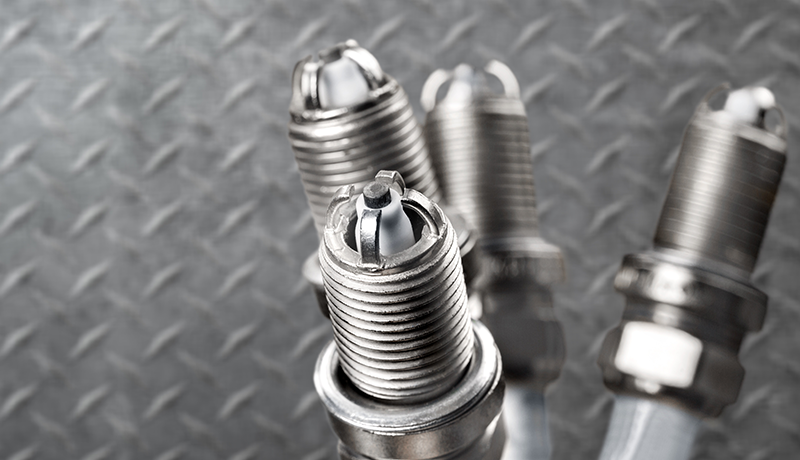
One of the local Laverda blokes here loves those multi-electrode spark plugs. Is that similar to multi-spark ignition? Pitatos Patartos.
Not a very convincing article Vince, reads like a salesman perspective of what actually happens, these type of plugs were factory ( Gold Lodge ) fitted to Alfa V6 engines or maybe the 4's. The fouling argument is specious, up to 4 body tabs directed to one centre electrode, when it fouls all outer tabs are stuffed. Tah for the URL, makes me smile...j
 
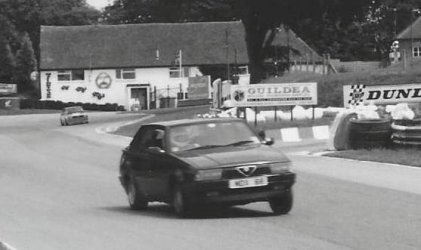
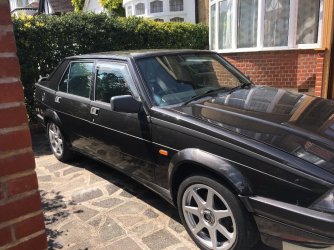
Better than the lamentable 90..... did well Sock, bit of an Alfa person here... j *** Drove an Alfetta GTV6 ( the one that blows the engine speed doughnut rubber coupler ) and two Suds... yes i know, had to be versatile swapping driving seats... grin.
 
Last edited:
Point to point, and on most circuits, my 75 2.0 T-Spark was quicker than my 3.0 V6 75. They followed my 2.0 Giulietta which followed my 2.0 Alfetta. Thirty-eight years of ownership, you could say I was an Alfa guy, too, Jon.
 
Back
Top