
Davo said:I run out at $200 an hour so that's a shitload of coffee
Well at least you're not a lawyer...

Davo said:I run out at $200 an hour so that's a shitload of coffee

Power at a coil ought to turn into power out of an HT lead
treoleileagh said:First I confess I know nothing about Ignitechs. Nevertheless a few things in this thread jumped out when I read through it. You've said a few times that you have power at the coils. You also said early on that the bike was missing on one cylinder (I guess then it must have been running on 2 cylinders).
Power at a coil ought to turn into power out of an HT lead, and a spark at its plug. I'm not Sherlock Holmes but maybe I'd take the single-outlet coil down to my local autoelectrical guy and ask for an opinion. Maybe its getting power but the coil is breaking down and not delivering any/enough output.
Firing on two cylinders suggests your dual output coil is okay. BTW do you have the HT leads from the coils going to the right plugs. Single output coil feeds the middle plug.
Cheers
Chris
cbertozz said:I was with you on that one until one of the coils stopped firing all together, then I swapped the wire and the opposite, so the coils are fine IMHO and it's the intermittent connection to the ignition box, which also drives the trigger wires for the coils, that has been causing the tail chasing.
Davo said:I think I suggested that some time ago.

SimonR501 said:When you are crimping, remember not to over crimp the connector with gorilla grip!
If over crimped the copper strands harden and break, one of the reasons people end up soldering.
The fancy expensive crimpers have adjustable crimp force.
Dellortoman said:Hey Carlo.
As you're something of a novice at this auto electrics business, here's a couple of tips about cable connectors:
Don't get the pre-insulated connectors with the coloured plastic collar around the part to be crimped (like the blue ones in the photo below). They're rubbish, but seem to be ubiquitous in hardware and car accessory shops.
Get uninsulated connectors with separate soft plastic covers as in the middle picture below. Slip the insulating cover onto the end of the wire, crimp the terminal on, then slide the cover back over it. This type of connector is a little harder to find. You need to go to a specialist electrical supplier or buy them on line.
Suppliers such as Ozautoelectrics sell them
http://www.ozautoelectrics.com/narva-56244-blade-terminal-insulators-suits-6-3mm-female-56224-pack-of-100.html
http://www.ozautoelectrics.com/non-insulated-female-blade-crimp-terminals-qk-series-tin-plated-brass-6-3mm-tab-0-8-1-5mm2-wire-size.html
You also need a proper crimping tool, like the one in the bottom picture at the very least. More fancy ones are available, but for your purposes the one shown is adequate. If you try to crimp with pliers, it won't crimp properly but you can solder it to make it work.
A set of wire stripping pliers is also handy if you're intending to do lot of this stuff.
Cam
SimonR501 said:When you are crimping, remember not to over crimp the connector with gorilla grip!
If over crimped the copper strands harden and break, one of the reasons people end up soldering.
The fancy expensive crimpers have adjustable crimp force.

Soldered joints are often too rigid to cope with vibes for long, and the remains of flux continue rotting the copper strands.

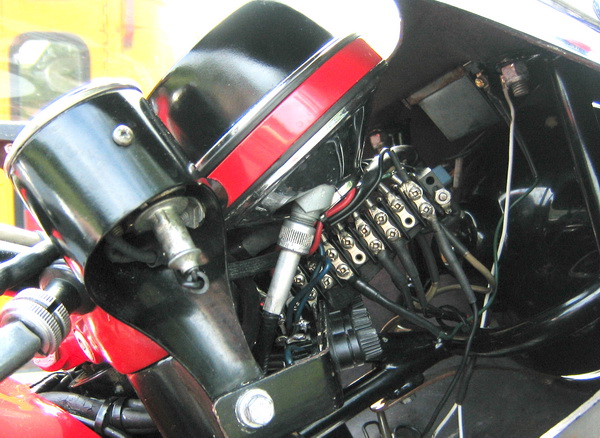

Laverda SF said:You don't want an acid lead flux - I use Hi-Po Paint thinner to clean the ends before I tin it.
Suggest Cybertoz becomes familiar with a soldering iron and learn how to wrap wiring harnesses and don't be afraid to Modify OEM crap.
sfcpiet said:And the cables fall off six months later...
Soldered joints are often too rigid to cope with vibes for long, and the remains of flux continue rotting the copper strands.
piet


blab said:Soldering is not recommended for situations where vibration occurs--sound familiar ?


cbertozz said:Off to be tested and wired by someone who knows next week
