seized Ceriani forks

  • Thread starter Thread starter 3patC
  • Start date Start date
3

3patC

Guest
I'm trying to dismantle a set of Ceriani forks from a 77 Jota. The bike has been out of use since 1984 and the forks appeared to be seized.
I've separated the stanchions from the sliders and removed the circlips from the bottom of the stanchions to try and remove the damper mechanisms which I believe are supposed to then slide out.
No chance, they wont budge.
I dont want to damage anything so has anybody got any suggestions of the best way to proceed?
Thanks Pat.
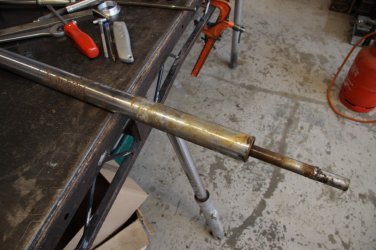
 
Not uncommon Pat, the aluminium piston "grows" inside the stanchion and jams up, I recently dismantled a very stuck set of Cherries and ended up machining out the lower aluminium sleve as it had become one with the leg. Only way to get them out is to give 'em a wallop, you can squirt a bit of WD40 or something down the legs to help ease the passage. When the pistons are out I hone the inside of the legs with a ball hone and machine new pistons.


   Keith.
 

Attachments

  • DPP_0001_1.JPG
    DPP_0001_1.JPG
    129.4 KB · Views: 34
I like the diesel idea Grant but I dont fancy sitting in my little flat with a minging bucket full of it for a week. Bought some of the deox-c that you recommended to deal with the discs and various other rusted parts though.

Keith I assume you mean knock the rod end upwards through the stanchion?

Thanks for the replies chaps.
 
Stick it overnight in the fuel tank of your next door neighbour's diesel car then...
 
Think I'd knock it out the other way.
                                                Dave
 
I might have this bit wrong Dave but if the lower sleeve is seized as Keith suggests I dont think it will exit from the bottom. Am I getting mixed up here?
 
Pat,

The damper assembly should exit to the top of the stanchion.  Screw a length of M10 threaded rod into the bottom of the damper rod, will help you nudge it past all the crud inside the stanchion without damaging the damper assembly itself.

piet
 
Does it matter if the alloy sleeve at the bottom is left seized in situ then Piet?
 
3patC said:
Does it matter if the alloy sleeve at the bottom is left seized in situ then Piet?

That's the sleeve that Keith mentioned, it sometimes needs to be machined out.  Brute force may do the trick, but if the stanchion is to be re-used, you should be careful when removing it. 

If it is seized, chances are that it has changed its' structure and might crumble to bits at some point.  Funny things go on in the murky depths of telescopic forks... oil change intervals weren't considered necessary just for the hell of it!! :D

piet
 
Back
Top