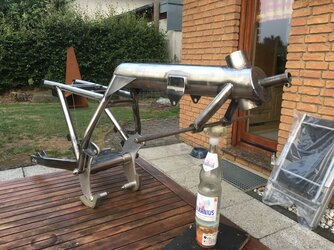
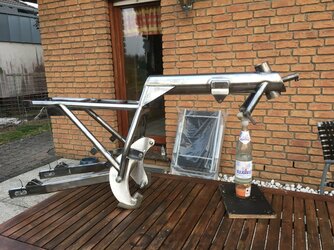
Just a few little things that no one seems to have thought about here.
Regardless of how great the welding looks or not, that is no guarantee of strength! OK, if it looks shit it is shit and if it looks good in "MAY BE" applies but the "may be" is very important!
As someone mentioned inox filler rods, yes this is great if you are not interested in the ultimate strength and integrity of the finished weld, but looks are more important. But, it will generally not be as strong as it should be and you should NEVER use inox fillers with most high carbon steels as carbon precipitation will weaken the weld enormously! Even though it may look good! (PS in my opinion the sexy rollcage X weld pictured is done correctly (other than the pinhole due to too fast power release) and with the correct filler wire as far as one can tell from a pic)
I used to be welding certified in ferrous and non ferrous metals for airplanes. (stopped biyearly re-certifying due to lack of time) and in numerous tests the welds were tested to distruction and always Xrayed etc, the welds were also tested for carbon embrittlement and other brittleness tests.
In my opinion the shock bracket broke, just as Lothars side stand bar, due to embrittlement of the material and / or weld , not penetration as you can see no elongation of material to suggest even a slight deformity before fracture.
If the frame is made in something like T45 or Reynolds 531 or latest spec 953 then it will surely need to be fully heat treated after welding to at least normalize it. This is why people like Harris use Brazing techniques that use far less heat and end up being superior to welds for many reasons and in many instances.
I do agree though that if you are selling items to the public that could endanger their lives if not done perfectly, you have a responsibility to make your quality controll of the highest standard! This should have never happened! Not even on a home build!
Julian
Regardless of how great the welding looks or not, that is no guarantee of strength! OK, if it looks shit it is shit and if it looks good in "MAY BE" applies but the "may be" is very important!
As someone mentioned inox filler rods, yes this is great if you are not interested in the ultimate strength and integrity of the finished weld, but looks are more important. But, it will generally not be as strong as it should be and you should NEVER use inox fillers with most high carbon steels as carbon precipitation will weaken the weld enormously! Even though it may look good! (PS in my opinion the sexy rollcage X weld pictured is done correctly (other than the pinhole due to too fast power release) and with the correct filler wire as far as one can tell from a pic)
I used to be welding certified in ferrous and non ferrous metals for airplanes. (stopped biyearly re-certifying due to lack of time) and in numerous tests the welds were tested to distruction and always Xrayed etc, the welds were also tested for carbon embrittlement and other brittleness tests.
In my opinion the shock bracket broke, just as Lothars side stand bar, due to embrittlement of the material and / or weld , not penetration as you can see no elongation of material to suggest even a slight deformity before fracture.
If the frame is made in something like T45 or Reynolds 531 or latest spec 953 then it will surely need to be fully heat treated after welding to at least normalize it. This is why people like Harris use Brazing techniques that use far less heat and end up being superior to welds for many reasons and in many instances.
I do agree though that if you are selling items to the public that could endanger their lives if not done perfectly, you have a responsibility to make your quality controll of the highest standard! This should have never happened! Not even on a home build!
Julian