speedometer and rpm cables

michipons

Hero member
Hi!

again finding little stones when reaching the final straight... :'(

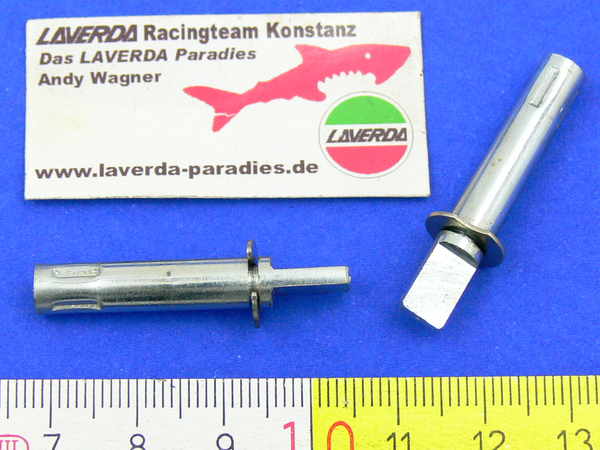
When I mount the speedometer cable, the nut touches the disc carrier, if I put it flat it doesn't with a clearance of less than a mm, but then is not tight... i don't have the old cable, so I don't know if I am doing something wrong or Wolfang provided the wrong cable?? I wouldn't believe this last question, BUT the rpm cable did indeed send it wrongly as is the square type, but my cylinder head has a kind of flat key hole, i have the old one and it looks different. What am I doing wrong?

Regards,
Miguel.

IMG_1248.JPG

IMG_1893.JPG

IMG_0703.JPG

IMG_0089.JPG

IMG_0384.JPG


ok, I can already answer my second issue myself, there is a separate terminal that fits the square transmission cable, I will have to try to remove the old and re-install or order a new one... I wonder why he didn't send it together already ::)
Miguel
 
michipons said:
ok, I can already answer my second issue myself, there is a separate terminal that fits the square transmission cable, I will have to try to remove the old and re-install or order a new one... I wonder why he didn't send it together already ::)
Miguel

That small adapter is not included with a new cable. It should pull off your old cable and slip right on to the new one. It should look like this photo attached.

Jim

18-60A.jpg
 
Yes thank you! I saw that a couple of minutes after wroting the question, but still don?t understand how to avoid the speedometer cable nut to touch the disc carrier...
 
Linish the corners off.
Its always a tight fit but giving the nut a bit of love with a linisher or even a file will sort it.
 
I didn?t have the feeling that those forks/speedometer are so tight with clearances, just the mudguard holders are so uneven that throw away a fine alignment of the forks... but anyway, liming a but the corner of the nut that fells beside the disc, is an obvious easier solution...

Another problem I?ve just seen, is that the speedometer cable is too short and the part that goes inti the instrument doesnt reach the gear... I will have to order a new one with longer cable, or cut it myself

Miguel
 
I would be ordering a new one, have never had luck cutting and modifying that type of cable. I don't know which model has a shorter cable than an SF.
 
Are the answers too this question real , shimwashers and linishing corners of it , this site is one of the funnist sites ever , makes me piss meself laughing , CARRY ON Lads your doing a grand job 😂😂😂😂😂😂 ,
 
John lord said:
Are the answers too this question real , shimwashers and linishing corners of it , this site is one of the funnist sites ever , makes me piss meself laughing , CARRY ON Lads your doing a grand job 😂😂😂😂😂😂 ,

So... what would be your idea?
Miguel
 
Tippie said:
have never had luck cutting and modifying that type of (speedo) cable.

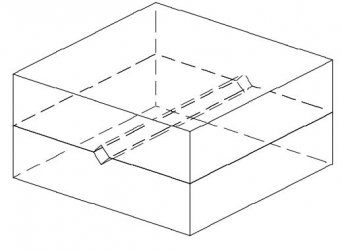
That's because you need a die to form the square shape at the end of the cable. I've drawn a picture of the one I made. I'd take a photo but I can't be bothered fossicking around in the shed to find it.

Put the round end of cable in the grooves between the two die halves and clamp them together in a vice or press. Release, turn the cable 90? and do it again. You may need to repeat several times to get a nice square section. When you have a nice square end that you're happy with, heat up the very tip of the cable until the ends of the individual cable filaments melt together. That'll give you a nice clean end that won't fray. If you make too much of a blob when fusing the end, you can file it back to square shape because it's now a sintered lump rather than individual cable wires. Job done.

I've also attached a pdf file of an engineering drawing that you can print and take to an engineering shop so they can make the 2 halves of the die for you. I haven't specified the plate thickness because it's not particularly important. Don't go thinner than about 10mm though.

If the engineering shop has the facility, ask them to case harden the business faces of the die. It'll still work if you don't harden it, but after several uses it'll start to get a bit beat-up.

If the machine shop doesn't harden it, you can do a bit of hardening yourself if you have an oxy acetylene set. Make a very acetylene rich flame so that when you play it over the die faces it'll leave a black sooty deposit. Then turn on the oxygen to make a normal blue in blue flame. Heat the die faces until all the soot is burned off, then quench the parts. Repeat the process a few times and the surface will end up hardened. Basically what it does is diffuse carbon into the surface metal so you end up with a thin layer of high carbon steel.
 

Attachments

you have got a shit cable
the hexagon at the wheel end is an imperial size that is a throwback from when Laverda used Smiths instruments, loosely speaking the hexagon should be about 16mm a/f I know that is a metric size but that spanner works and saves me digging around in the archive tools for imperial sizes for just one nut, is your hexagon 16mm? if yes then something else is not right.

generally there are three lengths of speedo cable, instrument on left as in 1200TS, 120 Jota, and (possibly) RGA, the next is the speedo on the right and then there is the RGS type with callipers behind the legs, the protrusion of inner cable and conduit is critical, the amount poking out at the speedo end is controlled by a thrust washer which is fixed, too much and you will bugger the speedo, too little and it doesn't engage, the wheel end is critical as well, it (obviously) must engage with any compressive forces on the inner cable, this end floats on the conduit as the forks compress and rebound, and must of course engage, but very often, it will work, until you cable tie the whole thing neatly (avoiding the possibility of it hooking and wrenching on the oil cooler) and then because any bending of the conduit effectively creates a larger dimension, the wheel end will disconnect, it is actually a critical thing and I spent money buying cables and having cables made, the problem was solved by the lucky gift of a NOS cable from a valued contact. My bike is TOG a 1200 TS with speedo on left.
CLEM
 
Yes, 15mm, as Paul says.

What I've done at the wheel end, if the angular edge of the nut fouls the disc, is to file away a tiny amount of the aluminium end of the outer cable.  Just enough to allow the flat edge of the nut to face the disc when tightened.  Removing too much might mess up the clearances that Clem refers to.

Tom
 
CLEMTOG said:
you have got a shit cable
the hexagon at the wheel end is an imperial size that is a throwback from when Laverda used Smiths instruments, loosely speaking the hexagon should be about 16mm a/f I know that is a metric size but that spanner works and saves me digging around in the archive tools for imperial sizes for just one nut, is your hexagon 16mm? if yes then something else is not right.

generally there are three lengths of speedo cable, instrument on left as in 1200TS, 120 Jota, and (possibly) RGA, the next is the speedo on the right and then there is the RGS type with callipers behind the legs, the protrusion of inner cable and conduit is critical, the amount poking out at the speedo end is controlled by a thrust washer which is fixed, too much and you will bugger the speedo, too little and it doesn't engage, the wheel end is critical as well, it (obviously) must engage with any compressive forces on the inner cable, this end floats on the conduit as the forks compress and rebound, and must of course engage, but very often, it will work, until you cable tie the whole thing neatly (avoiding the possibility of it hooking and wrenching on the oil cooler) and then because any bending of the conduit effectively creates a larger dimension, the wheel end will disconnect, it is actually a critical thing and I spent money buying cables and having cables made, the problem was solved by the lucky gift of a NOS cable from a valued contact. My bike is TOG a 1200 TS with speedo on left.
CLEM

Hi Clem,
Not sure what do you mean, those are the sizes of my hexagons:
IMG_6512.JPG

IMG_9457.JPG


Dellortoman,

Thank you very much for your tool pdf, very useful if I finally have to make a new inner cable. I would feel very comfortable doing it, because i would do it to my need, instead of risking ordering a new one with the same result... But, where to buy this inner cable to cut and shape to my needs? In addition, the part of the cable that goes to the wheel, has a little "stopper" pressed to the cable (see photo) how do you do that and where to buy that?

IMG_0169.JPG


Basically I can deal with the nut, finding a sweet position so that the flat area is facing the disc, or liming the corner, but the cable is too short, if it goes down to the stopper into the wheel, then the upper part is too short to enter the gearing of the instrument, so in any case, I will need a new cable, longer.  :'(

Miguel
 
"so in any case, I will need a new cable, longer."
And save yourself a lot of work. If you specify the length of the outer you need, the usual suppliers should be able to supply one that fits. Yours is a twin isn't it, so shouldn't suffer fouling with an oil cooler as Clem mentions.
All my Laverda speedo and tacho cables have been 15mm on the hex, and a knurled nut at the other end. It is frustrating that replacements do not copy the original, we find it on a lot of parts these days, "almost but not quite".
If you do need to shorten an inner, you do it on the lower end and leave the swaged bit attached at the upper end.
 
The outer (hose) is just perfect, just the inner is too short, it doesn?t engage both gearings at the same time... i?ve spoken with Wolfang, he just landed in Germany so he will send all the stuff next days, without long wait nor customs!😃
Miguel
 
michipons said:
In addition, the part of the cable that goes to the wheel, has a little "stopper" pressed to the cable (see photo) how do you do that and where to buy that?

IMG_0169.JPG

Yes, I forgot to mention the little stopper. No idea if you can buy  them anywhere. I just turn them up out of brass or aluminium on the lathe and then crimp them onto the cable with a pair of pliers. If you get that far, give me a shout and I'll make you a couple.

I think that little stopper goes to the top of the cable. It stops the inner cable slithering out if the bottom end comes undone from the wheel. I found that out to my cost on my Ducati one day. Speedo stopped working. I looked down and saw the bottom end of the cable swinging in the breeze. Stopped to re-connect it but the inner was gone. I went back along the road to find it, but never did. A complete new Ducati speedo cable was a stupid amount of money, so that's when I started buying universal speedo cable inners and cutting them to length.
 
CLEMTOG said:
you have got a shit cable
the hexagon at the wheel end is an imperial size that is a throwback from when Laverda used Smiths instruments, loosely speaking the hexagon should be about 16mm a/f I know that is a metric size but that spanner works and saves me digging around in the archive tools for imperial sizes for just one nut, is your hexagon 16mm? if yes then something else is not right.

The hex is 15mm a/f on a factory cable Clem.  It's always been a very tight fit, a 16mm hex will indeed foul the disc carrier on disc-equipped bikes.

A little bit of trivia, Smiths used mainly metric threads, as most of their pre-war designs were based on the french Jaeger instruments, the patents for which they eventually took over. Pre-war chronometric instruments often carry a Jaeger/Smiths logo on the dial. Post-war chronometric and magnetic instruments remained metric throughout. :D

I've also come across imperial-threaded nuts, always on aftermarket cables from manufacturers that failed to do their homework...

Thing that often crops up, the hex nuts are too long and/or the collar of the end fitting of the cable too thin.  The nut will then bottom on the speedo or tach drive connection, leaving the cable loose and flapping in the wind.

piet
 
Back
Top