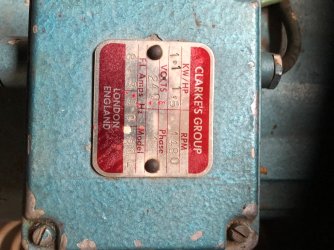
Disclaimer: “Naturally the motor and all components should be checked first, start and run windings, start switch, capacitor(s), and may as well do the bearings while it’s on the bench”

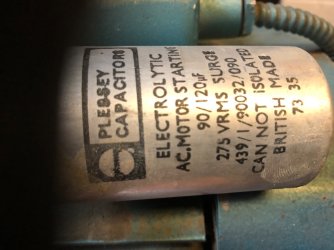
But if you want DIY, first look at the windings if you can see them through any ventilation holes, if the wire bundles seem to be two different colours - reddish and black, and it smells a bit like burnt varnish, then go and buy a new motor. Otherwise try a new capacitor anywhere around 90-120uf and see if it works. Capacitors don’t last forever, they rarely explode but generally loose capacity over time. Take the belts off to disconnect the compressor before you start testing. Difficult to be certain without it being in front of me on my bench, but if original, then this is a “start” capacitor which is only in circuit for a second to kick the motor off in the right direction, then the centrifugal switch disconnects it. If you don’t want to buy a new cap, you might have one about the same uF on another machine in your workshop that you can borrow for a quick test. It
must be a “Motor Start” capacitor to ensure correct voltage and specs, uF is less important for a start cap.
Important: if this doesn’t work, or if the motor runs but sounds grumbly instead of whirring, then you need an expert to dig deeper. Could be the start switch or one of the windings, and these days a new motor might be cheaper.
P.S. don’t leave the motor humming while stationary, or running and sounding like a sackful of wet arseholes, you’ve only got seconds before it burns out…