Tank sealant repair

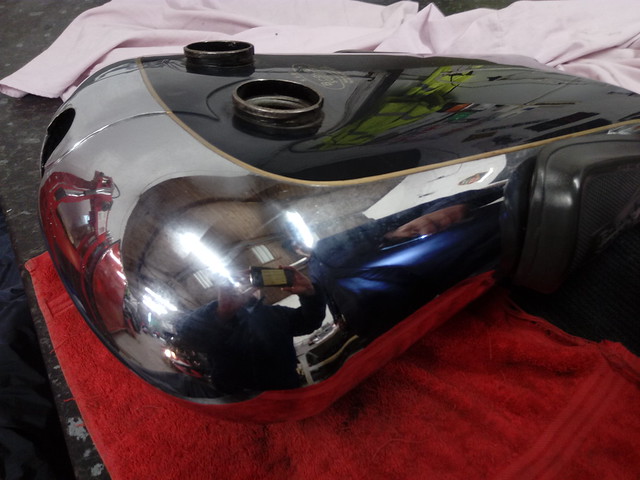
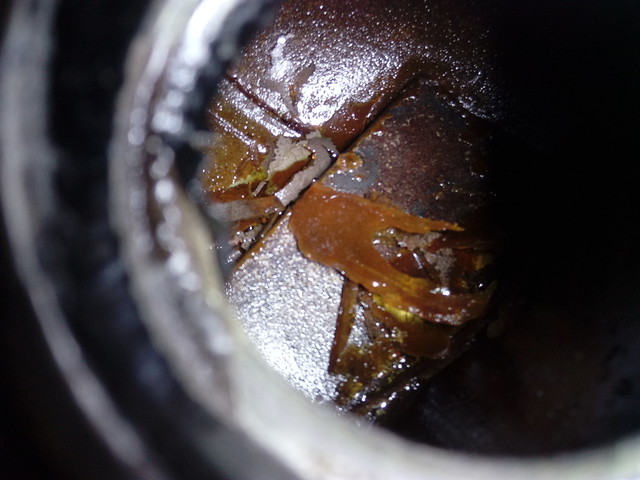
I am currently trying to remove a 30 year old polyester liner from a BSA tank, because it will have a major problem with modern fuels.
Using a German product called Fertan Sealeater, which allegedly dissolves almost anything. Funny enough, you can buy it in the UK, but not in Germany....I will let you know how it goes in the next couple of days.
The new liner will be Fertan Tapox.
A few years back, I lined my 1200's tank with a product called Kreem , it is still holding up fine despite modern fuels.
Have heard elsewhere that POR 15 is good.

With all tank liners, preparation is absolutely vital, the interior must be absolutely rust-free, clean, and well keyed.. A bit like painting, cutting corners doesn't work.

@ Jim, I know a retired pilot who made a forced landing on a beach in a light twin, because whatever the tanks had been sloshed with came loose and blocked the filters...
Fertan tapox is what I used on my Nuevo Falcone- finished coating looks like red oxide, turns petrol red and I found some red in the fuel taps- haven’t used bike since. I did all the research and this one looked good.
if you look at the Hirsch tank sealer it says ”for experimental aircraft only” so probably not in the rules to use on normal airplanes- but fine for your home built special that needs no approval ! Whoopee..
 
I am currently trying to remove a 30 year old polyester liner from a BSA tank, because it will have a major problem with modern fuels.
Using a German product called Fertan Sealeater, which allegedly dissolves almost anything. Funny enough, you can buy it in the UK, but not in Germany....I will let you know how it goes in the next couple of days.
The new liner will be Fertan Tapox.
A few years back, I lined my 1200's tank with a product called Kreem , it is still holding up fine despite modern fuels.
Have heard elsewhere that POR 15 is good.

With all tank liners, preparation is absolutely vital, the interior must be absolutely clean, and well keyed.. A bit like painting, cutting corners doesn't work.
 
If the inside of your tank is nice and rust free once prepped, don't use a sealer.
I do not see other indications for the use of a sealer than new fibreglass and pinholes.
You'll live to regret it otherwise.

Paul
 
Last edited:
I agree. Reckon I'd rather cut the bottom of the tank out and repair it than go the sealant route. Just seeing too many tales of woe on here about it. Sure, if done absolutely right, the results are acceptable, but if not - grief is you end result!
 
And when your tank is dented because the bike has fallen off its stand, you need to get the sealer out, take the dent out, repaint the tank and then repaint all the body work because it doesn't match.
You could have been riding and spending your money on women and wine during all that time.

Paul
 
Getting all the bad liner out of this Brough tank was a fun job - not the kind of thing you want to drop on the floor!

 
Sticking to a relatively good Metal Leaking tank repair - Other then welding.

After Washing with Detergents and say Mean Green - Then rattling Bird Shot mixed with Nuts and Bolts to descale followed by a Muratic Acid and Baking Soda treatment and rinse with Acetone you can use LePages 24 Hour Metal Epoxy to fix the obvious gas leaks (If it's a Crack, in the metal, always drill a round hole at both ends of the crack to prevent the crack from continuing).

That should fix your tank but if you feel need to line the innards of the tank I suggest you use 3M Zinc Chromate Epoxy Under Coat and swish it around in the tank.

Stay away from these so called metal leaking repair tank liners - They will really screw your tank beyond repair and you if your tank leaks gas, KA-BOOM and kiss your Ass Good-Bye.

When storing your ride in off season ensure to drain the tank fuels lines and carb bowls and spray them with RED Rust Check - I spray the whole of the bike with the stuff including all electrical contacts in to the cylinder bores (give the engine a spin without the plugs). Take the battery out and give it a charge about every month. If using a storage container put a bail of in there with her and cover the bike with linen bed sheets and do not forget to lower the tire pressure.
 
Last edited:
Update on removing old tank liners:
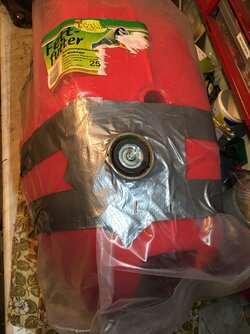
I used two old fuel taps to seal the tap bosses under the tank, and an expanding rubber drum sander to seal the filler neck. I had to turn it down a couple of mm to get it to fit. Worked a treat, not a drop of leakage.
As an additional precaution, I put the tank in a plastic bag, to avoid drops of Sealeater damaging the paint.
Then I poured 750ml of the Fertan Sealeater stuff into the tank, and left it for four days. I turned the tank regularly so that the entire interior came into contact with the Sealeater.
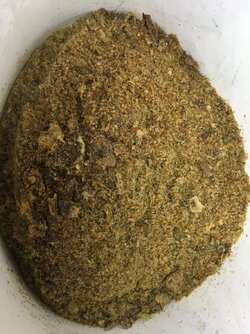
Result: the old polyester liner has been completely removed! To my surprise, it came out in moist granular form, I was kind of expecting a thick sludge... I suspect I didn't use enough of the Sealeater.
So it can be done.
Now I need to clean and de-rust the tank, then apply the modern seal.
I read somewhere that a mixture of Isopropyl alcohol(denatured alcohol) and Nitro thinners will also remove polyester liners, if you can't get hold of Sealeater you could give that a try. In Germany at least, both are readily available.
 

Attachments

  • IMG_1337.JPG
    IMG_1337.JPG
    159.1 KB · Views: 28
  • IMG_1338.JPG
    IMG_1338.JPG
    220.3 KB · Views: 29
How do you clear all the fine loose granular stuff completely from the tank? There are only three holes from which to extract whatever is in there, and I'm guessing the filler isn't a smooth exit when the tank is upside down (there must be a lip of sorts around the filler)?
 
The filler neck lip on the inside is very slight, so I inverted it, and flushed it out with water.
The fuel taps have bosses that protrude well into the tank, no use at all.
Paul's vacuum cleaner idea would also work.

Steve
 
I am currently trying to remove a 30 year old polyester liner from a BSA tank, because it will have a major problem with modern fuels.
Using a German product called Fertan Sealeater, which allegedly dissolves almost anything. Funny enough, you can buy it in the UK, but not in Germany....I will let you know how it goes in the next couple of days.
The new liner will be Fertan Tapox.
A few years back, I lined my 1200's tank with a product called Kreem , it is still holding up fine despite modern fuels.
Have heard elsewhere that POR 15 is good.

With all tank liners, preparation is absolutely vital, the interior must be absolutely clean, and well keyed.. A bit like painting, cutting corners doesn't work.

Hallo Steve,
I did also use Tapox (TX-10). But it's important, to follow the manufacturers instructions carefully – otherwise there’d be the risk, that it wouldn’t completely harden. Fertans advise on this is as follows:

You must have a gentle supply of low pressure air! This draught of air is required to have sufficient oxygen inside the tank. The epoxy resin can only harden in the presence of oxygen. At very high temperatures and / or very high humidity prolong this draught air process by about 50%.

Cheers
Jo
Jo,
Yes, I saw that in the instructions. Fortunately I have a big air compressor, so I plan to feed air in through the two fuel valves and out though the tank cap.
But thanks for the hint!
Gruß, Steve
 
Here is how I first noticed my [Bultaco] fiberglass tank was suffering - small pin holes through which dissolving resin was being liberated.

This is under the tank, in the 'arch' but the top surface did the same.
 
Back
Top