Findings during alpino rebuilds.
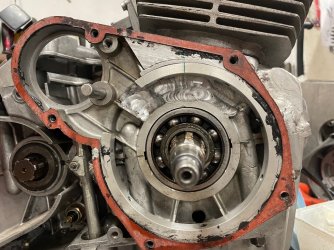
Having rebuilt the 350 laverda alpino and the 500, the 350 started up straight away - although when strobing I did find that the ignition was retarded and had difficulty aligning any of the marks. I had to advance the pickups to their most advanced position, however the bike ran and does run quite well and ticks over with very low rpm indicating the retardation. on the 500 it was very reluctant to start , in fact I only got a couple of fires/backfires . So I changed the position of the machining using the info given by Ross many years ago - this resulted in the bike firing straight up and settling to a nice tickover
So I may carry out the improvement on the 350 as the machining on the rotor appears to be exactly the same.
The difference in the position is substantial at 30 degrees. My feeling is that the machinist/draughtsman has had a miscommunication in laverdas works and milled the timing position the wrong way from the trigger position - clockwise when it should have been anticlockwise........ an easy misreading of the drawing, having been an Engineering draughtsman many years ago I can understand how this can happen.
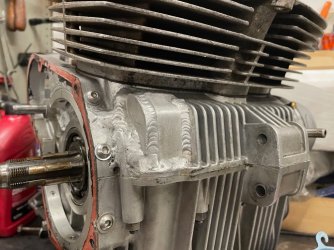
On the 500 when rebuilding I could not find an exhaust camshaft to replace my damaged one, but when measuring the inlet camshaft - which has the same casting number 14 the camshaft appears identical - so when reversed can become an exhaust camshaft - one just needs to block the tapping for the speedo drive which is now on the right.
This may be common knowledge, but could not find any references on the forum. The advantage is that inlet camshafts appear to be available from Thorne engineers and others whereas the exhaust camshafts are unavailable due to the propensity the Alpinos have for eating them........ especially on the offside.
While the engine was apart I also enlarged the oilway slightly to the offside exhaust camshaft as it is the last position in the flow of oil from the pump.
the other difference between the 350 and 500 is the throttle resistance - the 350 is light whereas the 500 - due to the pumper levers is quite stiff, as most classic bikes are treated somewhat more gently than when they were new the pumpers are maybe redundant for normal riding, I removed the operation from my 750 SF when I owned it and did not notice any difference in performance - apart from the heavy throttle suddenly becoming much lighter
The 500 is for sale if anyone has a hankering for one
Stu
Having rebuilt the 350 laverda alpino and the 500, the 350 started up straight away - although when strobing I did find that the ignition was retarded and had difficulty aligning any of the marks. I had to advance the pickups to their most advanced position, however the bike ran and does run quite well and ticks over with very low rpm indicating the retardation. on the 500 it was very reluctant to start , in fact I only got a couple of fires/backfires . So I changed the position of the machining using the info given by Ross many years ago - this resulted in the bike firing straight up and settling to a nice tickover
So I may carry out the improvement on the 350 as the machining on the rotor appears to be exactly the same.
The difference in the position is substantial at 30 degrees. My feeling is that the machinist/draughtsman has had a miscommunication in laverdas works and milled the timing position the wrong way from the trigger position - clockwise when it should have been anticlockwise........ an easy misreading of the drawing, having been an Engineering draughtsman many years ago I can understand how this can happen.
On the 500 when rebuilding I could not find an exhaust camshaft to replace my damaged one, but when measuring the inlet camshaft - which has the same casting number 14 the camshaft appears identical - so when reversed can become an exhaust camshaft - one just needs to block the tapping for the speedo drive which is now on the right.
This may be common knowledge, but could not find any references on the forum. The advantage is that inlet camshafts appear to be available from Thorne engineers and others whereas the exhaust camshafts are unavailable due to the propensity the Alpinos have for eating them........ especially on the offside.
While the engine was apart I also enlarged the oilway slightly to the offside exhaust camshaft as it is the last position in the flow of oil from the pump.
the other difference between the 350 and 500 is the throttle resistance - the 350 is light whereas the 500 - due to the pumper levers is quite stiff, as most classic bikes are treated somewhat more gently than when they were new the pumpers are maybe redundant for normal riding, I removed the operation from my 750 SF when I owned it and did not notice any difference in performance - apart from the heavy throttle suddenly becoming much lighter
The 500 is for sale if anyone has a hankering for one
Stu