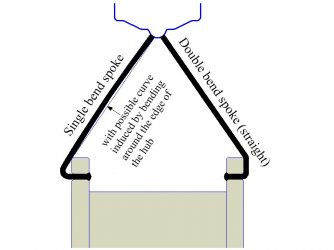
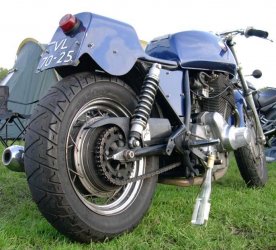
Dellortoman said:Incidentally, I had a look at my broither's re-spoked rear wheel on his 3C today (first time I'd seen it since I started this thread). It's a very neat job. The bloke who made the spokes put a double bend in the outer spokes. The first bend is the elbow bit where it goes through the (axial direction) hole in the brake drum. The second bend is to accommodate the curve the spoke has to make around the outer edge of the brake drum flange to achieve the correct angle to meet the centre of the rim. The original Laverda spokes didn't have this pre-bend in them, so they had to bend around the edge of the hub under their normal operating tension, which would have caused a point load on each outer spoke. It seems to me that the spokes will have an easier life if any bends they need are pre-formed rather than forced on them by wheel geometry.
?
For a spoke to be able to be strained to its limit it needs to be as straight as possible. The only bend should be at the hub, in the case of "normal" bent spokes. From this bend, the spoke should go straight to the point where it enters the rim, without the bore of the rim forcing the spoke to take another bend. Any bend between these 2 points will prevent the spoke from carrying its weight, a pre-determined fail point.
Real life might let you get away with this sort of bodge through excessive spoke guage or extremely short spokes, but in no way is it correct engineering practise! And not particularly clever either... :

piet