750 cam sprocket, shafts and rockers

Evan

Full member
Location
Texas
I just ground down the ends of 2- 9mm flare or "ringer" wrenches. Ready to loosen the cam sprocket nuts. Washers look more than locking washers. Should the outer edges of the lock washers be bent out slightly w/ a screwdriver? Or just go ahead and break the nuts loose?
The head was making a tapping sound before removal. There is nothing loose or anything to indicate play. Valves were 15 & 20 mm set before. Everything is tight though bearings are making a slight sound. Would that have been enough to make the tapping sound when running? The key has to come out yet. Flanges are tight...
 
Unless there is obvious movement between the left and right side cams I wouldn't pull it apart. Try grip each side and twist to detect any play. Vice grips on the tacho drive worm gear shaft protected by an alloy sleeve is a good way to grip the LHS. Of course if bearings need to be replaced it has to happen. The key only locates the two halves together. The press fit of the flanges onto the cams and the clamping pressure of the flanges to the cam chain sprocket hold everything in place. If you can source Schnoor washers these are far preferable to the 'star' serrated washers the factory used.

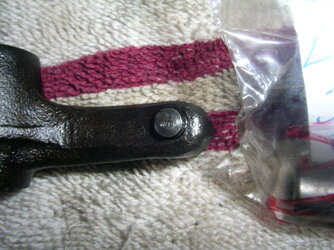
Tapping noise can be caused by sideplay in the rockers. Another chesnut is pitted valve stem ends that make accurate tappet adjustment almost impossible with feeler gauges.
 
Alternatively you can grind the stepped shoulder on the spindle very carefully - I mount the spindle in the lathe and have an adaptor to allow me to use my angle grinder as a poor man's tool post grinder. It does indeed make the engines a lot quieter, Thomas.
 
Just looked @ it again. Spindles & Rockers are out. No movement between the cams. It was definitley tapping & freaking me out. Thats why I took it off. When it ran @ about 1500 rpm I could almost get it quiet. Unless I am not looking at it the way I should I do not see any play in the cams. I"ll show it to a guy later today. If I would have left it tapping how long would it have lasted in miles?
 
Just looked @ it again. Spindles & Rockers are out. No movement between the cams. It was definitley tapping & freaking me out. Thats why I took it off. When it ran @ about 1500 rpm I could almost get it quiet. Unless I am not looking at it the way I should I do not see any play in the cams. I"ll show it to a guy later today. If I would have left it tapping how long would it have lasted in miles?
Did you check how much sideways movement the rocker arms had before you removed them? How do the tips of your valves and tappet screws look?
 
Soft spacers work too. I found brass ones the ex Raymakers works SFC.

Marnix
Not really. Depends...

Using brass in this application is asking for trouble, as is using mild steel spacer washers, wear qualities of both are pretty shitty. Bronze is softer than steel, but has superior wear qualities. Hardened (spring) steel or bronze thrust washers would be the correct items to use. Also depends a bit on the forces involved, thin bronze shims won't take the beating that hardened steel of the same thickness can take. Hardened steel shims are rarely ground flat, readily available ones are generally stamped fom spring steel sheet and are slightly dished, not ideal for this sort of adjustment and involves a bit of trial-and-error.

And now the "depends" bit. The rocker heel needs to be dead square to its (absolute cylindrical) axle and with no perceptible play, and the cam lobe surface also dead square to both its own and the rockers' axis, then you may get away with "soft" spacers, as there will be no resulting axial movement or load on the rockers. In this ideal world, there wouldn't be any clatter either, therefore negating the need for spacing in the first place. :rolleyes: Clatter in this area shows the rocker/cam geometry is far from ideal with quite a bit axial movement going on. Concave-worn valve stem tips can also cause axial movement of the rockers, guides will probably be shot as well in this case.

I would expect both the cams and rocker heels to have been designed to be ground square to their axes in production, but the wear and tear of the ages shows this is rarely still the case. Rocker axles are often worn, showing definite tapers at times (depending on how often they have been mis-placed/swapped around). This all ends up to clatter, which was probably not present in factory-new engines.

I have come across several engines with shimmed rockers, usually the shims were worn and battered beyond further use because non-hardened items were used.

piet
 
You often see those wavy type spring washers on rocker shafts to keep the axial movement of the rocker under control (I've seen them in car engines). Maybe they'd work OK on a Laverda twin.
 
Thackery washers I believe they're called, used in Bonnies and replaced by solid shimming to reduce drag as a hot up measure.
 
There isn't room for those spring types. From memory the spring head Ducatis used them, with a shim on the opposite side to locate the rocker arm axially. I often find that knocking the spindle in too hard (with the head heated up of course) causes the rocker arm to bind, so extract it very slightly, other times they go all the way in and there is too much axial play and need shimming, I go for as little as possible but not binding.
 
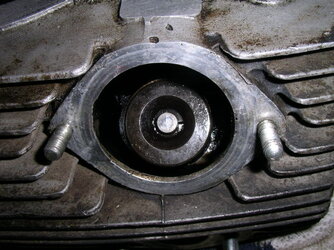
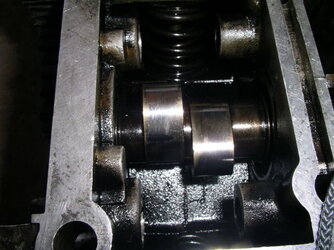
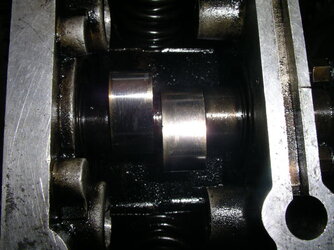
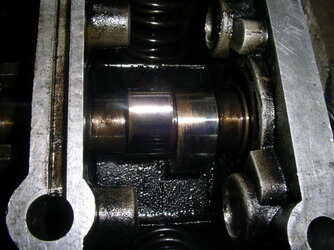
Pics.
 

Attachments

  • IMGP0187.JPG
    IMGP0187.JPG
    125.1 KB · Views: 45
  • IMGP0189.JPG
    IMGP0189.JPG
    117.5 KB · Views: 45
  • IMGP0190.JPG
    IMGP0190.JPG
    114.5 KB · Views: 43
  • IMGP0191.JPG
    IMGP0191.JPG
    112 KB · Views: 44
  • IMGP0192.JPG
    IMGP0192.JPG
    115.8 KB · Views: 43
  • IMGP0193.JPG
    IMGP0193.JPG
    120 KB · Views: 44
Can you still take photos of the treads of the rocker arms?

Valve stem end and cam look good at first glance.
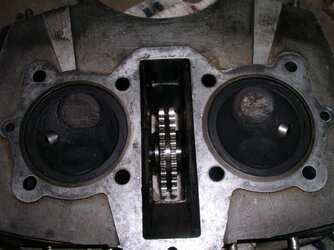
The extremely heavy pollution in the head is not good and not normal. Either an oil change was extremely excessive or something blows through (valve guide, piston). If the piston clearance in the cylinder is significantly too large, piston tilting can also produce unusually loud noises.

The dirty condition on the outside of the engine could indicate a somewhat negligent (pre-)owner.

Thomas aus LAU
 
More pics...Lost the keyboard a minute ago. Couldn't type. No I did not check for lateral play on the cams before I took them out. Did not know. Nothing mentioning that in the Grn Bk & nothing about washers. Bearings do have to come out. Cams show scratching. Grn Bk says grooves on cams must be replaced. If I run my fingernail over the scratches it does not stop my finger so I guess these cams are Ok. Only one valve tip has pitts. & then valve guides haven't gotten that far yet.
Question is can u measure space between cams & sides w/ feeler guage w/ Rocker Spindles out.? Then put appropriate washer size in?
 

Attachments

  • IMGP0195.JPG
    IMGP0195.JPG
    112.3 KB · Views: 39
  • IMGP0196.JPG
    IMGP0196.JPG
    115.6 KB · Views: 39
We need a foto from the flat side of the rockers who touches the cams.

Extrem much dirt/coal! The sealing surfaces look as if the engine was opened for the first time.
In this condition I would really check all relevant parts for wear and basically change the camshaft bearings and the easy-to-change outer crankshaft bearings.
I am afraid that pistons and possibly valves and / or valve guides will also have to be replaced here.

Thomas aus LAU
 
Last edited:
Your cams are definitely not trashed. You mention end play on cam, but you mean rocker arm I think, as the cam is located by the end covers. From the pics the cams look perfectly serviceable, and I doubt you will find the rocker arm flats destroyed, but put up a pic of them if you can. My practice is to polish both the lobes and the rocker arm flats on a buffing wheel. As Thomas says, you have to get the valves out and check the guides/valves/seats, and measure up the pistons and cylinders. High mileage SF are prone to very worn ring lands on the pistons, so check these also. Be very careful to make sure you have a good interference fit on the cam flanges when changing the bearings, they must be press fit, it is crucial that they are very tight, maybe someone can give a figure for you or and engineering shop to check yours. Laverdaparadies used to have flanges with different internal sizing for this. Unless you find something very wrong somewhere you are probably just up for a basic refurb of normal wear parts, but if this work is not done properly it can really cost in the long run. How many miles is on the bike? I can't remember if you have said before.
 
Back
Top