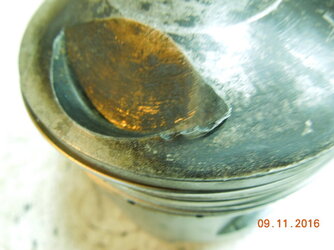
I've always wondered why Laverda rods are so susceptible to failure. Most people I've spoken with regarding rods venting the crankcase were adamant that the failure happened at low to medium revs, with little to no load on the engine. This coincides with my own "rod experience" when the LH rod of the 750 works engine decided it had had enough.

 www.cycleworld.com
I stumbled over this article, especially interesting is the bit about Allison V12s, I'm thinking this could be a cause for Laverda rods failing. In stock form, Laverda rods are quite sturdy and should get the job done, but many busted crankcases later, we all know they have their insufficiencies. Seems also that it's mainly old, worn engines that throw a rod, not low-mileage or freshly-overhauled engines. Worn crank bearings allow a lot of flex in the crank, I'm thinking excessive bearing clearance might add up to the condition explained in the article. Pre-damaged rods through hydraulic lock probably also play a large part in many failures, but that can't be all that is to it...
Any thoughts?
piet
Hollow Connecting Rods
Why did Honda fabricate hollow connecting rods for its 19,000-rpm F1 engine?
www.cycleworld.com
I stumbled over this article, especially interesting is the bit about Allison V12s, I'm thinking this could be a cause for Laverda rods failing. In stock form, Laverda rods are quite sturdy and should get the job done, but many busted crankcases later, we all know they have their insufficiencies. Seems also that it's mainly old, worn engines that throw a rod, not low-mileage or freshly-overhauled engines. Worn crank bearings allow a lot of flex in the crank, I'm thinking excessive bearing clearance might add up to the condition explained in the article. Pre-damaged rods through hydraulic lock probably also play a large part in many failures, but that can't be all that is to it...
Any thoughts?
piet


 The corrodori italiani had set you up nicely with a failure waiting to happen? Chi lo sa? Very innaresting thatit happened at 4000 ... we naturally assume rods go at suspersonic revs.


 Unfortunate, in any case though.