I need to reinstall an exhaust header stud that came out a while ago when the new exhaust was tried to be fitted. So I hear Anti-seize mentioned a lot, I expect I need to double nut the stud to wind it in but what's best practice, anti-seize on the stud that goes into the Head? Anything else to watch beyond stripping it or shaping it off? With luck, I will get the exhaust fitted correctly to the Atlas and go for a ride around the block.

You are using an out of date browser. It may not display this or other websites correctly.
You should upgrade or use an alternative browser.
You should upgrade or use an alternative browser.
Exhaust stud
- Thread starter Vince
- Start date

Vince,
Instead of using the double-nut method, source a sturdy dome nut (one-piece, not the type with the stamped-on tinny dome) and a bearing ball that fits inside it. Keep that in place with a small blob of grease, hey presto, you have an easy insertion tool for the stud! Thread in the stud with the dome nut and jerk the nut backwards when sufficiently tightened. No need to fumble around with 2 spanners and nuts.
HT anti-sieze on the stud is a good idea if you want to keep the stud removable in the future.
piet
Instead of using the double-nut method, source a sturdy dome nut (one-piece, not the type with the stamped-on tinny dome) and a bearing ball that fits inside it. Keep that in place with a small blob of grease, hey presto, you have an easy insertion tool for the stud! Thread in the stud with the dome nut and jerk the nut backwards when sufficiently tightened. No need to fumble around with 2 spanners and nuts.
HT anti-sieze on the stud is a good idea if you want to keep the stud removable in the future.
piet
Last edited:

Rob
Hero member
- Location
- Midlands, UK
Now that's a neat trick Piet! Thanks for sharing
Have you never wondered where that dimple on the end of some studs came from, Rob?Now that's a neat trick Piet! Thanks for sharing

I've made myself an advanced version of the dome nut using a bit of threaded hex stock (think an over-long nut) and a bolt inserted from one end. The bolt is rounded off at the tip and bears on the stud end. Got a set for all thread sizes used on our old clunkers.
piet


Again, check the adhesive specifications, were only a few high temperature adhesives for situations like the cylinder head of an air cooled motor. Think this has been covered prior, and newer data was more relevant than the data i had on hand here. Also there are a number of variants to copper type grease, usually price is an indicator of higher specifiction. j.
All I can say is that with common or garden blue Loctite, they don't come out with the nuts and neither do the valve cover studs on 750s.Again, check the adhesive specifications, were only a few high temperature adhesives for situations like the cylinder head of an air cooled motor. Think this has been covered prior, and newer data was more relevant than the data i had on hand here. Also there are a number of variants to copper type grease, usually price is an indicator of higher specifiction. j.
Paul
I have a laser-like focus when looking for bits, so off I go to my local Nuts and bolts place looking for Piets Dome nut, So focused a Laverda beginner would have noticed THERE 7MM and impossible to find locally. Bloody obvious with 30 seconds of thought. So I will use one of the other exhaust stud nuts to double nut the stud to put it in Not a wasted trip as I bought a few more bolts to replace some of those that are rusty on my bike. Plus I bought some rubber piping to go around the 2 sheets of Budareegar mesh on either side of the air filter.

piranha-bro2
Hero member
- Location
- Melbourne
Be careful using the brass nuts Vince. Might be OK - dunno. I wouldn't risk it. You should be able to buy HT steel in m7 for this purpose.
Marty told me it doesn't need bottoming HARD. I will take it easy with the poundage. The new stud came with a completely flattened spring washer, I was thinking stainless std washer against the finned exhaust gismo then a new spring washer and then the brass nut. What do you reckon? I don't have lights in my shed and it's drizzling rain so I have suspended play till the sun is out.

AJ
Senior member
- Location
- 38°33'00.0"S 177°55'00"E
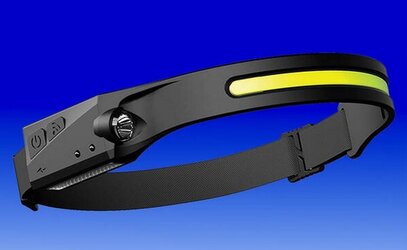
These USB headlamps are great for grovelling under motor vehicles. Could also be used to get home if the headlight fails.Marty told me it doesn't need bottoming HARD. I will take it easy with the poundage. The new stud came with a completely flattened spring washer, I was thinking stainless std washer against the finned exhaust gismo then a new spring washer and then the brass nut. What do you reckon? I don't have lights in my shed and it's drizzling rain so I have suspended play till the sun is out.
Attachments


The Sock
Hero member
- Location
- London, England
I much prefer these due to the all-round light. Recharges quickly but, sadly, you can't use it while it's charging. So I have two.These USB headlamps are great for grovelling under motor vehicles. Could also be used to get home if the headlight fails.

Tippie
Hero member
- Location
- Dr?bak, Norway
I use brass nuts on any exhaust stud, with a spring washer behind it, straight to the flange with no flat washer between, never had a problem. Stainless nuts are slippery and spring washers don't bite on them.Marty told me it doesn't need bottoming HARD. I will take it easy with the poundage. The new stud came with a completely flattened spring washer, I was thinking stainless std washer against the finned exhaust gismo then a new spring washer and then the brass nut. What do you reckon? I don't have lights in my shed and it's drizzling rain so I have suspended play till the sun is out.
I use brass nuts on any exhaust stud, with a spring washer behind it, straight to the flange with no flat washer between, never had a problem. Stainless nuts are slippery and spring washers don't bite on them.

And nip them up after a couple of heat cycles, the header gaskets tend to compress a fair bit.
piet
Ended up buying imperial brass hex bar, have 7m/m taps on hand, made my own exhaust stud nuts. Bit of a pain as being imperial a spanner to suit the brass nuts is required or my fallback the UK inspired "Metrinch" spanner kit, ie drives on the flats not the edges of a nut, very clever. Also made blind nuts with extra length, around 2,5 times major diameter. Having a lathe helps no end, or even if careful a bench drill press would work, FWIW.
Oh and if desperate Vince you can retap M6 out to M7 dependent on material or suitable M7 minor diameter drill to hand.
On poor eyesight, lots and lots of light is the best assist. j ** fortunate to have this kit here, near AU$300! paid a lot less 25 years ago..

Oh and if desperate Vince you can retap M6 out to M7 dependent on material or suitable M7 minor diameter drill to hand.
On poor eyesight, lots and lots of light is the best assist. j ** fortunate to have this kit here, near AU$300! paid a lot less 25 years ago..
Last edited:

andre g
Hero member
I just have one of this, but it is soo bright, awesomeI much prefer these due to the all-round light. Recharges quickly but, sadly, you can't use it while it's charging. So I have two.
View attachment 68483

Andy J
Hero member
- Location
- Isle of Man
AFAIK an 11mm spanner/socket fits the exhaust stud nuts.
11mm for the 7mm studs, 13mm for the 8mm ones.AFAIK an 11mm spanner/socket fits the exhaust stud nuts.
Paul
piranha-bro2
Hero member
- Location
- Melbourne
My (was) small valve SF - head bought to allow significant rework of port shape - had 7mm ex studs. Didn't know they'd changed to 8mm. Figured i may as well up them to 8mm to match my big valve head and ex flanges and add a little strength.