
You are using an out of date browser. It may not display this or other websites correctly.
You should upgrade or use an alternative browser.
You should upgrade or use an alternative browser.
Ignition flange puller
- Thread starter olly
- Start date


Of course the threads can be used, but the factory puller is just so much less fiddly. By the time you thread the 2 screws through the puller and into the flange, or through the flange against the casing, the factory puller has the flange on the bench. No big deal for the hobby wrencher, but a great help for the pro.I'm told the puller to remove the "flange (retaining automatic spark advance)" has hooks on it.
Any reason why using the screw holes circled is a no no?
Thanks
piet
Of course the threads can be used, but the factory puller is just so much less fiddly. By the time you thread the 2 screws through the puller and into the flange, or through the flange against the casing, the factory puller has the flange on the bench. No big deal for the hobby wrencher, but a great help for the pro.I'm told the puller to remove the "flange (retaining automatic spark advance)" has hooks on it.
Any reason why using the screw holes circled is a no no?
Thanks
piet

CLEMTOG
Hero member
If you are an ILOC member in the UK, you can borrow the correct puller from the tool library, if you are commuting distance to TN147LS in UK, prorfile on this new fangled forum system dont show me your location) then you can bring your engine (or bike on trailer/in van) over to me and use my factory tool, recently putchased from a useful contact who as an ex dealer and had two of them!
CLEM
CLEM

phil37
Hero member
- Location
- Lincolnshire


Tippie
Hero member
- Location
- Dr?bak, Norway
I have always got it off with two long screws into the holes and just grab them with my hands or two pairs of pliers and wriggle it off.

pf1
Hero member
- Location
- Portsmouth UK
I've just taken all that gubbins off my latest SF2 acquisition, it all came apart without any problem at all, didn't even know you needed a puller. However the rest of the engine is another story altogether, it is totally rusted up inside.

Exmoor beast
Hero member
- Location
- Minehead,Somerset, ENGLAND OF COURSE
This is your Brown project- worse or better than you thought?Doable?I've just taken all that gubbins off my latest SF2 acquisition, it all came apart without any problem at all, didn't even know you needed a puller. However the rest of the engine is another story altogether, it is totally rusted up inside.
I have always got it off with two long screws as well.I have always got it off with two long screws into the holes and just grab them with my hands or two pairs of pliers and wriggle it off.
Sometimes, I grab them with my hands.
( You get a sermon on the ILOC forum for a mechanical comment like that.)
Paul
pf1
Hero member
- Location
- Portsmouth UK
It will have to go to the back of the queue but I'll sort it, sometimes you are lucky and sometimes notThis is your Brown project- worse or better than you thought?Doable?

Magnetic metal filings on the oil (black treacle) - not tons but big enough and nasty enough.Uh oh - only a litre of syrupy oil in there - will update once he's looked in the strainer.
Might get him to keep taking it apart, clean up all the cases and gasket surfaces etc then send it off to Keith up in Scotland or someone similar to repair and rebuild.
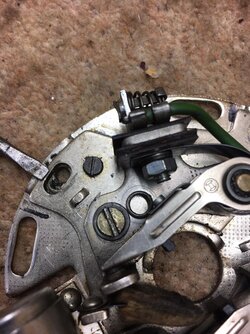
He's figuring out a way to fix these weedy and stripped threads at the moment - DPO stuffed them. I'd like him to weld up and re-drill but he's not keen.
Attachments

piranha-bro2
Hero member
- Location
- Melbourne
Not uncommon - 45 years of fiddling and threads in that thin metal base often give up the ghost. Weld and rethread is easy and a good idea. Strip the whole donk and sus what's required. It could well be that removing surface rust and replacing all roller and ball bearings will get it usable - and pray that the big ends don't have rust in them. Rebuilding an SF crank isn't rocket science but will hurt the budget of anyone who can't do it themselves (many!).
He's figuring out a way to fix these weedy and stripped threads at the moment - DPO stuffed them. I'd like him to weld up and re-drill but he's not keen.
