

Thomas aus LAU
Hero member
After several questions to the "Porsche brake-pads" for the Laverda drum-brakes following informations:
Some members of the LCO also drive (semi-) races.
We tested for a long time until we found a solution, with which you can get extremely effective drum brake.
Maximum braking force by little required effort and the brake can be dosed very well.
We take the brake pad-material that is normally used in the old Porsche drum brakes. We let them glue onto the original brake-shoes.
There are also thicker pads with 4.5, 5, or 5.5 mm if you have a twisted brake drum or you want to turn the pads off.
depending on the condition of your drum-brake.
What to do:
1. If necessary we clamp the drum in a rotary table on the milling machine to mill the drum inside round. You although can use a big late for this job.
2. First clean all bearings of the axles / levers and lightly lubricate them with heat-resistant grease.
3. Put your braking plate with the new brake pads into your drum.
4. Instead of the cable use a long thread to bring the pads firmly to the drum.
5. Mark this position on the thread
6. Then the braking plate with the brake pads come even on a rotary table pretensioned, till the marked position on the spanning thread, so that they would normally rest against the drum.
In this position, the pads will be milled round till the diameter of your inner drum.
7. To arrive the maximum we repeat now Step 3-5
8. Each brake-pad must be bevelled slightly on both narrow sides with a file or belt sander.
9. When assembling, do not yet tighten the tension strut to the braking plate. The wheel axle must also not be firmly tightened.
10. In this position, pull the brake lever firmly (let it) or fix it to the throttle with a rubber strap.
11. Only now first tighten the wheel axle and then the brake anchor.
12. Now lift the front wheel slightly and adjust the brake cable so that the wheel just turns.
13. The cable should be remarkable smaller than the inner Diameter of the outer hose and should be well oiled (e.g. with GGV).
14. Don't forget to lubricate the upper nipple at the end of the brake cable in the brake lever (just like with the clutch lever)! = no more broken niple
15. Finished - you will no longer recognize your old brake
Example for prices including removing the old brake pads:
Quality BK5387
Length 230 mm
Width 30 mm
Thickness 4 mm
Unit price (1 piece) 15.70 EUR + tax + shipping
contact: bremsen-schoebel.de
https://www.laverdaforum.com/gallery/albums/userpics/10086/270/Brake_Pads_Laverda_Backen_PL2012.pdf
https://www.laverdaforum.com/gallery/albums/userpics/10086/270/Bremsen-Schoebel_Imagebroschure.pdf
Best Thomas aus LAU
Attachments
Last edited:


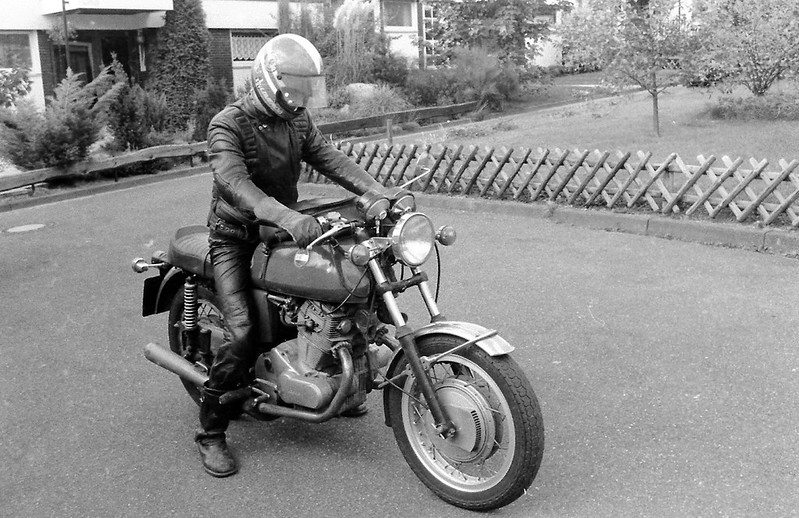

 . No doubt i could have improved the super freni but never had the skills or money back then. I must say, it was a joy to be able to squeeze that front brake lever with two fingers and make the front tyre shriek and start to lock, but with excellent feel and control. Not so good as things wore - the grabbing you complain of Vince, became pretty bad when new linings were in order. Sevo effect as the angles of the cams operating the shoes became more (or less?) acute with wear.