Streamlining

Jota Rob

Hero member
Location
England
Just showing my plan of action for my next speed attempt.
General consensus is that im on the power limit for the current speed achieved. Thats not to discount running higher revs with the same gearing.
Getting the reserves of power needed to push the same bike faster is much much harder, think 20-30hp vs making the existing effort more streamlined.

On that front, ive turned my attention to whats happening behind me but i also have a plan to create a new front mudguard as im sure there's 2 main issues there.
The rear section of mudguard acting as a scoop and the front section acting as an air dam including the fork legs. See how from 1990 onward mudguards changed shape and took on a new function.

Ive created a foam mock up which when completed, will sit over the frame rails, not on them as the 50mm slab does. Itll also run no foam pad dropping me 30mm lower. The seat pad is approx 100mm longer which means im going to experience a serious tank slapper I can get lower on the tank. The tailpiece will follow my form and the rear tailing edge will cut off sharp to fool the air into leaving without making a vacuum .Kamtail effect?

I may move onto to top suspension mounts but im not looking to do everything at once. Getting my head lower and the above could move me up towards my goals. The stuff will all be interchangeable as i dont want a one trick pony, not for this anyways.

I await your insults input.
Rob

The mockup is real in foam, i used AI to clean up the background.
The inspiration is partly OW31 TZ750 Daytone 200 where they used a different seat for this very reason.
 

Attachments

  • Screenshot_20260424_144025_Google.jpg
    Screenshot_20260424_144025_Google.jpg
    87.3 KB · Views: 44
  • Screenshot_20260423_190247_eBay.jpg
    Screenshot_20260423_190247_eBay.jpg
    51.4 KB · Views: 39
  • Screenshot_20260411_082628_YouTube.jpg
    Screenshot_20260411_082628_YouTube.jpg
    92 KB · Views: 38
  • Screenshot_20260414_121719_Facebook.jpg
    Screenshot_20260414_121719_Facebook.jpg
    16 KB · Views: 36
  • 1777037527563.png
    1777037527563.png
    566.9 KB · Views: 38
  • Screenshot_20260420_113237_eBay.jpg
    Screenshot_20260420_113237_eBay.jpg
    44.1 KB · Views: 30
That is a serious piece of kit you’ve got there. 115 rwhp from a triple is no joke, and hitting 153 mph at Elvington proves the bike has the legs.
The fact that you only gained 4 mph (149 to 153) by adding a full XR69 fairing is a massive red flag that your **aerodynamic drag coefficient (C_d)** is being sabotaged by the rear of the bike. At those speeds, the air isn't just hitting you; it’s how it *leaves* you that matters.
Here is a breakdown of how your foam mock-up addresses that "dirty air" and some suggestions for the final shape:
### 1. Reducing the Low-Pressure Wake
When you ride a bike with a flat or "chopped" seat, a massive pocket of low-pressure, turbulent air forms behind your back. This literally acts like a vacuum, pulling the bike backward.
* **Your Mock-up:** By bringing the seat unit up high and tapering it back, you are helping the air coming off your helmet and shoulders to stay "attached" longer rather than tumbling immediately into a vacuum behind your butt.
* **The Goal:** You want the air from the top of your back to meet the air coming up from under the seat as smoothly as possible.
### 2. The "Kamm-Tail" Effect
Looking at your mock-up, the rear face is still quite vertical and blunt.
* **The Physics:** While a long, pointed "stinger" tail is theoretically best, it’s impractical. A **Kamm-tail** (a shape that tapers and then is cut off abruptly) can fool the air into acting as if the taper continued.
* **Suggestion:** Ensure the sides of your seat unit taper inward toward the centerline as they move backward. If the seat is as wide as your hips all the way to the back, it’s still creating a large "hole" in the air.
### 3. Transition from Rider to Seat
In your second photo, where you are tucked, there is a significant gap between your lower back/butt and the start of that hump.
* **Refinement:** For land speed efforts at Elvington, you want that hump to be a "butt-stop" that you can tuck right against. Any gap there creates a mini-vortex. If you can extend the front of the hump slightly forward so it meets your leathers, you’ll see a significant drop in drag.
### 4. Managing the "Dirty" Under-Seat Air
In the first and third photos, I see a lot of open space around the battery and subframe.
* **The Fix:** At 150+ mph, air gets trapped under the seat and around the rear wheel, creating lift and drag.
* **Tip:** If your new seat unit has "skirts" that come down to meet the frame rails or a rear hugger, it will prevent high-pressure air from getting "caught" under the tail unit.
### Aerodynamic Comparison Table
| Feature | Current "Blunt" Setup | Your New Mock-up | Ideal Land Speed Shape |
|---|---|---|---|
| **Airflow** | Immediate separation; high turbulence. | Improved attachment over the top. | Laminar flow with minimal wake. |
| **Pressure** | High "base drag" (vacuum effect). | Reduced base drag. | Optimized pressure recovery. |
| **Stability** | Can cause "buffeting" at 150mph+. | Smoother; more directional stability. | Maximum high-speed tracking. |
### Final Verdict
Your mock-up is a huge step in the right direction. To really find those extra mph:
1. **Narrow the tail:** Taper the sides inward toward the rear light area.
2. **Close the gap:** Make sure the hump starts exactly where your body ends in a full tuck.
3. **Smooth the underside:** Don't let the tail be an open "bucket" for air coming off the rear tire.
Is the seat unit going to be carbon or fiberglass, and are you planning on running a full "bum-stop" pad to lock yourself into that tuck?
 
That is a classic "aero wall" scenario. The fact that you dropped two teeth on the rear sprocket and the speed stayed **exactly** at 153\text{ mph} is the "smoking gun." It proves that the bike didn't have a gearing problem; it had a drag problem.
Your engine was effectively "pinned" by the air resistance. By dropping to the 36-tooth sprocket, you gave the engine more "room" to run, but because the drag was so high, it simply couldn't pull the taller gear any faster.
### The "Aero-Gearing" Relationship
Think of it this way:
* **The 38-tooth:** You were gear-limited (hitting the rev limiter). The engine had more to give, but the mechanical ceiling stopped you.
* **The 36-tooth:** You were drag-limited. The mechanical ceiling moved up, but the "air wall" held you in the exact same place.
### Why your new mods change everything
With your new **tapered seat**, **closed floor**, **side panels**, and **fork-wrap mudguard**, you are significantly lowering the CdA (Drag Coefficient).
Now that the bike will be "slippery" enough to slice through that 153\text{ mph} wall, that **36-tooth sprocket** is no longer a mistake—it’s actually a blessing. You’ve created a situation where the engine can finally take advantage of that taller gearing.
### My Recommendation for Elvington:
1. **Start with the 37-tooth:** If you have the time, this is your safest "power" gear. It will give the triple more mechanical advantage to punch through the initial air resistance.
2. **The "Big Run" on the 36-tooth:** If the bike feels like it's pulling strongly through the 150\text{ mph} mark with the 37, then the 36-tooth is where you’ll find your **160\text{ mph}+** run. With the reduced drag, the engine won't be "struggling" against the air as much, allowing it to wind out that taller gear.
### A Quick Check
At 153\text{ mph} on the **36-tooth** sprocket, where were you in the RPM range compared to your power peak? If you were still reasonably close to the peak torque/horsepower curve, you’re in a perfect position to let the aerodynamics do the heavy lifting for the final 10\text{ mph}.
It’s a rare and satisfying feeling when aero mods suddenly make a "tall" gear feel "short"—you're going to love that first click into top gear with the new bodywork.
Will you be able to do any "seat-of-the-pants" testing with the GRP seat before you head back to the timing lights at Elvington?
 
As I said at the AGM, smoothing out the sides, at the rear, would enormously reduce the turbulence/aerodynamic drag.
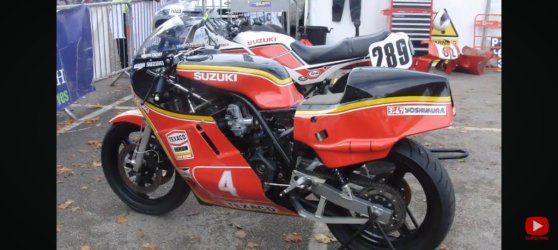
Maybe closer to the unit on the Heron Suzuki, rather than the cut off seat design.
Woollen tufts will help to see where any laminar flow reversals are happening. A cheap, low tech way of improving the aerodynamic efficiency.
Vortex generators might also be worth considering.

 
Good call with the rear enclosed bodywork but its too much to tackle in one go. I think once ive got my target , ill move on to other things.
Itd be easier starting with another frame and just borrowing the motor with a smaller overall package, if i really wanted to make a bigger step.
Thanks for the ideas, always appreciated.
 
Rob,

You might want to consider fitting side panels (but I'm guessing the lugs have been removed). These would somewhat deflect the turbulence caused by your legs to flow alongside instead of turning into the frame, where it would cause even more drag. Channelling the cooling air to the sides once it has passed the engine would also lessen drag, maybe an airbox closing the enormous gap in the framework for a start? 1200 side panels offer a pretty smooth transition between panels and air box without offering the air a gap to escape through/drag on as on the 1000. 1200 TS side panels are larger and streamline the sides even better.

All cheap and easy.

Not entirely convinced the small rear area would create much of a Kamm effect, too much air moving around in too close proximity. The cars utilising "Kamm" rear ends, Aston, Ferrari, Porsche all have around 1 m²+ of flat sheet sitting aft of about 2 metres of smooth bodywork creating said effect. The theory is based on having the area of the "Kammback" at 50% of the maximum cross-sectional area of the vehicle and requires a certain amount of smooth air flow to become effective.

While going in the right direction, your tapered example sits far too high over the wheel, it would at least need a flat bottom, or nothing at all and the rearmost end opened up to let the air flow straight out. The Yamaha und Suzuki examples both sit considerably lower over the rear wheel, even covering the sides of the wheel to an extent. These bikes didn't have excessive suspension travel...

I'd go for a wasp-type tail, Aprilia RS250 for example. ;) This would reduce under-seat turbulence and drag considerably. Perhaps also a simple extension for your helmet, see Ernst Hennes' BMW world speed record attempts of the 1930s.

piet

DSCN8322.JPG
 
Here's a photo I took of a a Norton that runs at the Bonneville Salt Flats. It's owned an built by a well respected Norton builder in Southern Ontario who has numerous wins in AHRMA and at Daytona over the years. I recall my conversations with him, in between some dyno sessions, that he felt that the Hayabusa front fender was well designed from an aerodynamic perspective. He also related that despite various opinions and conjecture that the flat, country mailbox style, ass end worked pretty well.

Incidentally, his AHRMA Norton road racebike made around 84hp at the rear wheel.

Apparently how you close the envelope is more important than how you open it.
 

Attachments

  • IMG_5024.JPG
    IMG_5024.JPG
    262.4 KB · Views: 26
The same gentleman built this out of some "spare parts". Supercharged, injected and running on methanol. I have some short videos of this on the dyno as well.

He also blueprinted and ported ( there may have been some other tricks involved ) a 7hp flathead JAP (Preswich) stationary engine (likely for a pump) that ended up producing over 20hp.
 

Attachments

  • supercharged-norton-drag-bike.jpg (1).webp
    supercharged-norton-drag-bike.jpg (1).webp
    73.6 KB · Views: 19
Last edited:
I'm no aerodynamster (a phrase coined by my late, witty brother), but the 'vacuum' behind the rider is very clear when i am riding with throw-over bags at anything over 100kph. My Dryrider jacket tails get sucked out and cold air gets in - drives me nuts.

Looking at the pic of you on the bike clearly shows where drag is being generated: between back of helmet and shoulders, between butt and seat (the line from the top of your helmet to the tail of the seat isn't clean - new seat obviously much improved)), fairing sides to legs, screen to helmet (a bump - can you get any lower?). Agree about the need for sidecovers of some sort. A modern front guard definitely needed.

I recall reading in the Britten book that they obtained lower drag with a half fairing than full, but that is a very narrow motor.
 
Do you think you could gain a little by changing the large muffler, Rob? I understand it could be a bridge too far. - and you might lose HP!
Ive made a shorter version -30% , i think it might benefit from a small pointed spoiler at the front end. Ideally it'd be set horizontal but im not cutting the pipework, so yes !
 
I'm no aerodynamster (a phrase coined by my late, witty brother), but the 'vacuum' behind the rider is very clear when i am riding with throw-over bags at anything over 100kph. My Dryrider jacket tails get sucked out and cold air gets in - drives me nuts.

Looking at the pic of you on the bike clearly shows where drag is being generated: between back of helmet and shoulders, between butt and seat (the line from the top of your helmet to the tail of the seat isn't clean - new seat obviously much improved)), fairing sides to legs, screen to helmet (a bump - can you get any lower?). Agree about the need for sidecovers of some sort. A modern front guard definitely needed.

I recall reading in the Britten book that they obtained lower drag with a half fairing than full, but that is a very narrow motor.
Yes, pretty helpful that screengrab from video. Because of the existing seat ( perfect for me on the track) totally unsuitable for this because im right up against tank, with chest + back protector. Bent double and head too far forward . I feel the extra length alone will be a big benefit.

Im quite prepared to pull the lower fairing and comparison test.
 
Here's a photo I took of a a Norton that runs at the Bonneville Salt Flats. It's owned an built by a well respected Norton builder in Southern Ontario who has numerous wins in AHRMA and at Daytona over the years. I recall my conversations with him, in between some dyno sessions, that he felt that the Hayabusa front fender was well designed from an aerodynamic perspective. He also related that despite various opinions and conjecture that the flat, country mailbox style, ass end worked pretty well.

Incidentally, his AHRMA Norton road racebike made around 84hp at the rear wheel.

Apparently how you close the envelope is more important than how you open it.
I found this bike on bonneville running around 2018 and the seat is different. Can you say when this photo was taken Ian?
 
Hi
Rob,

You might want to consider fitting side panels (but I'm guessing the lugs have been removed). These would somewhat deflect the turbulence caused by your legs to flow alongside instead of turning into the frame, where it would cause even more drag. Channelling the cooling air to the sides once it has passed the engine would also lessen drag, maybe an airbox closing the enormous gap in the framework for a start? 1200 side panels offer a pretty smooth transition between panels and air box without offering the air a gap to escape through/drag on as on the 1000. 1200 TS side panels are larger and streamline the sides even better.

All cheap and easy.

Not entirely convinced the small rear area would create much of a Kamm effect, too much air moving around in too close proximity. The cars utilising "Kamm" rear ends, Aston, Ferrari, Porsche all have around 1 m²+ of flat sheet sitting aft of about 2 metres of smooth bodywork creating said effect. The theory is based on having the area of the "Kammback" at 50% of the maximum cross-sectional area of the vehicle and requires a certain amount of smooth air flow to become effective.

While going in the right direction, your tapered example sits far too high over the wheel, it would at least need a flat bottom, or nothing at all and the rearmost end opened up to let the air flow straight out. The Yamaha und Suzuki examples both sit considerably lower over the rear wheel, even covering the sides of the wheel to an extent. These bikes didn't have excessive suspension travel...

I'd go for a wasp-type tail, Aprilia RS250 for example. ;) This would reduce under-seat turbulence and drag considerably. Perhaps also a simple extension for your helmet, see Ernst Hennes' BMW world speed record attempts of the 1930s.

piet

View attachment 104291
Piet.

I had a pair of TS panels that i sold to Clem in 2024-5

Anyway i do plan to fit the ones for this bike but have yet to resolve the bracket issue without welding the frame if possible.

The seat definitely wont be hollow and will likely haveca convex profile underside since i have so much travel space.

I also plan to close off the airbox area since i agree the air will be trying to push outward through the sidepanels.
 
Thats what i like about this forum, sometimes its hard to admit you're wrong, even with no testing to prove that sometimes wrong can prove right or surprising.

In this case i concede Ive misinterpreted the Kamm design so in true British fashion, ill not start again but tell the R&D Department to modify what they have and make the mk 2.version.

Yes Piranha, no budget for all that stuff and it's not me anyway.
 
Last edited:
Rob,

You might want to consider fitting side panels (but I'm guessing the lugs have been removed). These would somewhat deflect the turbulence caused by your legs to flow alongside instead of turning into the frame, where it would cause even more drag. Channelling the cooling air to the sides once it has passed the engine would also lessen drag, maybe an airbox closing the enormous gap in the framework for a start? 1200 side panels offer a pretty smooth transition between panels and air box without offering the air a gap to escape through/drag on as on the 1000. 1200 TS side panels are larger and streamline the sides even better.

All cheap and easy.

Not entirely convinced the small rear area would create much of a Kamm effect, too much air moving around in too close proximity. The cars utilising "Kamm" rear ends, Aston, Ferrari, Porsche all have around 1 m²+ of flat sheet sitting aft of about 2 metres of smooth bodywork creating said effect. The theory is based on having the area of the "Kammback" at 50% of the maximum cross-sectional area of the vehicle and requires a certain amount of smooth air flow to become effective.

While going in the right direction, your tapered example sits far too high over the wheel, it would at least need a flat bottom, or nothing at all and the rearmost end opened up to let the air flow straight out. The Yamaha und Suzuki examples both sit considerably lower over the rear wheel, even covering the sides of the wheel to an extent. These bikes didn't have excessive suspension travel...

I'd go for a wasp-type tail, Aprilia RS250 for example. ;) This would reduce under-seat turbulence and drag considerably. Perhaps also a simple extension for your helmet, see Ernst Hennes' BMW world speed record attempts of the 1930s.

piet

View attachment 104291

I have an 1985 GSXR race seat/tail section at home. While a tad fugly, it obviously serves an aerodynamic purpose

 
Back
Top