stevepm2011
Hero member
- Location
- Cologne, Germany
I thought this tip might help someone sooner or later:
After a couple of frustrating hours trying to extract my 1200 TS wheelbearings by conventional means, and buggering my favourite Rawlbolt extractor, I was forced to resort to a combination of violence and low cunning. (Having grown up in the bush, I have a lot of experience of both.)
Step 1:
remove the rubber seal from the outside of the offending bearing, wipe away as much grease as possible. This prevents a really bad smell.
Step 2:
find your oxy acetylene torch, goggles, brazing rods and flux
Step 3:
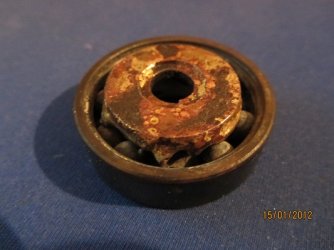
find a washer that has an OD about the same as the diameter of the inner race of the wheelbearing, and the smallest possible hole in the middle. Any old steel washer will do.
Step 4:
rough up the outer face of the wheelbearing inner race a bit: an air grinder or Dremel tool or similar with a grindstone is great. Sandpaper will probably work OK, with a bit of effort.
Step 5:
braze the washer to the outer face of the wheebearing. This is easier if you get some of the brazing rod to melt and flow on the washer, and on the face of the wheelbearing prior to mating them. (same as tinning things prior to soldering them together)
Step 6: flip the wheel over, insert a drift (bit of steel bar, 3/8 drive extension or similar) to rest on the inside of the washer you have brazed on, and tap the bearing out. As the brazing has already preheated the housing in the wheel, it doesn't need much force.
Step 7: flip the wheel back over, carefully drive the opposing bearing out.
Job Done, takes 10 minutes, cost a few pence!
Warnings:
be careful with the heat, you don't want to melt the wheel hub or set fire to your shed...
be very careful with the remains of the other seal on the bearing. Some seal materials produce aggressive compounds when burnt. Wear gloves.
if married, don't do this in the house, your wife won't like it
don't try and re-use the bearing !!
regards to all