Hi both,
Diameter fixed and changed to width, thanks for pointing it out. Silly me

Yep, very simply explained, Austentite and Martensite structures differ in easy terms by imagining Austentite as a pool of crystals jumbled up and all over the place, heating the material to its correct phase changing temperature will align all the crystals into a uniform and stronger structure, this is not necessarily harder, but it is always stronger / tougher. You then need to cool the structure in a controlled way so as to keep this transformation, otherwise it will simply change back again. Toughness is exactly what we are looking for in gears. Hard working gears are almost always made of a fairly tough softer material and case hardened to give a good surface strength and a tough strong core. Cryo treatment has been around for a long time and is not new, it is however hard to do correctly as the temperature needs to be controlled correctly and the re-warming must be done at the correct rate, just as in the opposite heating and cooling metal treatment process. It is no good just throwing your bits in a bath of liquid co2 for an hour and then getting them out and expecting them to be miraculously transformed, you could actually damage them rather than improve them. Leave it to specialist heat treating companies who know exactly what they are doing and have the correct equipment to do a correct job. And take their advice.
Some years back I had a terrible problem with a competition car breaking drive shafts, every up-rated and supposedly indestructible aftermarket shaft known to man was tried and lasted minutes not even hours. after advice from higher intelligence I had some driveshafts made in a material called Maraging 300, the specialist company who I took them to for heat treating, (Maraging steels are very different to normal tough steels as they contain almost no carbon and need a special process) I asked their advice and showed them the conformity ticket for the material. They were doing drive shafts for Williams and McClaren at the time and these shafts were made in the same material (I knew as the man that made theirs, made mine) but they would not tell me what exact treatment they would use, only that "it will work" It did. I never broke another drive shaft even after 5 years of hard use. These were the most expensive but Cheapest halfshafts I ever had.
I agree the bull written in that Cryo info sheet is very suspicious.
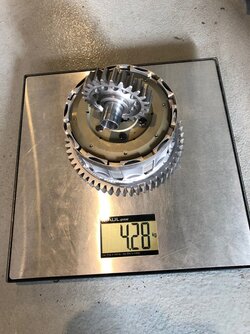
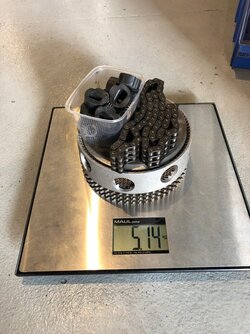
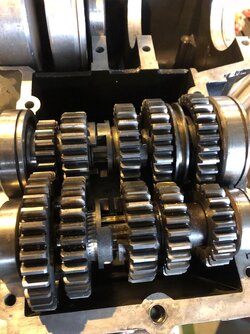
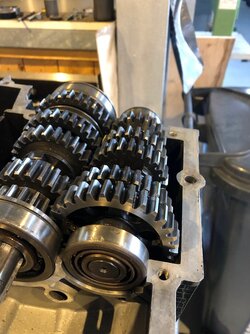
My gears will be shot peened and ceramic coated, I am also hoping that due to the light weight of my bike being probably 100kg lighter than a std SF and the max power revs being double so lowering the torque to very similar numbers as std I should get away with it for a reasonable time, I will also strip the engine after every race meeting so can inspect very regularly. I may need a special set of gears but in theory, the gears that I have should fit the power / torque curve very well. We will see.
Regards,
J
As a PS, it may be interesting to know that all metals form Martensite over age, the percentage depends of course on the material spec, but they do change and this is why you would have heard that the 1500 hp BMW F1 Turbo blocks used in the 80s by Brabham were second hand 2002 blocks, this was not quite true but they were several years old and the castings had gone through many heat cycles before being machined and used which made them massively more tough.


 )