
You are using an out of date browser. It may not display this or other websites correctly.
You should upgrade or use an alternative browser.
You should upgrade or use an alternative browser.
Unfiltered Intake Air.
- Thread starter BlackJota
- Start date

Andy
Hero member
- Location
- Auckland, roughly
My favourite story along those lines comes from when a bunch of us were renovating a Kentucky fried chicken (before it was called KFC, so a long time ago). We were all standing on saw stools and ladders holding up the huge chip hood while one bloke in the ceiling was undoing the bolts. Dozens of cockroaches were crawling up the inside of the hood out of the grease gutter, then falling off the slippery surface, straight down where the fryers used to be.
Ever since that, I’ve always had a really close look at the little crispy bits at the bottom of a bag of chips
Ever since that, I’ve always had a really close look at the little crispy bits at the bottom of a bag of chips

martymoose
Hero member
- Location
- Sydney, Australia
Hi Red, I would be very interested in a link to the velocity stack article. The Austin 7 hasn't raced in anger for 22 years, but is about to go on loan to another forum member to harrass a small rural NSW community, similar to its holiday in Murwillumbah last year. The guy that used to beat me down the straight at eastern creek had de- siamesed the 2 inlet ports and installed 4 amal carbys, with ram tubes and velocity stacks.
Try this:Hi Red, I would be very interested in a link to the velocity stack article. The Austin 7 hasn't raced in anger for 22 years, but is about to go on loan to another forum member to harrass a small rural NSW community, similar to its holiday in Murwillumbah last year. The guy that used to beat me down the straight at eastern creek had de- siamesed the 2 inlet ports and installed 4 amal carbys, with ram tubes and velocity stacks.
Attachments

Dellortoman
Hero member
- Location
- Tasmania, Australia
Well done Baz. That's the most comprehensive article on the topic of bellmouths that I'm aware of. Should answer every question you ever dreamed of Marty!
The late Professor Gordon Blair (author of article) is well known in engineering circles for his work on fluid dynamics in general, and its application to internal combustion engines in particular. He was a keen supporter of motorcycle racing did a lot of work on 2-stroke induction and scavenging in the late 1960's. His engines would beat the factory race bikes and he ended up working with Yamaha to design their TZ range of 2-stroke race engines.
BTW, if you're going to fit bellmouths to improve performance, don't put wire mesh strainers on them. If you do, you may as well just use a bean can as an inlet trumpet because the wire mesh will totally screw up the air flow.
Last edited:

78jotadave
Hero member
I suppose I could read the entire article but I'll be honest and admit I'm not sure or grasp what the author is saying, I did understand his conclusion.
CONCLUSIONS While the specific conclusions have already been highlighted at each stage of the discussion above, the general conclusion might be glibly stated that the design of an intake bellmouth is not as difficult nor as vital to good engine breathing as might have been imagined. On the other hand, in racing, where the last few hp per 100 hp is the difference between winning and losing, the design exemplars discussed above are not to be lightly ignored
My next question is when looking for improved top speed, would these be an asset?
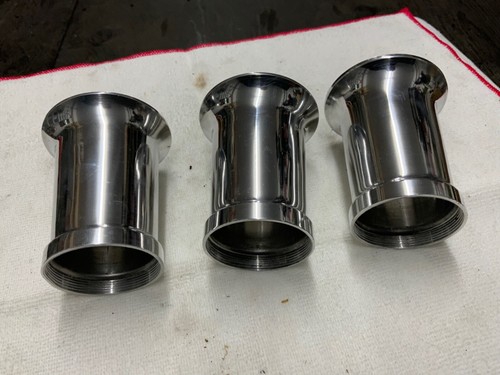
CONCLUSIONS While the specific conclusions have already been highlighted at each stage of the discussion above, the general conclusion might be glibly stated that the design of an intake bellmouth is not as difficult nor as vital to good engine breathing as might have been imagined. On the other hand, in racing, where the last few hp per 100 hp is the difference between winning and losing, the design exemplars discussed above are not to be lightly ignored
My next question is when looking for improved top speed, would these be an asset?
Laverda Dellorto TRIPLE JOTA Velocity stacks NEW | eBay
Find many great new & used options and get the best deals for Laverda Dellorto TRIPLE JOTA Velocity stacks NEW at the best online prices at eBay! Free shipping for many products!
www.ebay.com
Basketcase
Senior member
Riding your Duc to a Melbourne cafe risks dust from sand dropped on the road by trams on each hill.Suppose they are all right if you only going down to the pub (or cafe if you're on a Duc) but for the open road...
78jotadave
Hero member
Hoping to take a run on the salt flats in Utah (Bonneville) this year,' Run What ya brung' it's on the bucket list, still.
I thought velocity stacks were all about top speed performance, comments are appreciated.
I thought velocity stacks were all about top speed performance, comments are appreciated.

The Sock
Hero member
- Location
- London, England
Velocity stacks maximise power, dependent on their length, at a certain RPM, as do megaphones.Hoping to take a run on the salt flats in Utah (Bonneville) this year,' Run What ya brung' it's on the bucket list, still.
I thought velocity stacks were all about top speed performance, comments are appreciated.
Not necessarily an aid to maximum speed.

helicopterjim
Hero member
- Location
- near Lone Butte, BC, Canada
I suppose I could read the entire article but I'll be honest and admit I'm not sure or grasp what the author is saying, I did understand his conclusion.
CONCLUSIONS While the specific conclusions have already been highlighted at each stage of the discussion above, the general conclusion might be glibly stated that the design of an intake bellmouth is not as difficult nor as vital to good engine breathing as might have been imagined. On the other hand, in racing, where the last few hp per 100 hp is the difference between winning and losing, the design exemplars discussed above are not to be lightly ignored
My next question is when looking for improved top speed, would these be an asset?
Laverda Dellorto TRIPLE JOTA Velocity stacks NEW | eBay
Find many great new & used options and get the best deals for Laverda Dellorto TRIPLE JOTA Velocity stacks NEW at the best online prices at eBay! Free shipping for many products!www.ebay.com
I suppose if you had read the entire article you would have read “The best bellmouths are those that are short and fat with the elliptical the winner”.
That doesn't mean I know anything but those bellmouths in the ebay link are "long".
Jim

piranha-bro2
Hero member
- Location
- Melbourne
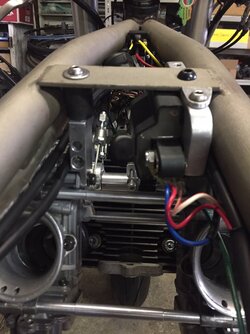
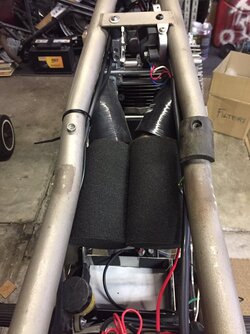
So these Sudco ones fitted to my FCRs should do the trick (with large intake tubes linking to two very large air filters) ...I suppose if you had read the entire article you would have read “The best bellmouths are those that are short and fat with the elliptical the winner”.
Jim
Attachments
Basketcase
Senior member
Put coil springs inside to prevent the foam from collapsing when you grab a big handful!
Dellortoman
Hero member
- Location
- Tasmania, Australia
They also don't have the full wrap-around lip on the entry as recommended by Prof Blair. I suspect the primary design criteria for those inlets was that they should look cool.I suppose if you had read the entire article you would have read “The best bellmouths are those that are short and fat with the elliptical the winner”.
That doesn't mean I know anything but those bellmouths in the ebay link are "long".
Jim
helicopterjim
Hero member
- Location
- near Lone Butte, BC, Canada
They also don't have the full wrap-around lip on the entry as recommended by Prof Blair. I suspect the primary design criteria for those inlets was that they should look cool.
I have some with blue mesh that look really cool.
Jim
piranha-bro2
Hero member
- Location
- Melbourne
Came with 'em. All good.Put coil springs inside to prevent the foam from collapsing when you grab a big handful!
martymoose
Hero member
- Location
- Sydney, Australia



chrisk
Hero member
- Location
- Brisbane, Australia
A just where will Carlo fit in that car?That is awesome Marty,
Your not going to be able to wipe the smile of Carlo's face for weeks.
What tyres are you using?Here is my A7 racer, complete with unfiltered air intake, about to leave for murrurundi. Number 1 son providing the horsepower for pushing it onto the trailer.