Laverda's Cast iron - Caproni Foundry.

Hi. If I've understood you correctly, this contradicts quite strongly what I researched and worked toward on late model triple cylinder head/s.

Do you have a report on your findings?

Are you suggesting that the alloy used on late triple heads was of a non heat treatable formulation, if do, what alloy?

None of this fits with my findings and work ?


Rob
Thanks for your message Rob

Very interesting. I can say that my material analysis was done quickly with limited equipment and knowledge, especially the knowledge for this purpose. I used XRF equipment with settings that can detect Magnesium and heavier elements, settings especially for light alloy metals. The analysis was taken from a straight machined surface that was lightly sanded with 400 grit paper and wiped clean with alcohol rag, two different locations.

With this kind of testing even a small reason can cause a wrong result and wrong conclusions. Always need to know the limitations of the method. To my understanding this method should well find the elements, but there is some limitations for example if the material is not exactly the same at the surface and deeper. I'm not a metallurgist and therefore I don't probably know what to look at.

Found the result sheet, I post the data below from these two measurements, there isn't any more results:

First measurement:
Al 85.92 w-%
Si 13.64 w-%
S 0.03 w-%
Mn 0.18 w-%
Fe 0.23 w-%
Ni 0.01 w-%

Second measurement:
Al 85.79 w-%
Si 13.74 w-%
S 0.05 w-%
Mn 0.20 w-%
Fe 0.22 w-%
Ni 0.01 w-%

Can you find if there is something essential missing from this?

-Jouni
 
Hi Jouni

I'm for sure no expert or academic on the subject and there's always room for error since I can only learn from what I obtained.

Sadly Mainwaring is no longer existing so I cant ask them what eqpt they used.

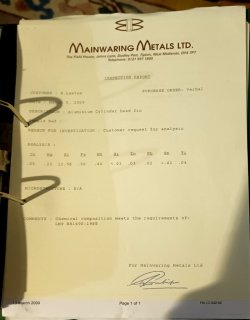
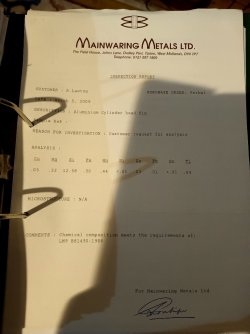
1st of all, likely in 2009 or earlier I took a head to a company, that charged a fortune and used a handheld scanner, gave me an answer that I wasn't happy with ( I don't remember why, I was irritated because he pocketed my money and I guess the result didn't make sense vs the problems I was having)

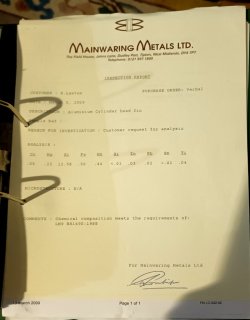
I then spoke with mainwaring ( a metals processing company ) who asked me to send a sample. That was 2009 and the sample was cut from a mid/late 70s all alloy triple head ( no skull, still have head)

They compiled the signed certificate that I've used every since.

My limited understanding is that both Magnesium and copper can have an influence on heat treatment.
That seems to be a main difference between our findings..

Subsequently with the welding process last year vs a failed attempt in 2008 now works in harmony with this finding.

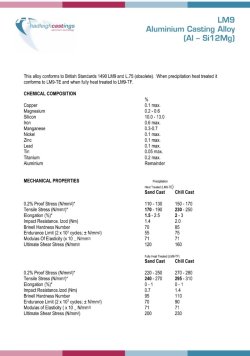
Ie matched filler rod material, appropriate heat treatment for LM9 to TF condition.

Of course if I was on the wrong trajectory because the initial finding was wrong, I'd look pretty foolish but it would also make a mockery of the welding and heat treatment process which worked well as of 2025...but we can only go on our findings so:
Either Laverda changed the alloy composition dramatically for the last heads or somethings not quite right between our findings.

Personally, I'd struggle to believe the heads are not heat treated because I've seen the difference heat treatment and annealing does to these parts but I do make mistakes and I'm not a uni academic so here we are 😀

If you need to know any holes in the story, please let me know.

My understanding is that porosity is more likely to occur with sand casting as used.

Regards Rob
https://haworthcastings.co.uk
 

Attachments

  • 20260120_231719.jpg
    20260120_231719.jpg
    73.8 KB · Views: 20
  • 20260120_231701.jpg
    20260120_231701.jpg
    79.5 KB · Views: 17
  • 20260120_222946.jpg
    20260120_222946.jpg
    95.6 KB · Views: 13
  • 20260120_222740.jpg
    20260120_222740.jpg
    69.4 KB · Views: 18
Last edited:
Sadly, the only Metalugist I ever knew was the late Chris Cutler, a very clever bloke who was behind Steve B's racing twin before Steve acquired it. There must be lots of anecdotal knowledge on the effects of welding these heads over the years, surely.
 
I had a look to see what other info I had from my time researching the different alloys.
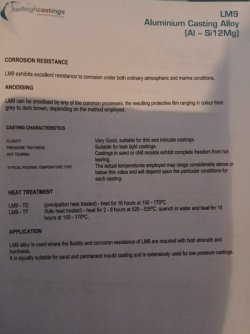
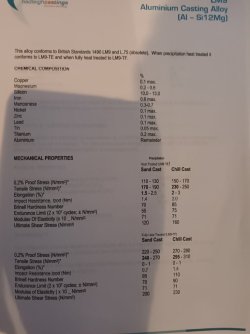
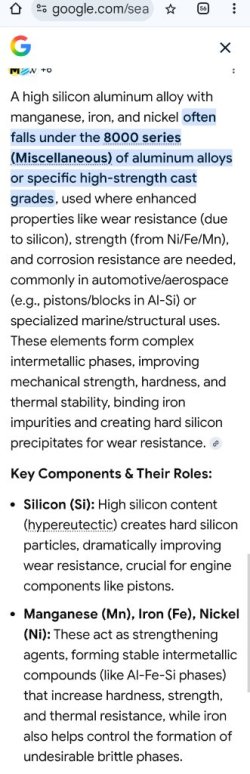
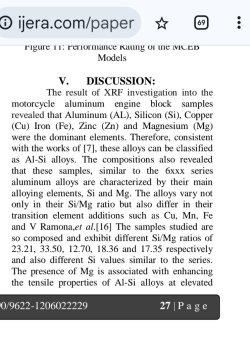
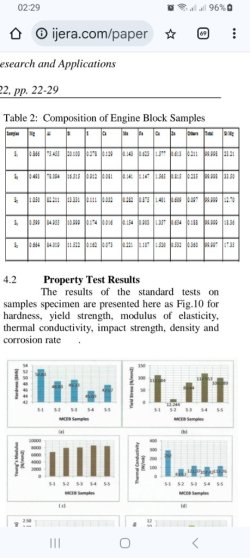
Processing that and looking again at your results suggests that Laverda "may" have swapped to a different alloy for the latest sfc heads. The first image is what I could find relating to your results.


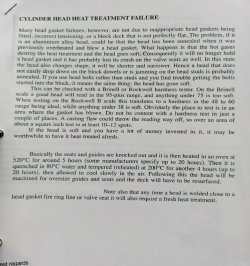
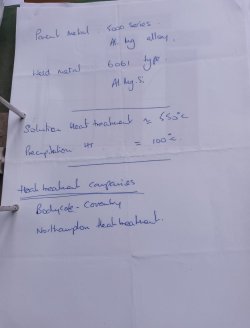
I attach the findings of the person/company who did the "1st" analysis of my non skull head.( handwritten paper)
The results I wasn't happy with because its lacking specific detail.

Prior to both these tests, I'd had a head welded up and machined but hadn't the info on alloys, instead entrusting the welding company to know that.

After that welding I decided to get a different head analysed. From that, I got the repaired head heat treated according to LM9 specs.

However it was too late, I'd done the research after the repairs.

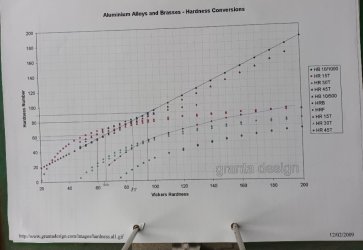
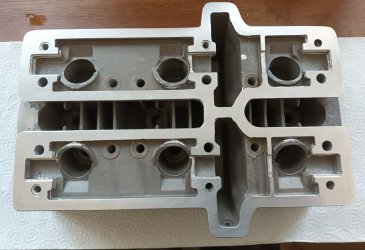
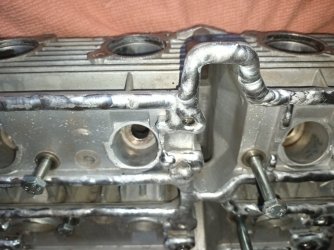
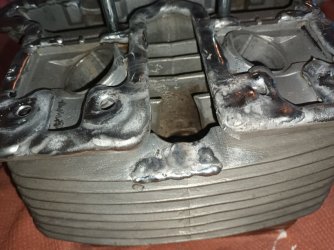
I used the hardness tester at the heat treatment company ( pics 3 & 4) and the results showed, that the parent metal was indeed, hardened to TF standard ( LM9 TF) but the welded areas were relatively soft because they'd used a universal rod, certainly one that didn't respond to the TF treatment.
Because this welding was around the valve seat area, I wasn't prepared to suffer another head dropping valve seats ( lack of tensile strength) so abandoned the project.

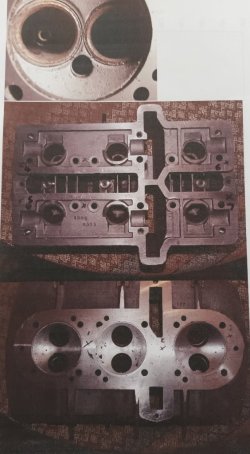
The head I now use that is extensively welded is an iron skull head ( I think 81 - later 3 pics) and I applied all that research and welding/heat treatment to it. It was soft, so I believe it is similar in composition to the earlier test head.

Hope that helps
Rob
 

Attachments

  • Screenshot_20260121_112623_Chrome.jpg
    Screenshot_20260121_112623_Chrome.jpg
    99.9 KB · Views: 29
  • 20260121_114125.jpg
    20260121_114125.jpg
    187 KB · Views: 22
  • 20260121_114054.jpg
    20260121_114054.jpg
    92.1 KB · Views: 26
  • 20260121_114040.jpg
    20260121_114040.jpg
    109.4 KB · Views: 28
  • 20250517_122824.jpg
    20250517_122824.jpg
    114.3 KB · Views: 28
  • 20250204_140240.jpg
    20250204_140240.jpg
    132.2 KB · Views: 27
  • 20250204_140255.jpg
    20250204_140255.jpg
    110 KB · Views: 27
  • 20260121_102417.jpg
    20260121_102417.jpg
    61.3 KB · Views: 25
  • 20260120_231719.jpg
    20260120_231719.jpg
    73.8 KB · Views: 26
Last edited:
Thanks Rob, very interesting.
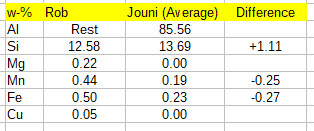
I made a comparison table I post below. Mine is average from the two measurements.
I wasn't thinking about the around 0.2 w-% of Mn and Fe on my cylinder head. Some alloying elements may have an effect in small quantities
like both probably do. I don't know what this result means, but I think that I'm sure enought to say that the method would have found Magnesium and Copper very well, if they would have been there.

My analysis was taken from the gasket surface, far as possible from the skulls and the stud holes. The surface was very lightly sanded with number 400 sandpaper and then wiped with alcohol rag, I don't want the surface to lose its straightness but remove the possible contaminant from the gasket if that is enough.
If an analysis is taken from a surface that is normally in contact with oil, the analysis would typically show a long list of metals and other elements in low quantities. Then it is hard to know what is actually from the alloy and what is contaminant.

-Jouni
 

Attachments

  • Difference.png
    Difference.png
    4.5 KB · Views: 6
🤣 I understand it pretty well

My family surname was Katajisto from Turku.
Katajisto means a sort of group of juniper-trees.

I was actually referring to your message probably quite long time ago that you will watch the vikings movie a couple times before you arrive Finland. According to some story that is not confirmed history, vikings arrived to Finland, went to some river with their ship, and started to rob, murder and rape in villages that were by the river. At some point Finlanders put ropes across the river, hide them well under the water level, and went hiding behind the trees with arms. When the ship came, they turned the ship with the ropes. Most of the vikings drew, rest of them were killed near the shore, except one. The one person was sent back to tell others never to come back again.

I have understood that in Sagas of Icelanders it is said that they once went to Finland, but Finlanders used black magic against them. Sounds me that they were beaten too hard and they needed to find an explanation.

-Jouni
 
Thanks Rob, very interesting.
I made a comparison table I post below. Mine is average from the two measurements.
I wasn't thinking about the around 0.2 w-% of Mn and Fe on my cylinder head. Some alloying elements may have an effect in small quantities
like both probably do. I don't know what this result means, but I think that I'm sure enought to say that the method would have found Magnesium and Copper very well, if they would have been there.

My analysis was taken from the gasket surface, far as possible from the skulls and the stud holes. The surface was very lightly sanded with number 400 sandpaper and then wiped with alcohol rag, I don't want the surface to lose its straightness but remove the possible contaminant from the gasket if that is enough.
If an analysis is taken from a surface that is normally in contact with oil, the analysis would typically show a long list of metals and other elements in low quantities. Then it is hard to know what is actually from the alloy and what is contaminant.

-Jouni
Hi Jouni

I think it's cool that we have different results but I don't have anything to add.
My thoughts are given.

I don't think you came here to shoot up my findings 🤣 so you have a different alloy (quite possible)

I did notice on your head, that you have no indentations where the cam pillars sit so it seems like you don't have these earlier softening issues.

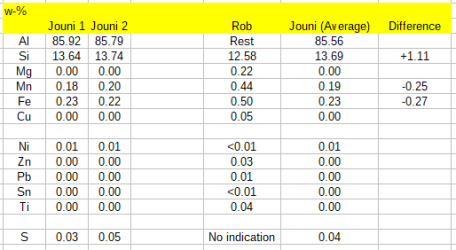
I like your chart but I have 9 elements, at the risk of sounding pedantic, they all apparently matter.

Best
Rob
 

Attachments

  • Screenshot_20260122_221756_Chrome.jpg
    Screenshot_20260122_221756_Chrome.jpg
    75.6 KB · Views: 5
Last edited:
Hi Rob

My intention was not to shoot down any findings. Reality is often much more complicated than understanding, and findings that may look conflicting from the first sight may be something else.

I think that skulled and non-skulled heads may have intentionally different alloys. I don't know if the same heat treatment could work well enough for both of them. Possibly even the alloy for heads with skulls of earlier material is different than alloy for later skulls. And they may have made other changes many times, also changes in their supply materials that they need to compensate.

Actually I dropped five elements off from your report and two from my own because I think they have no role for this comparison and had very low quantities. Secondly I know the test would indicate them even if the surfaces are once wiped with some other object. If you took the analysis from a cooling fin, they may be, for example, from exhaust gas, road dust, and Zn can be also from a bolt near it.
If you take two sheet metal plates made of steel, one plated with Zinc or other metal, one without any plating, and once lightly rub them against each other and then wipe and wash them very well, the plating will be still found from the non-plated sheet.

Yes I have no intention to weld or heat treat the head as it has no need for them. The test didn't cost anything for me.

-Jouni
 
Interesting about the meaning of FLAM. I've ben told more than once by a couple of members of the Laverda Corse team that it stood for Fonderia Laverda Alominio Magnesio. No idea really, but I was convinced.
 
Welcome Sergio, nice to see your broadening your education by joining this group. Or as some here would say be afraid, be very afraid. Seriously it’s a great place to broaden one’s knowledge of Laverda’s and many other things. Just don’t expect a thread to remain on topic for to long😂👍
Tom
 
Interesting thread! I'm no expert myself, but I once learned how crucial heat treatment is for alloys and their material strength.

Many years ago, my employer's purchasing department decided to relocate the supplier of a particular alloy wheel to China.

When the first batches of wheels arrived from China, our development department retested them — both in the lab and on the proving ground.
The identical wheel produced in China failed.

The material analysis revealed no defects, but the problem lay in the fact that the artificial aging process (warm aging), which was part of our previous supplier's manufacturing process, was either not or only inadequately carried out by the Chinese supplier.

This did cost of course money, as it takes time. But it was essential in subject case to achieve the material strenght required.
 

Attachments

  • Screenshot_20260123_023033_Chrome.jpg
    Screenshot_20260123_023033_Chrome.jpg
    138.6 KB · Views: 7
  • Screenshot_20260123_022914_Chrome.jpg
    Screenshot_20260123_022914_Chrome.jpg
    83.4 KB · Views: 6
  • Screenshot_20260123_022735_Chrome.jpg
    Screenshot_20260123_022735_Chrome.jpg
    113 KB · Views: 5
  • Screenshot_20260123_022715_Chrome.jpg
    Screenshot_20260123_022715_Chrome.jpg
    118.3 KB · Views: 6
I'm convinced the factory changed the alloy formula for the head castings more than once...

Through the experience of fitting valve seat inserts to the all-alloy heads and removing substantial amounts of aluminium from both inlet and exhaust ports of all head types, I come to the conclusion the early-type skulled heads with dowel fixings for the cam bearings were quite soft with a fair amount of porosity. The all-alloy version was softer still with enormous amounts of porosity. The softness may have to do with the seat inserts being additionally secured by peening, necessitating a quite soft material to avoid cracking/fracturing. The later versions were quite hard with minimal porosity. The final RGS-type were harder still with hardly any porosity at all, at least not around the ports. These have proved themselves to be the most durable of the lot, not only because of the revised casting moulds. The skull forms were changed at least twice, with additional material to better accomodate the valve seat inserts of the later types.

Cast aluminium tends to be quite dense along the perimeters with porosity occurring mainly within the thicker parts of the casting, be it because of too quick/slow pouring or sudden temperatur changes or whatever... Without a doubt, the all-alloy versions were the worst in every respect.

These quality issues are not exclusive to the triples, the heads of the 75 and 100cc tiddlers are pretty shite as well... Although porosity can be found in most 750 heads, these have no further issues and are generally pretty much vice-free. Perhaps because they are more of a basic block shape instead of a thin slab.

piet
 
To understand Finnish mindset, don't watch the vikings movie, Finlander's were not vikings.
Hei Jouni. I had the good fortune to live in Finland in 1964-1965. I went to a Finnish school and by the time we left I was typically mistaken for a Finn. My then blond hair and blue eyes certainly helped. My memories of the country are vivid, rich. I remember the market at the port in Helsinki, skating on the coast, driving across the ice in our VW bus and the huge bonfires that blazed to celebrate Midsummer. We lived there twice. I was conceived there the first visit but missed being born in Finland by five days. Outside of some swear words that stuck in my head I no longer know the language, but an older sister and brother are still conversant.
 
Back
Top