20 50 mineral-based break in engine oil?

Update on my oil saga:
For the 300 mile break in I used 20 50 Motul Mineral oil which I have changed twice, and each time there was some minor swirl. During assembly I coated the cylinders w oil and applied red line assembly lube on the cams. A boroscope shows that the cross hatching from the honing is still present, and I had the bores rechecked that showed trueness. At @ 150 miles compression was @ 145lbs, and at 300 miles it’s @170 lbs, which is good news. I’ve been varying the speeds without red lining, constantly doing 40-65 mph, and sometimes 70 mph. This is the second time around with Ross pistons and the motor feels smoother at 60 mph than before. I’ll use 20 50 Motul full synthetic next and re torque the cylinder head nuts. I’m hoping the combination of a slightly looser bore ( to allow for the forged piston expansion), Teflon coated pistons, and using full synthetic will be the fix since I didn’t want to split the cases to examine the slingers which may or may not be the problem. Again, the oil analysis of the Bell Ray mineral oil I previously used indicated that it lost viscosity, and was told to use synthetic oil after the break in. Oil has improved since 1974.
I appreciate all the helpful input.
 
Last edited:
Good news, Teddy. Lots of strong acceleration in the mid range. Cross hatching will probably be in evidence for quite some time, but the increase in compression is a positive sign.
 
Again, the oil analysis of the Bell Ray mineral oil I previously used indicated that it lost viscosity, and was told to use synthetic oil after the break in. Oil has improved since 1974.
I appreciate all the helpful input.
Teddy, it's your bike, and you did the rebuild, but the bottom line is these Laverdas are old bikes, and the factory built these bikes along with engines for agricultural equipment to run on mineral oils. The mineral oils available today are not the mineral oils used when these bikes were built; they are far superior. The internet is full of reasons why you should not run synthetics with ball-bearing big ends (ball skidding), each to their own end, eh! Get out and give the 750 some berries.
BelRay is, in the grand scheme of things, a small company.
Autumn is here; I hope you get some riding in before it turns cold,(y)
 
Update on my oil saga:
For the 300 mile break in I used 20 50 Motul Mineral oil which I have changed twice, and each time there was some minor swirl. During assembly I coated the cylinders w oil and applied red line assembly lube on the cams. A boroscope shows that the cross hatching from the honing is still present, and I had the bores rechecked that showed trueness. At @ 150 miles compression was @ 145lbs, and at 300 miles it’s @170 lbs, which is good news. I’ve been varying the speeds without red lining, constantly doing 40-65 mph, and sometimes 70 mph. This is the second time around with Ross pistons and the motor feels smoother at 60 mph than before. I’ll use 20 50 Motul full synthetic next and re torque the cylinder head nuts. I’m hoping the combination of a slightly looser bore ( to allow for the forged piston expansion), Teflon coated pistons, and using full synthetic will be the fix since I didn’t want to split the cases to examine the slingers which may or may not be the problem. Again, the oil analysis of the Bell Ray mineral oil I previously used indicated that it lost viscosity, and was told to use synthetic oil after the break in. Oil has improved since 1974.
I appreciate all the helpful input.
Do you realize in the US, "synthetic oil" is marketing term? It can be regular petroleum oil. Neither the American Petroleum Institute or the Society Of Automotive Engineers has any definition of synthetic oil.

In 1992 as Mobil was selling their "Mobil 1" synthetic motor oil, Castrol introduced their own synthetic oil which was made from petroleum oil. Mobil sued Castrol for selling fake synthetic oil and lost in court as there is no scientific definition of synthetic oil. Used oil from the fish fryer can be sold as synthetic oil. Some companies selling synthetic oil are actually selling oil that is not made from petroleum oil and some do not.

I am only stating how it is in the USA. The rest of the world and synthetic oil, I don't know.

From the internet:

When you pick up a bottle of synthetic motor oil today, there's no reliable way to tell from the label alone whether the base oil inside is a true synthetic or mineral oil.

Both are legal to call synthetic in the US. Both will carry the same marketing language about superior protection and extended drain intervals. The price difference between them at the shelf level can be significant, and the consumer has almost no way to know what they're actually buying without digging into technical data sheets that most manufacturers don't make easy to find.

This isn't a fringe situation. Many well-known, widely sold motor oils marketed as full synthetic in the US use petroleum base stocks. Some perform excellently. Some are genuinely competitive with synthetic based formulations for typical passenger car use. But the label doesn't tell you what you are actually buying.

And finally for those of who were riding Laverda's years ago in Southern California and remember our local Laverda dealer (Lance Weil of Ricky Racer) he told me to never used real synthetic oil in a Laverda as the big end rollers will skid at high RPM.
 
And finally for those of who were riding Laverda's years ago in Southern California and remember our local Laverda dealer (Lance Weil of Ricky Racer) he told me to never used real synthetic oil in a Laverda as the big end rollers will skid at high RPM.
If Mobil 1 is fully synthetic, then that claim is bullshit - I ran it for probably 15 years in every kind of riding situation, 60-80,000km? My brother has raced many seasons on it - his SFC cranks was perfect - I can show you the SFC rollers I took out of it when I went Carillos and fitted new rollers as a matter of course. Seen it used in std SFs without a problem.

My SFC crank was originally fitted with square-ended rollers - they had skidded, nothing to do with oil. Replacements are all dome ended rollers (as also used in triples).
 
I think the statement balls or rollers skidding with synthetic oil is a myth. However, there was real findings and real lubricating problems, but the conclusions were wrong. This one is explained on the links below for those who are able to read them:


-Jouni
 
If Mobil 1 is fully synthetic, then that claim is bullshit - I ran it for probably 15 years in every kind of riding situation, 60-80,000km? My brother has raced many seasons on it - his SFC cranks was perfect - I can show you the SFC rollers I took out of it when I went Carillos and fitted new rollers as a matter of course. Seen it used in std SFs without a problem.

My SFC crank was originally fitted with square-ended rollers - they had skidded, nothing to do with oil. Replacements are all dome ended rollers (as also used in triples).
I have no direct knowledge of synthetic oil causing big end bearing problems. I am just repeating what I was told by the Laverda dealer and he did build a number of race bikes.
 
So what type of oil is Amsoil really?
Amsoil invented synthetic oil supposedly. We used to be the UK stockist and used it for years. I did have a Fireblade that I serviced with Ams and the starter clutch slipped, wasn’t doing it before service . Changed to other brand and it worked fine? Think my boss chose Ams as it wasn’t widely available which kept customers coming back to us. Amsoil polish is superb stuff, best I’ve used. Never noticed any difference using one oil from another with the exception of Redline 80/90 Hypoid in my Guzz gearbox/ final drive- gearbox slicker and drive box runs cooler.
 
Do you realize in the US, "synthetic oil" is marketing term? It can be regular petroleum oil. Neither the American Petroleum Institute or the Society Of Automotive Engineers has any definition of synthetic oil.

In 1992 as Mobil was selling their "Mobil 1" synthetic motor oil, Castrol introduced their own synthetic oil which was made from petroleum oil. Mobil sued Castrol for selling fake synthetic oil and lost in court as there is no scientific definition of synthetic oil. Used oil from the fish fryer can be sold as synthetic oil. Some companies selling synthetic oil are actually selling oil that is not made from petroleum oil and some do not.

I am only stating how it is in the USA. The rest of the world and synthetic oil, I don't know.

From the internet:

When you pick up a bottle of synthetic motor oil today, there's no reliable way to tell from the label alone whether the base oil inside is a true synthetic or mineral oil.

Both are legal to call synthetic in the US. Both will carry the same marketing language about superior protection and extended drain intervals. The price difference between them at the shelf level can be significant, and the consumer has almost no way to know what they're actually buying without digging into technical data sheets that most manufacturers don't make easy to find.

This isn't a fringe situation. Many well-known, widely sold motor oils marketed as full synthetic in the US use petroleum base stocks. Some perform excellently. Some are genuinely competitive with synthetic based formulations for typical passenger car use. But the label doesn't tell you what you are actually buying.

And finally for those of who were riding Laverda's years ago in Southern California and remember our local Laverda dealer (Lance Weil of Ricky Racer) he told me to never used real synthetic oil in a Laverda as the big end rollers will skid at high RPM.

I have met oil supplier delivery drivers, who drive for the company that sells the oil. They have no issue telling me that they only load from one source, deliver to multiple sites and the oil is then bottled and labeled as various oil types, and synthetic oil ….. just isn’t.

One even told me what the wholesale prices were, after I calculated the value of 30,000lt of oil he was carrying at say $15.00 per litre.

He laughed, and said the wholesale price is nothing like the retail price!

“Synthetic oil” has a retail price not dissimilar to “mineral oil” why the fuck would any company go through the massive amounts of money required to create infrastructure to make a synthetic oil when the wholesale price of mineral oil is so low and the retail margins so high?

I once asked a guy driving an oil recycling tanker how they can distinguish between loading up with mineral and synthetic oil….. thinking one would contaminate another and that vehicle service departments would store accordingly…. laughing he said “there is no segregation for a reason”

One likened it to milk …. milk is milk, you can add water and sell it as light milk…. but cows don’t make light milk!

Both oil and milk are a marketing departments playground for the gullible.
 
Having worked in a grease and oil factory, fixing the equipment for blending, cooking and packaging...
Petrol and diesel engine oils are made to an industry specification.
Standards include SAE, API (American Petroleum Institute), ACEA European, OEM like Ford M2, BMW, etc.
For example - Japanese- JASO T903 (4-Stroke Motorcycle): Grades MA, MA1, and MA2 cover wet-clutch high friction needs, while MB offers lower friction for scooters.
Laverda recommended Total GTS 20W-50.
In the 70's that was API SD or SE, in the eighties SF and later SG. This specified higher levels of Zinc (ZDDP) and phosphorous.
Laverda stated that operating the motorcycle above 27 Celsius were hot weather conditions.
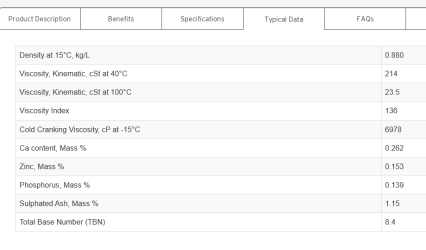
In West Oz where it's hot, I've run Penrite HPR30 SAE 20W-60 for years. Now rated at API SM, with Zinc at 1530ppm.
Redax uses Liquid Moly 20W-50 or Lucas 20W-50.
Choose your poison and compare it's Technical Data Sheets.

E.g - HPR 30 20W-60 SM
1790488593630.png

For fuel, to achieve the old UK standard of Five Star - Mix 1 litre of Avgas to 3 litres of regular unleaded and you'll get approx. 100 RON Octane with 13 grams of suspended Lead. (at sea level 101.4kPa)

(Got a mate with a Cessna ?)
 
I buy all my oils from Smith & Allen who are a small independent oil company who buy their oil from shell and re package it. Our Shell rep in the ‘90’s told me that the semi & fully synthetic were the same oil but were packaged for people who wanted to put the best oil in their bikes. He also told me that the 10w fork oil was the same as the MX racing gearbox oil, price was way different. Be careful of some EBay cheap oil claiming to be of a certain standard but has not been actually tested . At Hughendens we found that BMW twins that burnt synthetic oil seemed to be a lot happier on Shell Four seasons. that was a 20/50 mineral, also ran quieter . I was never happy with the increased service intervals, oil came out like black piss- lost so much viscosity. Kawasaki doubled their service interval mileage just to fit in with Yamaha- so one minute we’re changing oil religiously at 3000 miles then all of a sudden it’s 6000 miles. I grew up with Green Duckhams in the garage, loved the smell and it looked great when you poured it into a jug- When Honda had oil pressure/ cam problems with the early V4 ‘s the tested loads of oils to see what worked, Duckhams gave them the best working oil pressure but they opted for an additive called U.C that was probably Slick 50 or similar.
 
Having worked in a grease and oil factory, fixing the equipment for blending, cooking and packaging...
Petrol and diesel engine oils are made to an industry specification.
Standards include SAE, API (American Petroleum Institute), ACEA European, OEM like Ford M2, BMW, etc.
For example - Japanese- JASO T903 (4-Stroke Motorcycle): Grades MA, MA1, and MA2 cover wet-clutch high friction needs, while MB offers lower friction for scooters.
Laverda recommended Total GTS 20W-50.
In the 70's that was API SD or SE, in the eighties SF and later SG. This specified higher levels of Zinc (ZDDP) and phosphorous.
Laverda stated that operating the motorcycle above 27 Celsius were hot weather conditions.
In West Oz where it's hot, I've run Penrite HPR30 SAE 20W-60 for years. Now rated at API SM, with Zinc at 1530ppm.
Redax uses Liquid Moly 20W-50 or Lucas 20W-50.
Choose your poison and compare it's Technical Data Sheets.

E.g - HPR 30 20W-60 SM
View attachment 108010

For fuel, to achieve the old UK standard of Five Star - Mix 1 litre of Avgas to 3 litres of regular unleaded and you'll get approx. 100 RON Octane with 13 grams of suspended Lead. (at sea level 101.4kPa)

(Got a mate with a Cessna ?)

Alright…. Someone with some true inside knowledge! 🥳

Dave, what’s your take on synthetic oils? True or a marketing myth?

I liken it to the old: If it looks like shit, smells like shit and tastes like shit …. chances are it is actually shit.
 
In the most basic terms Automotive engine oil;

Mineral oil is highly refined from crude oil to form an organic Base Stock.
Mineral oil has molecules of varying size
Now add additives such as thicknessers, tackifiers, Zinc, Phospherous to get to The API specification desired.

Synthetic oil is made from extracted ethylenes (or esthers) usually from Natural Gas (LNG) to form a synthetic Base Stock
Synth has molecules of a standard size and are free of contaminants
Now add additives such as thicknessers, tackifiers, Zinc, Phospherous to get to The API specification desired.

Almost all Synthetic engine oils on the shelf have some mineral Base Stock in them to help with seal swell, other benefits and keep the cost down.

In Australia -
"Semi Synthetic" oil has 10 - 49% synthetic Base Stock (plus additives)
"Fully Synthetic" oil has 50 - 100% synthetic Base Stock (plus additives).
 
In the most basic terms Automotive engine oil;

Mineral oil is highly refined from crude oil to form an organic Base Stock.
Mineral oil has molecules of varying size
Now add additives such as thicknessers, tackifiers, Zinc, Phospherous to get to The API specification desired.

Synthetic oil is made from extracted ethylenes (or esthers) usually from Natural Gas (LNG) to form a synthetic Base Stock
Synth has molecules of a standard size and are free of contaminants
Now add additives such as thicknessers, tackifiers, Zinc, Phospherous to get to The API specification desired.

Almost all Synthetic engine oils on the shelf have some mineral Base Stock in them to help with seal swell, other benefits and keep the cost down.

In Australia -
"Semi Synthetic" oil has 10 - 49% synthetic Base Stock (plus additives)
"Fully Synthetic" oil has 50 - 100% synthetic Base Stock (plus additives).

Thanks Dave, truly enlightening and well explained to us oil nufties.

In a previous life, I dealt a lot in plastics and my jaw dropped when you mentioned ethylene to create the synthetic base, as in most common plastics.

On visiting a large American plastics company in Malaysia I spied a huge plant, 🤔 ExxonMobil maybe, nearby. It was explained that this plant supplied the some of the ethylene based resin for their plastics production.

But I was ignorant to other, possibly larger markets, as in oil production you pointed out, they and others supplied.

Considering ethylene is a byproduct, the uses for it stagger me. I think I’d rather see it used in solid forms rather than ethylene gases being spewed out into the atmosphere.
 
Synthetic oil (according to Wikipedia)
I am leaving this in French because the direct translation on the site does not yield the same text; you need to use a translator.
If you want a so-called synthetic oil, you must use polyalphaolefins (PAOs).
The problem is that the technical specifications are far too vague to tell.

https://fr.wikipedia.org/wiki/Huile_de_synthèse

What could be considered true synthetic oil

https://dymresources.com/product/pao/

https://www.eurolab.net/en/sektorel/otomotiv-testleri/polialfaolefin-(pao)-analizi/

Ultimately, the most important thing is to use the oil recommended by the manufacturer.

https://info.ec24.ch/ratgeber/uebersicht/motoroel-mineralisch-synthetisch-oder-vollsynthetisch
 
Back
Top