Vic
New member
- Location
- Scotland Perthshire


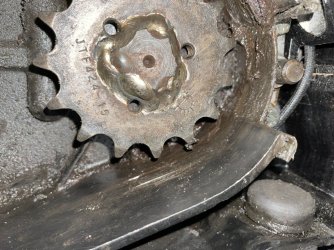
it's not a question of 'coming off' but 'spinning round'Bloody hell. What a mess. Why the fuck did they weld it all around? A little dab of weld would have stopped the sprocket coming off, and could have been ground off without ruining the entire output shaft.

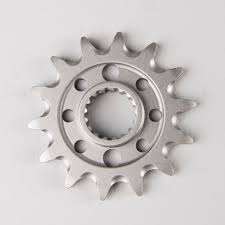

it's not a question of 'coming off' but 'spinning round'
the sprockets grind down the teeths of the Atlas shaft - until it's 'round' (you spin me right round like a sprocket baby)
seems to be a typical maladie of 80th trails, e.g. AT owners share the same fate.
My Atlas looked the same: after the shaft had been completely "drilled off" I put a 'final' new sprocket and the welder fixed it
Anyway once the teeths are gone the shaft is kaputt - welding does not do more damage but gives you another batch of 20000 kms.
You might think of opening the engine to replace the shaft but you realise that there's no spare parts anymore and nobody in todays business is willing to 'repair' a worn shaft.
You end up by grinding off the welding, sticking a new sprocket and welding it again.
So it's not the dumbness of "people" but a design fault of 80th engineers.
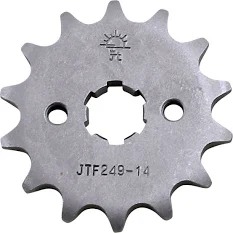
good engineers (many teeths - less stress on a single one)
View attachment 96458
bad engineers (only 6 teeths and small shaft diametre, like Atlas):
View attachment 96459

Hey Frranky I remember your name from the Atlas site. Do you know who ran the site or have access to the information on there? It would be great to get the information in the library on this site. Cheers AJit's not a question of 'coming off' but 'spinning round'
the sprockets grind down the teeths of the Atlas shaft - until it's 'round' (you spin me right round like a sprocket baby)
seems to be a typical maladie of 80th trails, e.g. AT owners share the same fate.
My Atlas looked the same: after the shaft had been completely "drilled off" I put a 'final' new sprocket and the welder fixed it
Anyway once the teeths are gone the shaft is kaputt - welding does not do more damage but gives you another batch of 20000 kms.
You might think of opening the engine to replace the shaft but you realise that there's no spare parts anymore and nobody in todays business is willing to 'repair' a worn shaft.
You end up by grinding off the welding, sticking a new sprocket and welding it again.
So it's not the dumbness of "people" but a design fault of 80th engineers.
good engineers (many teeths - less stress on a single one)
View attachment 96458
bad engineers (only 6 teeths and small shaft diametre, like Atlas):
View attachment 96459

right. Atlas has the 500 'shaft type' - the 500s probably suffer less from wear bc a) a little bit weaker engine b) street-driving style smoother than trail riding style (smoother)Isn´t the Atlas engine basically the same as the road 500 and thus the Montjuic, which developed into the water-cooled Zane bikes? We hear about lots of problems from those engines but I cannot remember much talk about destroyed gearbox output shafts. What is the difference there?
indeed the sites needs a refresh, I'll do some straight talking to the owner ...Hey Frranky I remember your name from the Atlas site. Do you know who ran the site or have access to the information on there? It would be great to get the information in the library on this site. Cheers AJ
Didn't Andy (the Kiwi one) recently (last year perhaps) have the drive sprocket shaft on his RGS re-splined and hardened in NZ?
some aspects:Andy has an Atlas as well. Sorry, Franky missed that effect. I have no interest in major engine rebuilding anytime soon. Maybe hard shock loads on the engine, wheel stands best avoided. I dont have the wheel stand Jean anyway. I can pop over stuff, but those long balance point ones dont happen for me.

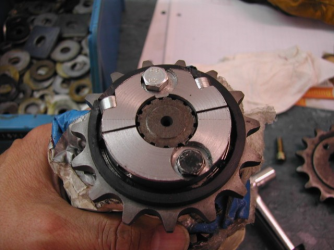
Thanks for your help,unfortunately the engine sprocket is welded solid therefore I have to change the rear wheel as the one fitted to for a 520. Can you please advise. VictorAttached for Vince: Atlas sprockets cross reference list
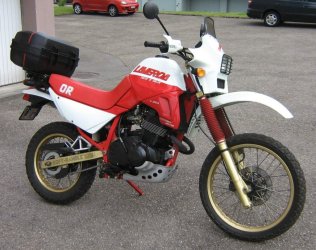
 . Amazing what some people can think is a good idea