Eu U-turn on petrol cars

Status
Not open for further replies.
Quite true, Lothar.

But... zero emissions surrounding EVs is still a load of bullshit. The vehicles themselves may not emit harmful/toxic gases, but there's still the micro-particle issue from tyres, brakes etc. Because these components rely on friction to work as intended, there will be wear in some form, emitting particles that are difficult to manage. I've read somewhere the reason for quite a few car manufacturers reverting to rear drum brakes in less powerful vehicles is entirely for this! They are apparently better sealed than previous systems and therefore collect and hold more dust, making maintenance again more complicated (read expensive!) because strict work and safety rules have been imposed. Imho, the only way around the micro-particle issue is less vehicles on the road... pretty unpopular, I know.

During production, EVs require immense amounts of energy. Due to the extensive use of aluminium alloys, far more than for conventional IC vehicles. Electricity is the major contributor in the production of aluminium. If that energy comes solely from conventional coal powerplants, the initial carbon footprint for each individual vehicle starts off pretty huge. The extensive use of plastics still relies primarily on dinosaur juice, refining that for the waste products that eventually yield the required plastics also causes several thousand (million?) tons of CO2 emissions worldwide. Even if the majority of the energy required came from sustainables as wind or solar, the production of those systems also requires loads of energy to begin with. Zero emissions is a very difficult goal to achieve. The question remains, from which point do we start counting emissions?

piet
 
Hi Piet,

EV's use mostely recuperation to brake. Brake-pads and Discs last something like 4-5 times longer than on conventional cars (on my A6 Allroad, i had to exchange the pads every 25.000km, the discs every 35.000 - 40.000km; on my EV, the brakes look like new after 42.000km...). Same goes for tires, as EV drivers typically do drive slower on German Autobahn due to range shrinking MASSIVELY if you go faster... My two sets of tires still have 50% to go... On the A6, 25.000 - 30.000km was the max I got out of the tires...

There have been several researches about the CO2 production/emission of conventional and EV cars and the latest studies show with the current mix of green power to conventional produced electricity, that after only 30.000km, the EV's are better.

Also keep in mind that Oil needs to be drilled, stored, shipped from offshore to shore by ships that consume the dirtiest diesel you could ever get (Schweröl), then need to be pumped to land, refined, stored, pumped into trucks (that run on diesel), be transported to the gas station, pumped into the underground tanks, then again pumped into cars, where it is burned with an "efficiency" of 25% roughly in average. The energy needed and the polution produced is MASSIVE for this... (go and look at the refinary in Godorf by night... you can see it from space...).

If you encounter all that, there is no logical way to use gasoline for transportation. None. Period.

Still, in a motorcycle or a sportscar, it is fun, I must admit...
 
That`s what the Venezuelan President was telling his country`s people to sing the other day , in the face of possible imminent USA military action .......

( actually it was Don`t Worry Be Happy , by Bobby Mc Ferrin , but close enough ... ) ..........

Hasn`t Venezuela got lots of oil ? .........
Plenty of oil. We'll be sending our grand children in uniform to get it.
Nothing new.
Paul
 
That is the way possibly but I don’t hold out much hope for charging View attachment 101206

Somewhere in amongst that lot is probably a Morini 350 Sport wiring loom ........


BTW ...... Which would be more eco-friendly ....... A forty year old Honda CG125 ... ( 70 mph / 140 mpg ) .... whose manufacturing / delivery carbon footprint faded into oblivion many years ago ......................... Or a massive .... ( in terms of weight and road space occupied ) .... EV manufactured in equally massive numbers by the friends of Putin ?

OK ...... So on a CG125 you get wet and cold if you get your timing wrong ....... but so what .......... After all , we`re supposed to be motorcyclists first and foremost ............ aren`t we ? ......................
 
Last edited:
The only electric vehicles which really appeal to me are those 45 mph e - pushbikes you see hooded up teenagers hooning and wheely-ing around the city streets on ......... They look like brilliant fun .............

Gotta watch out for them diving under your left elbow when you`re about to turn left though .........
 
The only electric vehicles which really appeal to me are those 45 mph e - pushbikes you see hooded up teenagers hooning and wheely-ing around the city streets on ......... They look like brilliant fun .............

Gotta watch out for them diving under your left elbow when you`re about to turn left though .........
My grandsons have them…. I had a go on the 20” wheel jobbie, after a few beers.

What a hoot, I was lapping the thing around the back yard at warp speed. 🤣🤣🤣

My son has a large brick pizza oven surrounded by river sand …. when the pizza oven jumped out and hit the front wheel of the e-bike, mid speedway style drift, I high sided it and was unceremoniously thrown off and the cheering and laughing stopped!

My tightarsed grandson said I had to pay $120 for a new pair of front forks! 😠

Christmas Day is at their house this year, I’m going to have a crack again, if I’m allowed 😁
 
Hi Piet,

EV's use mostely recuperation to brake. Brake-pads and Discs last something like 4-5 times longer than on conventional cars (on my A6 Allroad, i had to exchange the pads every 25.000km, the discs every 35.000 - 40.000km; on my EV, the brakes look like new after 42.000km...). Same goes for tires, as EV drivers typically do drive slower on German Autobahn due to range shrinking MASSIVELY if you go faster... My two sets of tires still have 50% to go... On the A6, 25.000 - 30.000km was the max I got out of the tires...

There have been several researches about the CO2 production/emission of conventional and EV cars and the latest studies show with the current mix of green power to conventional produced electricity, that after only 30.000km, the EV's are better.

Also keep in mind that Oil needs to be drilled, stored, shipped from offshore to shore by ships that consume the dirtiest diesel you could ever get (Schweröl), then need to be pumped to land, refined, stored, pumped into trucks (that run on diesel), be transported to the gas station, pumped into the underground tanks, then again pumped into cars, where it is burned with an "efficiency" of 25% roughly in average. The energy needed and the polution produced is MASSIVE for this... (go and look at the refinary in Godorf by night... you can see it from space...).

If you encounter all that, there is no logical way to use gasoline for transportation. None. Period.

Still, in a motorcycle or a sportscar, it is fun, I must admit...
Lothar,

EV brakes may rely largely on retardation by recuperation, but micro-particle emissions are inevitable, no matter how small the amount. Why would someone want a 500+kW EV if not for the offered performance? The amount of dual-motor Tesla S I see in every day traffic is boggling... 1020hp for a family sedan? 2.1 sec 0-100kmh, WTF? If this performance is exploited, tyres will suffer and brakes won't last any better than in an equivalent IC vehicle, not easy to overwhelm physics in these realms. Only "sensible" EVs in imo are 50kW shopping bags that can be conveniently recharged overnight. I drove a Dacia Spring recently and was suitably impressed, cheap and cheerfull for short distance use, quite OK for what it represents. As you may remember, my neighbour runs a tyre service. He can't stop laughing at the amounts of rubber EVs go through. Yeah, drive sensibly, brakes and tyres will last. But it seems not relying so much on the vehicles' brakes also has its downsides, he also reports he finds an extraordinary number of rusted discs and seized brake calipers in EVs.

Oil drilling and transport won't cease when fossil fuels are no longer needed. Our everyday life is ruled by plastics, we've made ourselves dependant on oil in more ways than for fuels only. Consider the amount of plastics in a car and new/better compounds are constantly being developed. Even the frames of the cyclists that are "saving the planet", riding around on their €10000 carbon fibre velocipeds are made from oil extracts... then there's the issue that 95% of those frames originate in China and are distributed around the globe in ships burning megatons of said crude. :rolleyes:

No matter how we look at it, humankind is working hard at exterminating itself, and calls for counter measures are exceedingly being ignored.

Anyway, as I see it, we'll be able to enjoy our clunkers until we kick the bucket, stay calm and keep riding. There'll be more than enough fuel to go around, might become a bit expensive though...

piet
 
My grandsons have them…. I had a go on the 20” wheel jobbie, after a few beers.

What a hoot, I was lapping the thing around the back yard at warp speed. 🤣🤣🤣

My son has a large brick pizza oven surrounded by river sand …. when the pizza oven jumped out and hit the front wheel of the e-bike, mid speedway style drift, I high sided it and was unceremoniously thrown off and the cheering and laughing stopped!

My tightarsed grandson said I had to pay $120 for a new pair of front forks! 😠

Christmas Day is at their house this year, I’m going to have a crack again, if I’m allowed 😁
The pizza oven jumped in your path? Geez, you must have been pissed...:ROFLMAO:

piet
 
I like my toys mechanical in nature. I think hybrid cars have a huge role in our future and I think my wife's Toyota Venza Hybrid is fantastic. My Dad's Jag I-pace while a blast to drive has certainly been lacking in the reliability department. My 2.0 TDI wagon on the other hand still nets me 900km to a 55 liter tank (close to 600 miles a 14.5 US gallon) on the highway. With around 185hp and 325tq it's approaching quick-ish.

With my current position I have customers in the provinces of Quebec and New Brunswick that I may be required to see on a moments notice. I do the 1000 mile (1600km) drive in one shot and it usually takes me about 14.5 hours. That's less than 2 tanks in the TDI, a little over 2 tanks in the Venza and well over 2 days if I had to take an electric vehicle..... factor in winter driving and lack of charging infrastructure and you get the picture.

I'm in the electrical industry and I am responsible for or rebuilding induction based inverters on a regular basis. I also have access and talk to some if the inverter industries leading engineers when I'm in the States and these are the conversations that we have over dinner on a frequent basis.

Eventually EV cars will settle on a format that is pretty much standard, eg buss voltage and transistor type, but without power grid and infrastructure development it's all a bit of a moot point.

Most of the major car manufacturers are scaling back on their EV production right now and this is leaving parts suppliers in a bit of a pinch as production lines have been built. Floor real-estate has been lost to non revenue generating production lines while capital is tied up in stagnant equipment. Ultimately those costs will be offset against the sale of hybrid or combustion vehicles and will be passed on to the consumer.

I've told the kids that I'm going to burn as many hydrocarbons as possible before they have to box me up and stick me in the ground.
 
Last edited:
Since I drive an EV, the funny thing is that most people in a discussion not happy with EV's are those, that don't have one and never had one for more than a test ride! All kind of resistance, "counter arguments" etc. etc. Funny enough, those who have one are really happy with it and would never turn back (with very rare exceptions).

If 5 times less particles emitted from the brakes is not an argument for an EV, if half the cost for driving the same distance (if not less) in optimal conditions, if almost no Service cost in more than 40.000km (except for the airfilters and the wipers...), if re-charging ANYWHERE you can find a power plug doesn't convince you, stay with the petrol driven car and be happy. Fully OK with me. And yes, there are rare cases where using a petrol driven car makes more sense (extreme long distance drives f.e.; it makes me question though if flying wouldn't be a) cheaper, b) quicker, c) less poluting etc. etc. etc., but I assume there are no flights that make sense so you take the car or you have to cary something with you that you can't take on a flight).

Infrastructure in our country is absolutely no issue at all. We have something like 12.000 Gas Stations and more than 200.000 public charging stations. Plus another Million private ones roughly. Who has a gas station at home? I can charge even from my solar power system, starting in roughly March until roughly Oktober/November in 95% of all cases. Rest of the year, I can charge from my household power supplier. There are meanwhile even boxes that look for the best power-deal and charge your car on the lowest power cost somewhere at night. Is someone re-fuling your car at night while you sleep when gas prices are low? Maybe not, right... ;)

in 40.000km, my Audi would have eaten 2 sets of tires, 1.500€ each. Cost for brakes would have been something like another 1.500€ in total - at least... Not to talk about Oil exchanges, Filters, worn suspension parts etc. etc. etc. I spent on the Audi a minimum of 1.000€ on service every year, sometimes above 2.000€. On the EV, I spent a total (including a replacement of a ball joint and brake fluid replacement etc. etc. ) of roughly 1.100€ - in 4 1/4 years.

The car consumes less, is more silent, more powerfull, has equal space and comfort than the Audi and overall is the economically better choice.

To your point, Piet, of 1.000Hp in a SUV: Nonsens for me, I agree. Still extreme fun. That does not mean that every EV driver is just accelerating insanely at every traffic light or stop or is driving 250km/h on the highway. It is great to have the power to accelerate when needed (or wanted), but you do not do that all the time.

On the point of brakes rusting: yes, happens. Mostly on people that do park their cars outside. Still, these cars are either 5 - 8 years old and/or have seen 80.000km or more, which is 2-3 times longer than the brakes on the Audi lasted... Smart EV's do use the brakes once in a while to keep the rust off. As said, mine look like new after 40.000+ km and 4+ years. so do my tires. And my car has over 500HP and almost 600Nm. I did not buy it for the power, I did buy it because it has 4-wheel drive, which is safer in wett and winter. Simple as that.

My Neighbor next door had a Toyota hybrid. When he sold the car with 180.000km, it still had the first brakes and second set of tires on it. It was his daily commute to his company. He was so convinced afterwards that he got himself a Volkswagen ID4. Meanwhile he has the bigger one (ID7?) and is totally happy with it.

I have done round-trips of 1.100km and more with my EV in 2 days. The navigation system plans the charging stops, leads me to the charging station and back to the route and I can even plan that before on my mobile so that I know what time to get up. Charging takes typically less than 20 minutes overall, which gives me time for a bio brake and a coffee. In some cases, the car calls me back before I finished the coffee really... On a distance of roughly 550km (from here down to Zurich), the time difference to the Audi was about 30 Minutes. Easy to plan in...
 
Last edited:
I’m in my fourth year of owning a VW ID3 EV. Just past 50k miles a few months back. Charged at home for 90% of charges. Battery life has not changed noticeably since new. Costs about a fifth to run compared to my other car which is a VW Golf 2 litre diesel. Although it goes for VW service, they don’t do anything as there’s nothing much to do. Brakes are still just fine because of regenerative braking. It’s on third set of tyres - the originals were crap, but EV specific tyres are now more widely available than 4 years ago. I’ve only once had to wait 10 mins in a motorway service station to get to a charger. Driving an EV changed the way I drive, it’s more relaxing. I’m not a car buff, cars are just transport for me. My diesel gets used for long journeys (I drive through France a few times a year, and the Golf does 600 miles on a tank, where the EV is 200 miles). The Golf fuel consumption doesn’t drop as drastically as the EV at higher speeds -70-80mph.
 
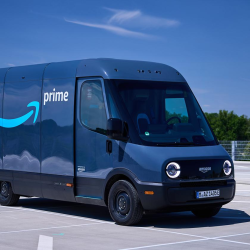
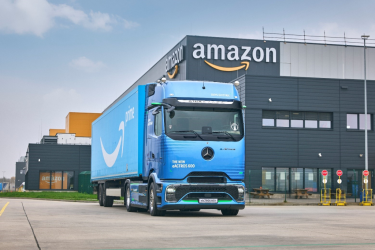
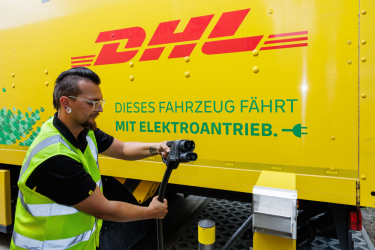
you would be surprised, but we have already electric busses, trucks and even camping vans, camping trailers that are EV's... Amazon over here delivers parcels with EV trucks, German Post has started to, too... Fendt is one of the first to offer electric tractors, Linttas is having the first combine harvesters https://linttas.com/

They must all be totally mad I assume...

1765890786263.png
1765890806856.png
1765890864465.png
 
Since I drive an EV, the funny thing is that most people in a discussion not happy with EV's are those, that don't have one and never had one for more than a test ride! All kind of resistance, "counter arguments" etc. etc. Funny enough, those who have one are really happy with it and would never turn back (with very rare exceptions).

If 5 times less particles emitted from the brakes is not an argument for an EV, if half the cost for driving the same distance (if not less) in optimal conditions, if almost no Service cost in more than 40.000km (except for the airfilters and the wipers...), if re-charging ANYWHERE you can find a power plug doesn't convince you, stay with the petrol driven car and be happy. Fully OK with me. And yes, there are rare cases where using a petrol driven car makes more sense (extreme long distance drives f.e.; it makes me question though if flying wouldn't be a) cheaper, b) quicker, c) less poluting etc. etc. etc., but I assume there are no flights that make sense so you take the car or you have to cary something with you that you can't take on a flight).

Infrastructure in our country is absolutely no issue at all. We have something like 12.000 Gas Stations and more than 200.000 public charging stations. Plus another Million private ones roughly. Who has a gas station at home? I can charge even from my solar power system, starting in roughly March until roughly Oktober/November in 95% of all cases. Rest of the year, I can charge from my household power supplier. There are meanwhile even boxes that look for the best power-deal and charge your car on the lowest power cost somewhere at night. Is someone re-fuling your car at night while you sleep when gas prices are low? Maybe not, right... ;)

in 40.000km, my Audi would have eaten 2 sets of tires, 1.500€ each. Cost for brakes would have been something like another 1.500€ in total - at least... Not to talk about Oil exchanges, Filters, worn suspension parts etc. etc. etc. I spent on the Audi a minimum of 1.000€ on service every year, sometimes above 2.000€. On the EV, I spent a total (including a replacement of a ball joint and brake fluid replacement etc. etc. ) of roughly 1.100€ - in 4 1/4 years.

The car consumes less, is more silent, more powerfull, has equal space and comfort than the Audi and overall is the economically better choice.

To your point, Piet, of 1.000Hp in a SUV: Nonsens for me, I agree. Still extreme fun. That does not mean that every EV driver is just accelerating insanely at every traffic light or stop or is driving 250km/h on the highway. It is great to have the power to accelerate when needed (or wanted), but you do not do that all the time.

On the point of brakes rusting: yes, happens. Mostly on people that do park their cars outside. Still, these cars are either 5 - 8 years old and/or have seen 80.000km or more, which is 2-3 times longer than the brakes on the Audi lasted... Smart EV's do use the brakes once in a while to keep the rust off. As said, mine look like new after 40.000+ km and 4+ years. so do my tires. And my car has over 500HP and almost 600Nm. I did not buy it for the power, I did buy it because it has 4-wheel drive, which is safer in wett and winter. Simple as that.

My Neighbor next door had a Toyota hybrid. When he sold the car with 180.000km, it still had the first brakes and second set of tires on it. It was his daily commute to his company. He was so convinced afterwards that he got himself a Volkswagen ID4. Meanwhile he has the bigger one (ID7?) and is totally happy with it.

I have done round-trips of 1.100km and more with my EV in 2 days. The navigation system plans the charging stops, leads me to the charging station and back to the route and I can even plan that before on my mobile so that I know what time to get up. Charging takes typically less than 20 minutes overall, which gives me time for a bio brake and a coffee. In some cases, the car calls me back before I finished the coffee really... On a distance of roughly 550km (from here down to Zurich), the time difference to the Audi was about 30 Minutes. Easy to plan in...
When applied to a country the size of Canada, EV's aren't a practical solution aside from the dense population corridors. Hybrids seem to be a more pragmatic solution, that would also help to reduce emissions, while offering combustion range convenience.

While people seem to be quite aware of the repercussions of a gasoline/diesel fire most don't seem to be aware of the hazards of lithium ion battery combustion. The energy density and toxicity of a lithium ion fire is terrifying as is the fact that it is an exothermic reaction. It's also a scary proposition to think of a lithium ion battery pack going into thermal runaway in an underground parking garage. Compound that with a ventilation system and the fact that lithium and cobalt poisoning can occur through skin contact and it should give pause for concern and open up a dialogue about lithium ion battery safety.

Not all is rainbows and unicorns in the EV world.
 
From AI...:

Electric vehicles (EVs) burn significantly less often than internal combustion engine (ICE) cars, with data showing EVs having far fewer fires per 100,000 vehicles sold, though EV fires can be harder to extinguish and may reignite due to battery chemistry, leading to high-profile incidents that skew public perception despite lower overall risk. For instance, some data shows around 25 EV fires per 100,000 sold versus 1,530 for gasoline cars, making gasoline cars far more prone to igniting.
Key Statistics & Comparisons
  • US Data (NTSB): EVs have about 25 fires per 100,000 vehicles sold, while gasoline cars have around 1,530, and hybrids 3,475.
  • European Studies: Reports from Sweden and London show similar trends, with ICE vehicles being 20-30 times more likely to catch fire than EVs.
  • Miles Traveled: One report suggests one Tesla fire for every 205 million miles, far less than the average for all car types.
Why the Misconception?
  • Media Coverage: EV fires, while rare, are dramatic and get more media attention, creating a perception of higher risk.
  • Extinguishment Challenges: EV battery fires involve complex chemistry (like lithium-ion) and can reach extreme temperatures (over 1,200°F), requiring more water and time to cool and prevent reignition, which challenges firefighters and makes incidents seem more severe.
In Summary
Despite their challenging extinguishment, data consistently shows EVs are far less prone to catching fire than gasoline or hybrid vehicles; they are simply a different type of fire risk.
 
It's also a scary proposition to think of a lithium ion battery pack going into thermal runaway in an underground ..
..or in a pocket device like a phone, or a head torch, or a domestic device like a speaker or cleaner, chainsaw, drills etc, etc. Chances are we all have loads of these batteries lying around our houses, whilst we sleep. Rule 1 is don’t mess around with them.
 
Status
Not open for further replies.
Back
Top