External Oil Filter/Magnefine Setups

ksoholm

Senior member
Lads,

I have read the couple of posts here about using a Magnefine transmission filter plumbed in before the oil cooler as a method of filtering oil. Has it been found effective?

What other external filter options work well? Does anyone have photos? I'm pondering adding one to my RGS.

Thanks -
 
Contativesal topic, finding a tidy place to fit anything is hard. Piet posted recently about his way. I added a 30-micron cleanable mesh filter about the size of a cigarette pack for a while but it was a pain to get at to clean. I just do oil changes every 2 to 3000k and call it good. The system is low-pressure and doesn't like any restrictions. A search might show some pics maybe. I was really keen on this for a long while so I see where you are coming from. I have been there including Synthetic oil etc etc, but not so much now. I just ride them hard and do lots of oil changes.
 
Been looking at aftermarket external filter kits as well, e.g. kits for Yam XS650 / Brit twins.
Will the 9mm oil pump from a 1200 in my 3CL suffice to push the oil through the system ?
 
he might be wrong on the points, (and he now has two Laverdas with electronic systems in his emporium) but he is probably right on the oil filter fashion accessory, it gives people comfort, but if you strangle the oil circulation it will then give the alloy welders great earning potential. A friend recently bought some new oil hoses for his triple (not fitted with a filter) and was shocked to see the restriction to the bore at the engine end connections.TOG has now done 270,000 kilometres on two (rotating) engines and never a failure caused by oil.
CLEM
 
I have an external oil-filter on my Jota since roughyl 50.000km. The oil stays clear for longer and the restricition is - with a 10mm pump... - not really much as I also use a mesh type filter that you simply wash out and re-use (which also has a magnet in it to collect metal parts). No oil-supply issues, though the center bearing of my crank gave up 2 years ago for what reasons ever. the rest of the engine looked quite well and all damages had nothing to do with the oil supply.

Piet uses a Harley Davidson external filter plate and according filter, which he has on the bike for VERY long (on his yellow rocket and I think also on the RGS). Don't think it caused any issues at all.

So - if you want it, go for it. Just don't listen to the sceptics, 99% of them don't have experience with this solution, just concerns about it. ;)
 
I have never understood this fear that an external oil filter will somehow restrict oil flow to the engine. There is no difference between a "low pressure" and "high pressure" oil pump. The only difference is a "high pressure" oil pump has a restriction on the output side due to the engines plain bearings not allowing full flow from the pump. If there was any restriction on a Laverda's oil pump it is also now a "high pressure" pump. Also, oil filters don't restrict oil flow and most have a bypass valve in the filter in case it gets plugged. If oil filters were so bad, no manufacturer would fit them. As for Harley Sportster filters being different and made for a low pressure system, I bet the filter is no different than any other filter.

None of my Laverda's have a oil filter but I thought about fitting one. I have fitted them to British bikes with low pressure ball and roller bearing engines and have never had a problem. I have a filter on my 1950 BSA M21 which pretty much has no oil pressure at all and no problems with it either.
 
only problem I have with installing an oil filter on to a triple is the resultant mess of hoses that results in plumbing it in
detracts from what is essentially one of the most beautiful engines ever built

have only seen two bikes that had what I believe to be well thought out and installed oil filter set ups and one of those is the MK3 Motodd I built for Mike
Both these bikes the oil filter was designed during the custom build so it was possible to fit them to the bike without upsetting the visual appeal of a Laverda engine

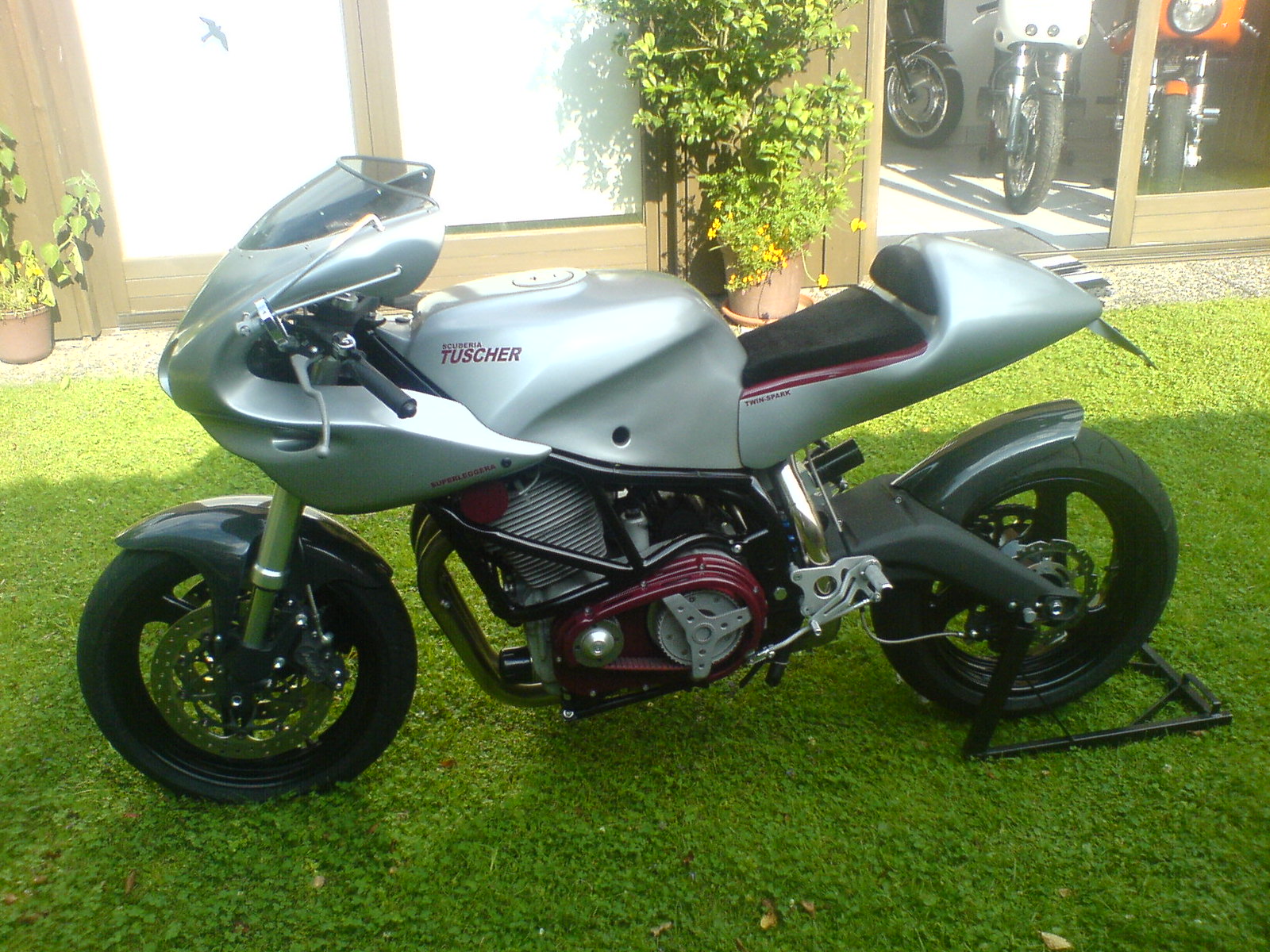
There is the Austrian Tuscher bike that the owner modified to take a spin on oil filter direct onto a machined section on the front of the lower engine case, that was very neat and I would have looked at doing the same but I had already finished building the Motodd engine before Mike asked me to install an oil filter

DSC00093

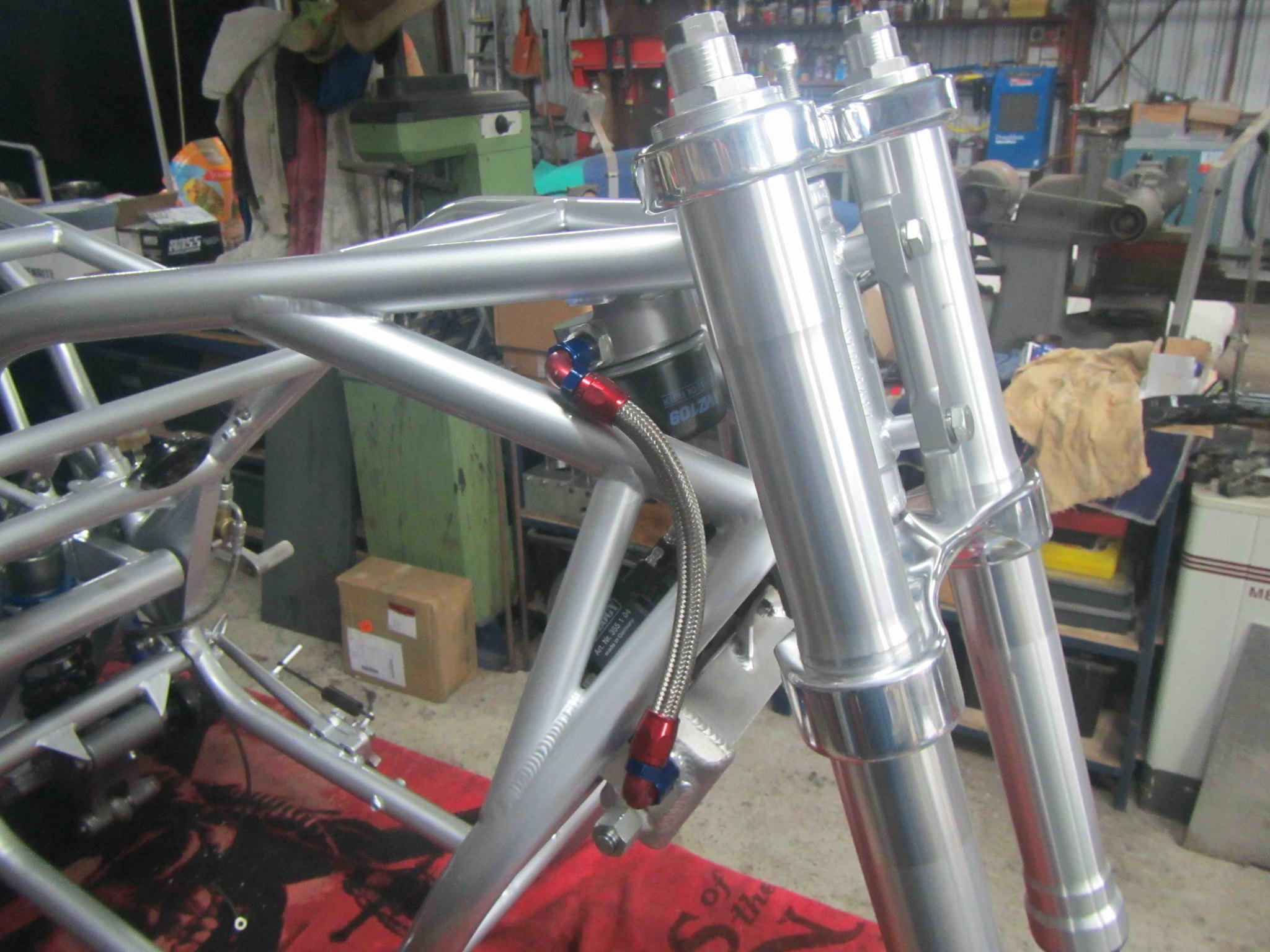
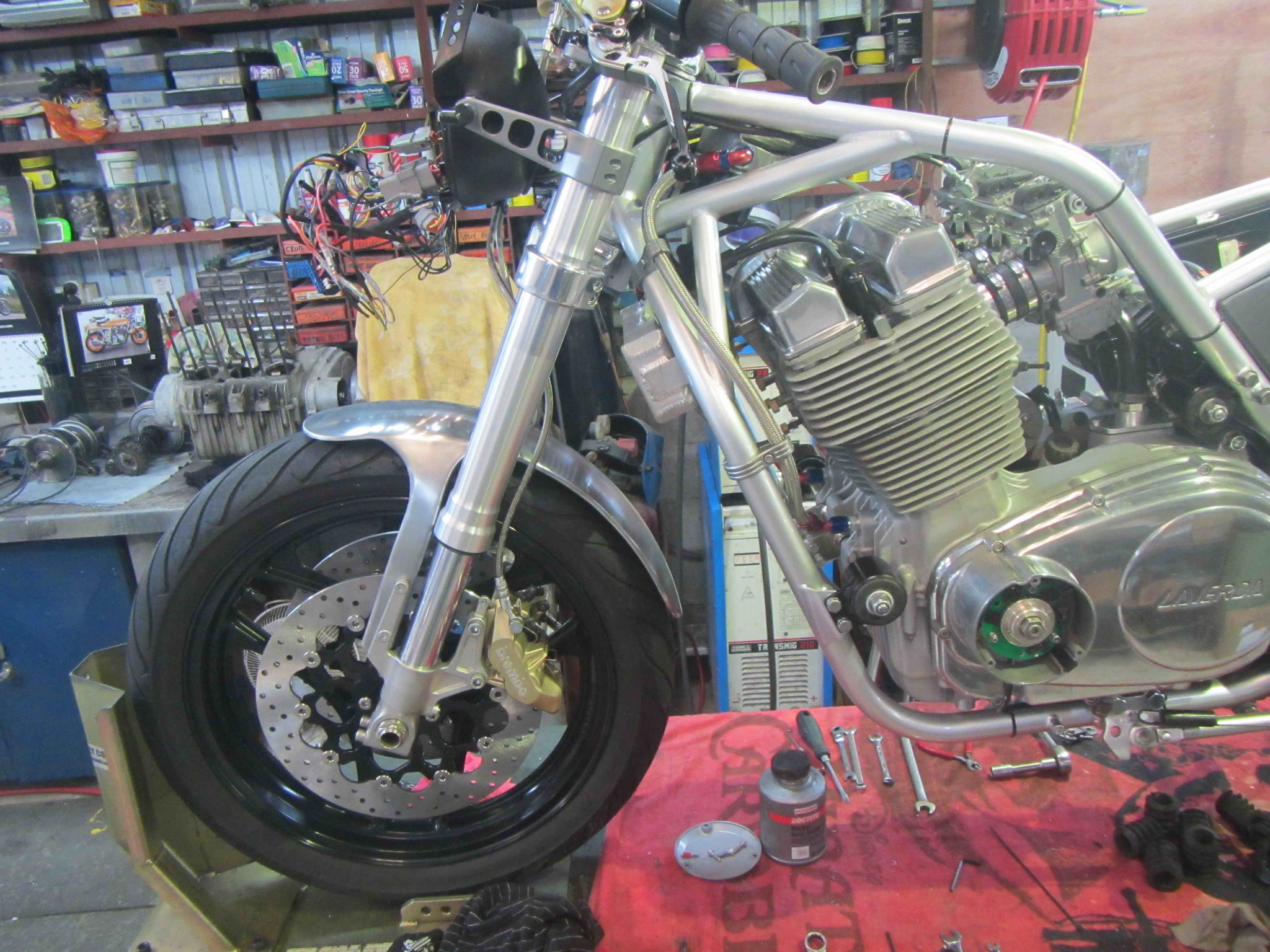
And Mike's Motodd where I machined a custom Oil filter head that mounted inside the headstock and used a Ducati spin on oil filter
Oil cooler was then custom made and is what they call a dual bypass oil cooler where there is a division at half height so oil goes across the cooler in the top section and returns to the outlet in the lower section

Motodd oil filter

Motodd oil filter 2
 
When fitting my homemade filter "fixture" many years and miles ago I tested the pressure with and without a filter ( did the job of carving out the element ) the gauge did not register any difference at all. When cold oil it was a little pressure, when hot none. Roller bearings all over my RGS engine exept for the camshaft which surely likes the cleaner oil as will all other moving parts in any engine. Has same filter on my old BSA by the way..
 
I have never understood this fear that an external oil filter will somehow restrict oil flow to the engine. There is no difference between a "low pressure" and "high pressure" oil pump.
Correct. The oil pump is a positive displacement device. The pump output is determined only by the speed of the pump. It's mechanically locked to the pump, like a gear or chain. It's capable of delivering oil at very high pressure.

The delivery pressure coming out of the pump is determined by what restriction (back pressure) is in the oil system. If you put a filter after the pump, the pressure between the pump and filter will be higher, but it won't make the slightest difference to the flow rate or pressure of oil downstream from the filter. Although it will put a bit extra load on the shaft that drives the pump.
 
When fitting my homemade filter "fixture" many years and miles ago I tested the pressure with and without a filter ( did the job of carving out the element ) the gauge did not register any difference at all. When cold oil it was a little pressure, when hot none. Roller bearings all over my RGS engine exept for the camshaft which surely likes the cleaner oil as will all other moving parts in any engine. Has same filter on my old BSA by the way..
No pressure will always be no pressure.

Paul
 
If a standard crank can last at least 200 000 km with regular oil changes before the slingers are full, how many decades do some of you intend keeping on riding the things?
How old are you? Has a fuel substitute been found that doesn't need octane boosters, lead subsitute and winter stabilisers?

Paul
 
Some people actually ride their bikes, sometimes from England down to Italy and back and cover 4.000 - 5.000 Km on that way. Having to do 2-3 oil exchanges on the way or having none to do might be a hugh difference for them...
And maybe ask Piet what he finds in the slingers (or Red) of Cranks that have less than 100.000km on them...
 
If a standard crank can last at least 200 000 km with regular oil changes before the slingers are full, how many decades do some of you intend keeping on riding the things?
How old are you? Has a fuel substitute been found that doesn't need octane boosters, lead subsitute and winter stabilisers?

Paul
Bollocks Paul, that is simply a myth believed by those wearing rose-tinted Laverda glasses. I'd like to believe it, but experience tells me otherwise.

Sure, a crank CAN still run OK'ish after 150000km, not many do. Clearances and trueness will have suffered throughout with the associated clanging and shaking, fuelling the old addage "They all do that, Sir".

The slingers will be full long before that, no matter how often you change the oil. Solids will deposit themselves in the slingers as soon as they circulate through the engine after being "produced". The aim of a filter is to catch these solids BEFORE they go around and are deposited...

I've rebuilt and repaired many cranks, Laverda and others. Even those that seemed to have been running smoothly are often in dire need of repair, more often than not, impending disaster is just around the corner.

Run a Laverda crank for 200000km, you may as well simply chuck it in the scrap and install a new one, there's not much in there that will be re-usable.

Pictures show the pin and rod of a 120° crank from a SFC1000 with, iIrc, approx. 60000miles. Another 5000 and serious clunking would have been noticable.

piet

DSCN9287.JPGDSCN9288.JPG
 
Bollocks Paul, that is simply a myth believed by those wearing rose-tinted Laverda glasses. I'd like to believe it, but experience tells me otherwise.

Sure, a crank CAN still run OK'ish after 150000km, not many do. Clearances and trueness will have suffered throughout with the associated clanging and shaking, fuelling the old addage "They all do that, Sir".

The slingers will be full long before that, no matter how often you change the oil. Solids will deposit themselves in the slingers as soon as they circulate through the engine after being "produced". The aim of a filter is to catch these solids BEFORE they go around and are deposited...

I've rebuilt and repaired many cranks, Laverda and others. Even those that seemed to have been running smoothly are often in dire need of repair, more often than not, impending disaster is just around the corner.

Run a Laverda crank for 200000km, you may as well simply chuck it in the scrap and install a new one, there's not much in there that will be re-usable.

Pictures show the pin and rod of a 120° crank from a SFC1000 with, iIrc, approx. 60000miles. Another 5000 and serious clunking would have been noticable.

piet

View attachment 67029View attachment 67030
Ok then.

What's the average yearly mileage of a Laverda nowadays?
They probably suffer from non use far more than use.

Paul
 
If you had paid attention, I did state in a previous post, (not sure if in this thread, too lazy to check) that a filter installaton makes most sense if high annual mileages are envisaged. In that case, a filter will afford peace of mind as well as save a not inconsiderable heap of cash by considerably extending oil change intervals. As Lothar has noted, needing to change the oil during an extended continental trip is simply a royal pain in the butt, totally needless but completely avoidable with a filter.

I can fully appreciate anybody trying to protect his/her freshly and usually very expensively re-built engine as well as he/she can, even if only negligible mileages are attained. Up to him/her, just the same as painting the bike any colour they want...

Not everybody wants to run his/her restored pride and joy into the ground as quickly as possible, although I'd have no objection, keeps my fridge filled! :LOL:

piet
 
If you had paid attention, I did state in a previous post, (not sure if in this thread, too lazy to check) that a filter installaton makes most sense if high annual mileages are envisaged. In that case, a filter will afford peace of mind as well as save a not inconsiderable heap of cash by considerably extending oil change intervals. As Lothar has noted, needing to change the oil during an extended continental trip is simply a royal pain in the butt, totally needless but completely avoidable with a filter.

I can fully appreciate anybody trying to protect his/her freshly and usually very expensively re-built engine as well as he/she can, even if only negligible mileages are attained. Up to him/her, just the same as painting the bike any colour they want...

Not everybody wants to run his/her restored pride and joy into the ground as quickly as possible, although I'd have no objection, keeps my fridge filled! :LOL:

piet
I do pay attention but memory isn't what it used to be.
Changing oil on a long trip is totally needless indeed. Better done at home.

Paul
 
All reads are outwardly correct, sort of. What troubles me, the 1200 hot rod motor i put together was inherited with a history of destroying the upper valve train parts, most notable destroyed cam followers, posted photos prior. The previous discussed "oil the primary chain" idiotic drilling of a post oil pump gallery around 2-3m/m hole. Once plugged this motor has been trouble free for more than 15 years. Have my limits in knowledge for hydraulics, yet the bleeding of post oil pump pressure did damage to the motor valve train. Did measure the actual pressure once, was low though how low i cannot recall. It was not 90psi like in a copper s driven by a family member, when hot it plummeted at idle.... sit here with my teapot of Lapsang Souchong tea..... j.
 
Back
Top