Harsh Reality Pics - The Black Museum

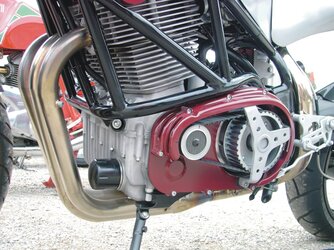
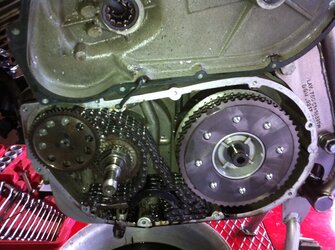
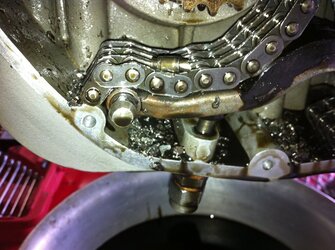
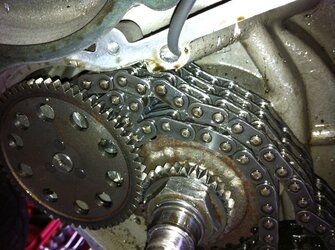
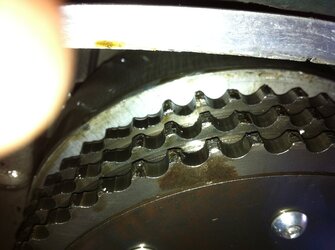
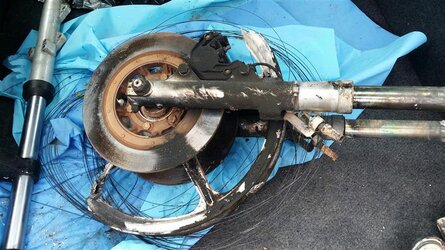
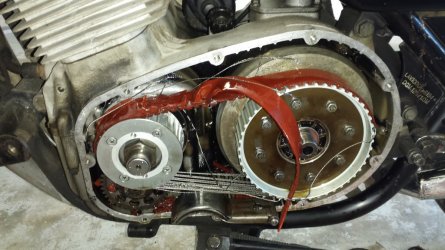
My beloved Belt Drive let go about 3 years ago, had it in there for 10 years, replaced belts regularly as you do. Engine out, stripped, cleaned out debris. Lucky nothing inside gearbox, crank, etc. While it was out
Re-bore, pistons, and Head work done by Red. Went back to duplex chain drive.
 

Attachments

  • Gen III Belt Sept 2015.JPG
    Gen III Belt Sept 2015.JPG
    145.2 KB · Views: 73
  • Belt Failure Nov 2017.jpg
    Belt Failure Nov 2017.jpg
    137.1 KB · Views: 71
My beloved Belt Drive let go about 3 years ago, had it in there for 10 years, replaced belts regularly as you do. Engine out, stripped, cleaned out debris. Lucky nothing inside gearbox, crank, etc. While it was out
Re-bore, pistons, and Head work done by Red. Went back to duplex chain drive.
What a shame those belts don't work, I could imagine the primary drive would have been much quieter and smoother???
 
What a shame those belts don't work, I could imagine the primary drive would have been much quieter and smoother???
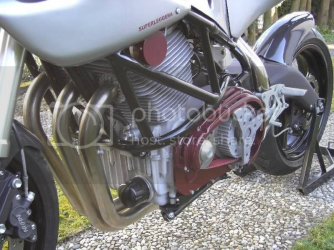
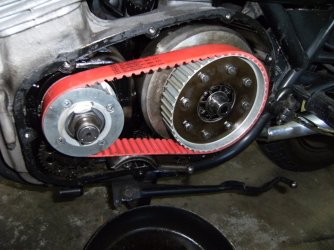
Yes, much quieter,smoother action. Less rotating mass. The pulley diameters changed the gearing by close to 10% higher, which I didn't mind.
Still, I had 10 years out of it, with a few track days thrown in. Thought it would not fail, but there you go. It failed at a fairly easy accelerating pace, I knew immediately what the problem was. Clutch in engine off and coast to a stop. Zero internal damage. Must say I am very impressed with the"Hans Tuscher" dry belt system.
 
That's quite a speccy special, Thomas! A LOT of development and build work gone into that!! What did they do to fit that very wide section rear tyre? Move the motor to the right or outrig the drive sprocket? The former could create probs with the alternator width on a triple.
There was a bit of discussion about it on this forum years ago here. Seems Piet had a hand in its creation so he may be able to answer specific questions.
 
There are plenty of nice specials out there but only one question:
how many thousands or tens of thousands of km does it do every year.

Paul
 
Mine will do plenty, Paul. But as special as it will be to me it doesn't have the degree of trickery of that beast. I've done much modification but the overall look is SF(sort of C) - hence the SFQ tag - retaining some of the classic SFery.
 
I will bet that you had previously damaged (eg cracked and not seen) or missing teeth, prior to that breakage, usually caused by using the teeth to lock the crank when tightening the bejeesus nut, not many had the factory tool, I did and loaned it to a looser, who never returned it, I dont believe him to be in Laverda circles, but if his head ever pops up, I will be there with my very long memory! for a long time they were unobtainium, those that had them guarded them closely (unlike me) recently a chap in Ireland has been making a substitute which works very well, but is an ugly thing and is not comfortable in the hands.
CLEM
 
The primary chain was around 17.000 km old.

During the installation of that chain, the wrong method was definitely not used to block the drive with a flat steel.
I only work here with a high-quality pneumatic impact wrench from HAZET in order not to generate any bending forces on the crankshaft..

Brettoni said, this is due to the higher alternating forces due to the significantly lighter crankshaft + the higher power.
After this happened to him several times, I think he knows what he's talking about.

As a precaution, changing a chain every 10,000 km with an SFC is no problem. A twisted crankshaft or a destroyed engine housing does.
Everyone has to decide for themselves what to do here.

Thomas aus LAU
 
I did two triplex chains on mine, one on the road and one on the track. The big strong wide oil pump from LavParadies took a whack but no other damage, very lucky. Two single chains since and no problems. It is a very easy mistake when pushing hard on the racetrack to change down too early. Many have blown up engines that way, not just Laverdas and not just primary chains. It was a conscious effort to force myself to let the revs drop sufficiently, it made for smoother faster laps.
 
The primary chain was around 17.000 km old.

During the installation of that chain, the wrong method was definitely not used to block the drive with a flat steel.
I only work here with a high-quality pneumatic impact wrench from HAZET in order not to generate any bending forces on the crankshaft..

Brettoni said, this is due to the higher alternating forces due to the significantly lighter crankshaft + the higher power.
After this happened to him several times, I think he knows what he's talking about.

As a precaution, changing a chain every 10,000 km with an SFC is no problem. A twisted crankshaft or a destroyed engine housing does.
Everyone has to decide for themselves what to do here.

Thomas aus LAU
I'm terribly guilty.
I bought my SFC in January 1993 and used it until it was burnt in October 2016. Mostly road use, several 10s of thousands of km, and some track. The primary that was in the bike when I bought it stayed there and its history was unknown apart from the fact that the bike had been raced.
Was I very lucky or were you very unlucky Thomas. Or was something else happening.

Paul
 
Yes, what happened to you was criminal, nonsensical, unfair and mean - a stroke of fate.
Maybe if that hadn't happened, one day you could have broken your primary chain or broken your front wheel and destroyed the SFC AND you.

Who knows?

Rebuilding is a new challenge for you and you will be proud, when that job is done.
People quickly forget bad events ...

By the way:
To be on the safe side, I swapped the rear magnesium hub for an original new one from 1975. Old magnesium can be a ticking time bomb under heavy loads.

Thomas aus LAU
 
Last edited:
Back
Top