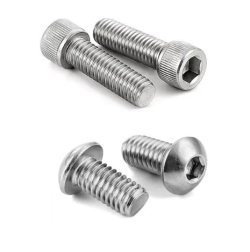
stainless engine bolts of 750sf2?

mikeb

New member
Location
new zealand
Hi. PO has used shiny A2-70 stainless bolts (and nyloks) for the engine mounts on 750sf2. i've read some threads on this forum and there appear mixed views on their suitability, especially given the stressed nature of the engine. i would have thought steel 8.8 or 10.9 were better choices.

so... change to steel or don't worry about it?

thanks!
 
I run stainless hardware on lots of bikes and have never had a problem in 50 years. That is even on high stress bolts like the brake calipers and motor mount bolts. Don't worry about it.

And newer model BMW bikes have a number or stainless bolts on them,
 
I’ve used stainless bolts in almost every bike I’ve owned since 1978. Most were for the bling factor, some in stressed areas.

Never had one break, even when on a bike that a car modified into scrap metal.

Occasionally they would bind up (nut and bolt, not stainless into aluminium) and the bolt only broke while using a breaker bar with a 3 foot pipe on the handle, trying to remove the bound nut.

A forum member, metallurgist boohared the use of them, point taken, but doctors say I shouldn’t drink alcohol….. again, point taken. 🍺
 
Stainless steel is a very hard metal and I’m not sure how it compares to machine grade, but nylock nuts are a very idea good for that vibrating motor. Personally I’ve used stainless allen head bolts on my 750 engine case, much to the distain from the rivet counters here.
 
SFQ has M12 fine thread bolts with original SF1 nylocs on the four lower engine mounts. I had to import the fine thread bolts from the UK. 14,000km and never had an issue. I've proven plenty of naysayers wrong over the decades. A mate's SF2 I've worked on over the years had broken the original lower engine bolts before I met him ... absolutely no idea why - it wasn't a bad motor ... maybe he didn't tighten them enough.
 
Thanks for comments. Raises an additional point. Are these engine bolts specified as standard or fine metric threads? I haven't seen the spec anywhere.
 
I had a Stainless rear shock mounted with an Alan bolt, gauled and seized, and I couldn't get an angle grinder near it. I eventually managed to break it using a long pipe on a spanner. Taught me a good lesson on lubing Stainless fixings.
 
I once worked on a massively expensive Unit Block right in Millionaire's Row, Palm Beach, they used top-flight boat industry Stainless hardware and fixings. It still rusted in a couple of years.
 
Correct torque is important for whatever grade of bolt is used for a given application.
8.8 high tensile bolts will tolerate a small amount of flexing without breaking, going up in tensile strength makes the bolts more brittle and prone to breaking. For an example the long bolt that holds the rubber mounted spigot for the RGS fairing is prone to fracture if a 12.9 bolt is used and comes loose, in this instance an 8.8 bolt would tolerate the vibrations better. FWIW I would stick to 8,8's for the engine mounts knowing that the vibration generated by the motor could easily loosen the joint and add stress to the bolt. important to torque the bolts up correctly.
Stainless steel bolts have a much lower tensile strength, just a tad higher than mild steel. 304 and 316 stainless steels have a tensile strength equivalent to 5.8 bolt. Higher strength stainless bolts are available from specialist suppliers but the normally available ones are 304 or 316.
Just Saying.
I,m not against stainless steel bolts, use them myself.
Stainless steel nuts and bolts of the same grade have a tendency to gall together if used dry, use some lubrication. Differing the grade of steel , ie, 316 matched with 304 stainless is less problematic. My preferred option is to use bright zinc coated Nylock nuts with stainless bolts.
 
Back
Top