Laverdalothar
Hero member
- Location
- Germany
It's not about the big bumps, it's about the fine adjustment 


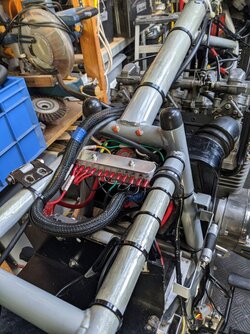
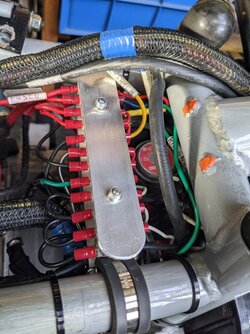
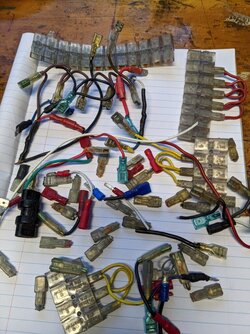
Nice neat wiring job Chuck. Beautifully organised and tidy. You've almost inspired me to do a similar tidy-up of my Jota.
But again, I wouldn't have used those red crimp terminals. I'd have just tinned the ends of all the wires with solder and shoved them into the screw terminal blocks without a crimped-on fitting. I admit that I'm heavily biassed by a pathological hatred of the damn things, but there is logic behind my argument. By using those crimp terminals you've introduced another joint in each cable that could potentially give trouble. The fewer joints you can get away with the better.

The bootlace ones that I use are crimped at the bare metal end, not through the plastic. They’re good to protect thin flex strands from the connector screw, and stop the strands from spreading.Ferrules are OK, so if they're soldered on. I just don't like those pre-insulated ones.
 .....

A good quality crimp tool makes all the difference.


Wonder who will be first to use wire wrapping.

not with stranded wire cable, wouldn't last 5 minutes.Wonder who will be first to use wire wrapping.
Get a decent quality ratcheting crimper. The ratchet feature ensures the jaws are closed all the way home. The Cabac ones (such as Quentins) are fine for crimping ferrules/bootlaces, although I prefer to not use removable jaw ones, for no great reason other than I'd be forever changing dies. Hence, I have a few brands. For insulated lugs/spades etc. different tool again.Quality tools are necessary for any job. I like to solder after crimping because I've found that the wires can pull out of my crimps. Maybe my crimp tool isn't up to scratch.
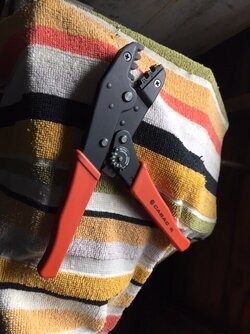
For small electrical cables I use the crimping pliers in the photo below. They're for non-insulated lugs, and I use the soft type insulating sleeves that slip over the lugs after they're crimped. I bought the crimper donkey's years ago when it was the best I could afford at the time, but looking around on line they seem to be a bit low tech compared to what's available now at reasonable prices. Perhaps it's time for an upgrade. What kind of crimper are you using Chuck?
Get one.....FFS Pat, no one told me that...Get a decent quality ratcheting crimper.


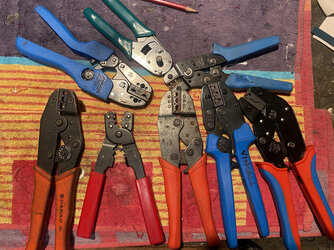
I doubt you'll get a reliable crimp with those Dellortoman, you can't get the right pressure. The ratchet type are best, and come with interchangeable dies for different crimp types. To save money, you just buy the dies you will use. Ratchet is important. You should be able to find a similar tool like this at Jaycar in Tassie or online....Quality tools are necessary for any job. I like to solder after crimping because I've found that the wires can pull out of my crimps. Maybe my crimp tool isn't up to scratch.
For small electrical cables I use the crimping pliers in the photo below. They're for non-insulated lugs, and I use the soft type insulating sleeves that slip over the lugs after they're crimped. I bought the crimper donkey's years ago when it was the best I could afford at the time, but looking around on line they seem to be a bit low tech compared to what's available now at reasonable prices. Perhaps it's time for an upgrade. What kind of crimper are you using Chuck?

 rhinotools.com.au
Sure about that ? Ratchet crispers esp those elcheapo ones with removable jaws need to be regularity checked and dialed in. When was making harness for LPG conversions we quickly learnt the down side of cheaper ratchet crimpers…So I am with Cam on this one .. Oh and I can tell ya OEM dont use those insulated type crimps for a reason.……not sure its an upgrade using them to be honest think its more a backward step.. but like I often say what would I know right I much prefer to do the job using proper connectorsI doubt you'll get a reliable crimp with those Dellortoman, you can't get the right pressure. The ratchet type are best, and come with interchangeable dies for different crimp types. To save money, you just buy the dies you will use. Ratchet is important. You should be able to find a similar tool like this at Jaycar in Tassie or online....
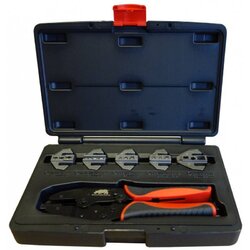
This is just an example.Automotive Kit - Rhino Tools Sydney Australia
Shop online automotive kit with quick change cable crimping kit, No tools required at low prices available on Rhino Tools Sydney Australia. Order now!