
You are using an out of date browser. It may not display this or other websites correctly.
You should upgrade or use an alternative browser.
You should upgrade or use an alternative browser.
What did you do to or for or with your Laverda today?
- Thread starter CLEMTOG
- Start date

The Sock
Hero member
- Location
- London, England
Because the primary chaincase has a whole lot of moving parts and the oil gets splashed around effectively. The hole is there to top up the level, from the crankcase.And my question to those that know, if the static oil level is so close to the bottom of the primary drive oil hole. ( See photo) dipstick vertical, how does the primary chain,clutch, needle bearings etc get lubricated adequately?
I never used to bother, but I've now taken up the habit, on occasional oil changes, of removing the primary chain adjuster and draining the clutchcase before replenishing the oil.

BlackJota
Senior member
- Location
- Sunshine Coast Australia
The outer clutch drum is the lowest rotating part seems to only be just submerged in the static oil level. When the engine is running the oil level will be less. So I'm wondering how is everything in there getting lubricated. I guessed this area would be swimming in oil but it seems like it's not.Depending on the model year, it varies. Early 3Cs had, I think, 3 tiny holes between the primary so oil didn't move quickly between them. RGS had a pump-fed line directing oil on the primary chain itself and a much bigger hole between the cavity
Last edited:
BlackJota
Senior member
- Location
- Sunshine Coast Australia
Me too, first time in 46 years when I drained it out before removing the cover. Not much oil in there though.Because the primary chaincase has a whole lot of moving parts and the oil gets splashed around effectively. The hole is there to top up the level, from the crankcase.
I never used to bother, but I've now taken up the habit, on occasional oil changes, of removing the primary chain adjuster and draining the clutchcase before replenishing the oil.
Last edited:
BlackJota
Senior member
- Location
- Sunshine Coast Australia
That sounds about right. I did need slightly more oil to top it up after I ran it up today after replacing the parts. Primary side sounding much quieter now.I seen to remember about 300cc in the primary, that my 3c. It explains if I don't drain the primary why it only takes 2.7 litres or a touch more to get the dip stick reading right after a change. Some stay in the oil cooler as well, I guess.
Last edited:

piranha-bro2
Hero member
- Location
- Melbourne
Maybe when you lean on left-handers the primaries get some oil?!!! What that means for trips over the Nullarboring is anyone;s guess.
SFs have an oil feed hole in the oil pump body directed at the primary drive. The SFQ even has two!
SFs have an oil feed hole in the oil pump body directed at the primary drive. The SFQ even has two!

This is my 3C, n° 2098. The top hole is the original. I drilled the bottom one to improve clutch oiling.Depending on the model year, it varies. Early 3Cs had, I think, 3 tiny holes between the primary so oil didn't move quickly between them. RGS had a pump-fed line directing oil on the primary chain itself and a much bigger hole between the cavity
Unfortunately, for nothing. It has been deemed that the alloy of the cases cannot be trusted after the fire.
Paul
Attachments
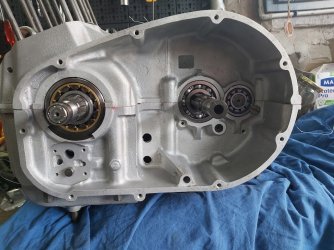
There's plenty of oil in the 750 primary.Maybe when you lean on left-handers the primaries get some oil?!!! What that means for trips over the Nullarboring is anyone;s guess.
SFs have an oil feed hole in the oil pump body directed at the primary drive. The SFQ even has two!
The best mod on 750s or triples I should think is drilling plenty of holes in the clutch basket.
Paul

chrisk
Hero member
- Location
- Brisbane, Australia
Unfortunately, for nothing. It has been deemed that the alloy of the cases cannot be trusted after the fire.
How come, the only reason I can think of is micro cracks?
BlackJota
Senior member
- Location
- Sunshine Coast Australia
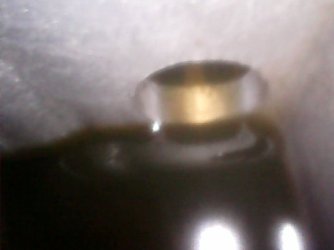
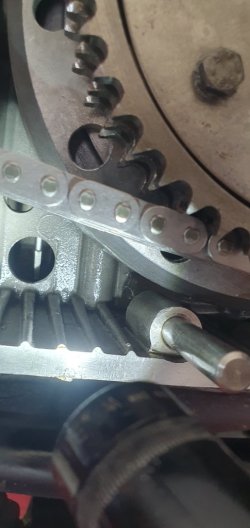
I just took a photo of the oil level in the sump in relation to the drain hole from the primary case. The oil only just flows into the casing through that hole.If the oil level in the sump were lower than full then none would flow in there under static conditions. The bottom of the hole is barely level with the bottom of the clutch drum, so nothing is flapping in oil to spread it around. Once the engine is running surely the sump oil level will drop even further in order to feed the top end and oil cooler etc and oil can't flow into the primary case through that hole.
So how does sufficient oil enter the casing. My only theory is that there is a slightly lower pressure difference in there from the main crankcase with the engine running, because it is separated except for the hole. However looking at Paul's primary case photo the 3 bearings would be an oil source for the primary chaincase if the pressure in the crankcase is slightly higher, and the hole is simply a drain hole.
Or have I completely lost the plot?
Attachments
piranha-bro2
Hero member
- Location
- Melbourne
Why would there be an oil seal on the main bearing, Vince? It's encased within the crankcase system - no way oil can escape into the atmosphere.I have a vague memory of there being no oil seal in the main bearing. Like the abundance of pre-72 V8s in Oz, I am probably wrong. Try a search here; the oil system has been discussed, and there is subtle stuff happening.

Tippie
Hero member
- Location
- Dr?bak, Norway
No need to pull out any hair over hypothetical problems. These motors do huge mileages without undue wear if they are maintained properly so it obviously all gets lubricated. I do not have any extra holes in my 750 clutch baskets and have done huge mileages and many seasons of racing with zero problems and many triples have similar experience. A good way to get through a night in the club cafe though, theorising about how it could work.
chrisk
Hero member
- Location
- Brisbane, Australia
No need to pull out any hair over hypothetical problems. These motors do huge mileages without undue wear if they are maintained properly so it obviously all gets lubricated. I do not have any extra holes in my 750 clutch baskets and have done huge mileages and many seasons of racing with zero problems and many triples have similar experience. A good way to get through a night in the club cafe though, theorising about how it could work.
Heed Piets advice on such matters:
Don’t overthink it!
MetallurgyHow come, the only reason I can think of is micro cracks?
3 or 4 studs pulled when I torqued the head, and they had been Timeserted. The head is warped beyond hope anyway.
There was a micro crack about 10 cm long and 1 mm wide above the gearbox sprocket which was laser welded.
Not worth the risk.
Paul
chrisk
Hero member
- Location
- Brisbane, Australia
Fuck, fuckity, fuck fuck……. whatever happened to Padders?Metallurgy
3 or 4 studs pulled when I torqued the head, and they had been Timeserted. The head is warped beyond hope anyway.
There was a micro crack about 10 cm long and 1 mm wide above the gearbox sprocket which was laser welded.
Not worth the risk.
Paul

Exmoor beast
Hero member
- Location
- Minehead,Somerset, ENGLAND OF COURSE
I was warned not to buy salvage of FZR1000 from a burnt motorcycle shop, I wanted the engine but the wheels had melted like candles & were flat at the bottom! Fire investigator told me temperatures of the fire were insane. Best avoided.Metallurgy
3 or 4 studs pulled when I torqued the head, and they had been Timeserted. The head is warped beyond hope anyway.
There was a micro crack about 10 cm long and 1 mm wide above the gearbox sprocket which was laser welded.
Not worth the risk.
Paul