
motoddrob
Hero member
- Location
- S/W Australia
Have a mate here running oem bored to 36s


Yep, ran my 1980 Jota with OE PHF smooth bored to 36mm back in the day.36mm bores on standard 32mm bored PHF's??? my memory was that this cant be done, (half moons of fresh air showing left and right of carb slide) did you mean 34?

My understanding is that 32s, 34s and 36s use thew same casting, and 38s and 40s run the same casting. My theory is that this is why 36s are prone to more slide wear than 32s because there is less metal to support them (especially at the sides of the venturi). Happy to stand corrected.Yep, ran my 1980 Jota with OE PHF smooth bored to 36mm back in the day.
Castings differ slightly between 32 and 36mm, don't know about the 34, but maybe they're in between.My understanding is that 32s, 34s and 36s use thew same casting, and 38s and 40s run the same casting. My theory is that this is why 36s are prone to more slide wear than 32s because there is less metal to support them (especially at the sides of the venturi). Happy to stand corrected.

Stand uncorrected, Quentin.My theory is that this is why 36s are prone to more slide wear than 32s because there is less metal to support them (especially at the sides of the venturi). Happy to stand corrected.
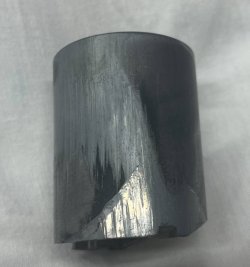
Yep, ran my 1980 Jota with OE PHF smooth bored to 36mm back in the day.
Makes sense about the centering issue, Piet.Castings differ slightly between 32 and 36mm, don't know about the 34, but maybe they're in between.
Mixing chamber/slide housing is shorter on the 32, a spacer is needed under the cap to provide full slide lift for 36mm. Shortening the slide at the top edge could be an easier alternative.
The big challenge is re-locating the mixing chamber floor to keep the venturi centered to the flange, same slides for 32 and 36. I too see the 36 wearing quicker than the smaller versions.
piet
That'll polish out Hamish!

Looks like this, Quentin.Can't see how you could do that with a Dell - unless there was almost nothing supporting a closed slide.
Yes Quentin,Makes sense about the centering issue, Piet.
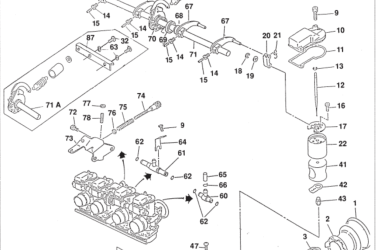
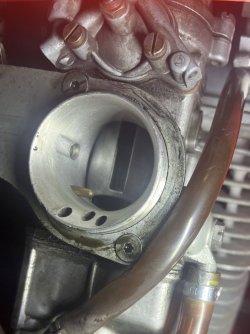
Rob, when you say 'smooth bored' that would mean there's an insert fitted to the slide chamber that creates an uninterrupted passage through venturi (ie no deviation around the slide area). CR Keihins (round slide) literally has this insert bolted in and the slides are like an inverted bucket (22 and 41 in the diagram). Can't see how you could do that with a Dell - unless there was almost nothing supporting a closed slide.
View attachment 97578
 I did that with my PHBs as well, but seriously doubt any advantage could actually be measured.

Few pages back indeed https://laverdaforum.com/threads/what-did-you-do-to-or-for-or-with-your-laverda-today.97052/page-367Running 9:1, is there a reason you want to run 10s??? Or have we discussed this already? Surely 9s would be fine? i've run 10.5:1 on 9s, zero issues.
Thanks Piet, I'll can start with the N2s then -I'm not a racy kind of rider so I'll fit those & watch what happens first also taking Marnix' advice in mind. So N2 is roughly B9 and N3 is roughly B8? ((i can imagine they are made to factory spec/definition and not to a "heat standard")Lean it out far enough and one might even NEED 10's...
Should run fine with Champion N3's/NGK 8's if carburation is correct, N2 if compression has been raised. Most SF1-3 cope quite OK with Champion N3 for tootling around, N2's should be considered forhooninghigh-speed use.
piet

I'll start with the N2 / B9s. What I have is basically a high compression GT engine it seems.One thing is for certain, running B8s on a small valve S or SF is NOT a good idea.
Marnix

Lee rode solo from Adelaide to Melbourne, then two up back with me as pillion. On bizarre advice he swapped his Bosch 260T2 plugs for 240T2 (eq to B9 to B8 or N2 to N3 - cool to hoy ... whoever gave the advice got it arse about ... maybe they were thinking Champion, where the numbers hot-cool go the other way). So after doing maybe 1000km, 120kph+ up a long not overly steep hill suddenly holed a piston. Moral being, you can ride safely forever if you never create the perfect conditions for the hot plug to play havoc.Did a 170 k run with the 71 SF, Zero problems running the NC3 plugs.
Have to admit that my negative opinion regarding Champion plugs has gone.
Gerald
Plugs sound good. Not implying that you'll definitely hole il pistone, Gerald - just pointing out that working the engine hard creates a higher risk.Quentin,
Did a plup chop and all seems OK. No white deposit, more a dark grey on both sides.
I have a set of NC2 here as well, will give them a try.
Regards
Gerald
I've run Champions in mine for 49 years. Never liked the way it ran on NGKsDid a 170 k run with the 71 SF, Zero problems running the NC3 plugs.
Have to admit that my negative opinion regarding Champion plugs has gone.
Gerald
Its hard to imagine how a hot grade plug has a part to play in damage to a piston in of itself, perhaps a combination? More the matter of what type of ignition in use, Inductive discharge is the most "weak" type of spark initiator, slow rise time of spark gap ionisation being the less than optimal at igniting a fuel load in compression. Contaminated plugs will defeat an inductive discharge ignition design, in worsening conditions. Included in that is the "dwell extender" designs, fix one problem ( maybe ) and get other issues.Lee rode solo from Adelaide to Melbourne, then two up back with me as pillion. On bizarre advice he swapped his Bosch 260T2 plugs for 240T2 (eq to B9 to B8 or N2 to N3 - cool to hoy ... whoever gave the advice got it arse about ... maybe they were thinking Champion, where the numbers hot-cool go the other way). So after doing maybe 1000km, 120kph+ up a long not overly steep hill suddenly holed a piston. Moral being, you can ride safely forever if you never create the perfect conditions for the hot plug to play havoc.


