when you are your own dreaded previous owner

When a car of one of my sons was stolen, Nissan GTR, the police found it after a few days and it was stored in the local police pound.
The pound was broken into at night and the thieves emptied a foam fire extinguisher into the car to erases traces of DNA apparently.
End of car.
End of story.

Paul
 
Last edited:
I just did some reading about the fire suppressant foam used by fire departments. Scary stuff, high cancer risk, contamination of soil and groundwater, and pernicious by design, sticks to stuff rather than runs off...... I had no idea.

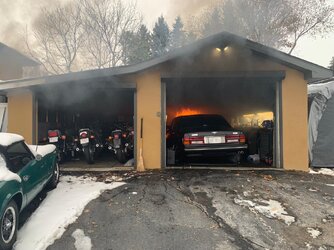
the 79 1200 was one of two motorcycles on the edge of the second garage bay closest to the side of the 1990 Bentley Turbo R as it was immolating itself in the garage. The bike in front of the 79 1200 and closest to the Bentley engine bay (1966 Garelli 150) was destroyed, the 79 1200 thankfully got saved by the fire department when they first saturated it with the fire suppressant foam then dragged it out of the garage while the Bentley was burning. You can see the 79 1200 in the attached photo, closest to the side of the Bentley. The fire department also dragged the rest of the motorcycles out.

Attached is a photo taken right after I gave up trying to put out the car fire with fire extinguishers, before the fire really got going, after the fire department had been called, but before the fire department arrived. Looking at the photo, the fire was pouring out of the Bentley front grill and out of both front wheel wells at that point, looks like the drivers' side front tire had already exploded as the photo shows the car drooping to the left already. Then the fire once it really got going was quite spectacular, 6 fire trucks, an ambulance, the fire inspector, and police. We made the local news. The car was destroyed, (even the windshield melted) and the garage totally gutted. My son Marc and I both had to be treated for smoke inhalation for our initial stupid attempts in the first moments trying to put the fire out and save the bikes. I also just noticed in the photo a garden hose running into the garage then abandoned, what a stupid and futile idea that was, even less effective than the fire extinguishers :cry:(n)

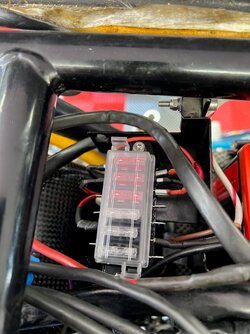
The 79 1200 has not been started or ridden since the car/garage fire. I tried to get it going last summer without success. I didn't know fire suppressant foam could result in corrosion in electrical connections. I have had another close look at the wiring and connectors on the 79 1200. Not just the fuse block is corroded, other connectors are just as bad, or worse, bloody hell. All the electrical on the 79 1200 is now coming apart for replacement or repair as appropriate. Tackling it this weekend. All the other bikes are fine and have already been fully cleaned up, tires replaced, etc. and have been ridden regularly since without issues.

The local electronics wholesaler I deal with highly recommended this stuff to me to deal with electrical corrosion and oxidation for anything I don't simply replace https://www.be-electronics.com/product_p/d5s-6.htm I picked some up today.
 

Attachments

  • Bentley fire.jpg
    Bentley fire.jpg
    177 KB · Views: 54
That Deoxit is incredible stuff. Rarely have I found any product that so totally delivers what they claim. I had to source it from Sweden, fortunately available in a pump container, allowed to post. You are so lucky not to lose the lot in that fire Paul. And we used to do occasional training on supply boats with AFFF, nobody was careful and it all got hosed overboard after the drills.
 
Vehicle fires are incredibly hard to put out, there were approx 10 blokes there on the ride when my XT500 went up. It was on a freshly graded road with plenty of loose soil and we practically buried that bike but once the fuel tank started boiling it was obvious it was toast. It's an interesting sensation looking down at your leg and seeing a bright red fire from foot to hip, it would have been nice if I could have put it on the side stand but avoiding getting myself burning up stopped that idea immediately. I have a strong memory as a kid visiting an Uncle with serious burns from a Bulldozer in a Hospital Burns unit. It's a smell you don't forget.
 
That's a scary photo Paul. The firemen did well to save all the bikes. Do you have any clue as to why the Bently burst into flames?

Maybe it's a thing with Pommy cars. I used to work with a guy who bought a brand-new Range Rover. He'd only had it a few days when it burst into flames while he was driving with his wife and little kids in the car. He only just managed to pull over and get the kids to a safe distance before the whole car turned into a fireball. He said it was like something out of a Hollywood action movie.
 
Speaking of Hollywood Movies, everybody thinks cars explode every time your in an accident. These spontaneous car fires don't help with that idea.
 
I just did some reading about the fire suppressant foam used by fire departments. Scary stuff, high cancer risk, contamination of soil and groundwater, and pernicious by design, sticks to stuff rather than runs off...... I had no idea.

the 79 1200 was one of two motorcycles on the edge of the second garage bay closest to the side of the 1990 Bentley Turbo R as it was immolating itself in the garage. The bike in front of the 79 1200 and closest to the Bentley engine bay (1966 Garelli 150) was destroyed, the 79 1200 thankfully got saved by the fire department when they first saturated it with the fire suppressant foam then dragged it out of the garage while the Bentley was burning. You can see the 79 1200 in the attached photo, closest to the side of the Bentley. The fire department also dragged the rest of the motorcycles out.

Attached is a photo taken right after I gave up trying to put out the car fire with fire extinguishers, before the fire really got going, after the fire department had been called, but before the fire department arrived. Looking at the photo, the fire was pouring out of the Bentley front grill and out of both front wheel wells at that point, looks like the drivers' side front tire had already exploded as the photo shows the car drooping to the left already. Then the fire once it really got going was quite spectacular, 6 fire trucks, an ambulance, the fire inspector, and police. We made the local news. The car was destroyed, (even the windshield melted) and the garage totally gutted. My son Marc and I both had to be treated for smoke inhalation for our initial stupid attempts in the first moments trying to put the fire out and save the bikes. I also just noticed in the photo a garden hose running into the garage then abandoned, what a stupid and futile idea that was, even less effective than the fire extinguishers :cry:(n)

The 79 1200 has not been started or ridden since the car/garage fire. I tried to get it going last summer without success. I didn't know fire suppressant foam could result in corrosion in electrical connections. I have had another close look at the wiring and connectors on the 79 1200. Not just the fuse block is corroded, other connectors are just as bad, or worse, bloody hell. All the electrical on the 79 1200 is now coming apart for replacement or repair as appropriate. Tackling it this weekend. All the other bikes are fine and have already been fully cleaned up, tires replaced, etc. and have been ridden regularly since without issues.

The local electronics wholesaler I deal with highly recommended this stuff to me to deal with electrical corrosion and oxidation for anything I don't simply replace https://www.be-electronics.com/product_p/d5s-6.htm I picked some up today.
Hey PLC, are you able to make a further insurance claim on the “newfound” damage to the 79 1200? Too late perhaps?
 
I did not claim insurance on any of the bikes, just the garage and contents on my house policy, and the Bentley on its auto policy. Good thought though. Would have been a separate claim on each bike with a deductible on each individual motorcycle policy, would have been a nightmare for future insurability and rates.

spent 10 hours aggregate in the garage today on the 1200 over the course of the day, with bathroom, food, and insulin breaks.

I have now been through every electrical connection on the bike, replaced about 2/3's, the rest cleaned up with the CAIG Deoxy, seems to be magical stuff.

also stripped all three brake calipers, corrosion crap on all the pad pins etc. When you look closely at the bike it is covered with little white spots everywhere, I am going to have to pressure wash the bike with some sort of solvent/cleaner much as I hate to use a pressure washer.

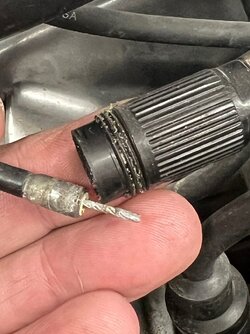
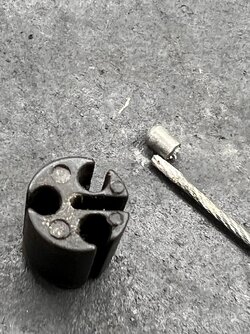
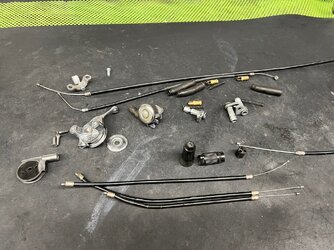
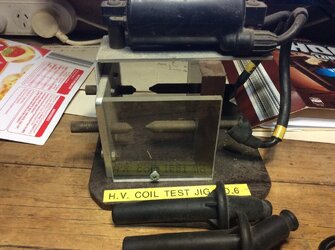
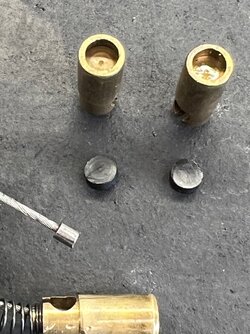
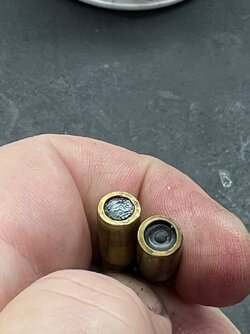
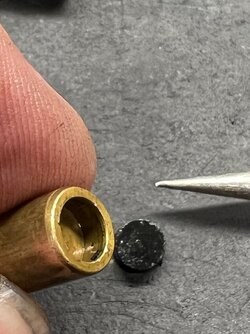
I replaced the throttle cable with a new one, the one on the bike was full of white corrosion crap. When I worked the choke lever, the end of the choke cable was so corroded it pulled off inside the splitter, rendering the choke useless, bloody hell. I will deal with building up a new choke setup tomorrow. I am hoping to have the bike running tomorrow and then hopefully out for a short test ride. John's IIS ignition is still a marvel, was fun watching all three plugs buzzing madly on the test circuit from 1,000 up to 10,000 rpm(y):cool:

plugs, made me think. I replaced all three plugs today with new NGK B8 R, could not find any non resistor plugs to buy. Anyone think a resistor plug will make any difference?

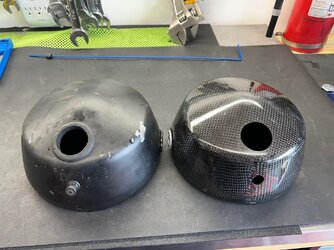
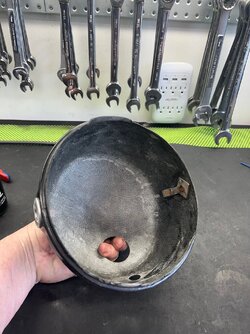
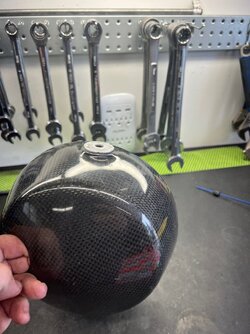
"While am at it.....' and still have the headlight off and all the wiring in the front of the bike still apart, I am going to fit the carbon fiber headlight shell made by Boba that I have had on a shelf for a few yearsI

couple of progress photos

oh, and Cam. the insurance companies are still fighting amongst themselves as to the cause/source of the fire. The car had just been returned to me the day before after a month in a specialty shop having the complete mechanical fuel injection rebuilt, my insurer is suing the specialty shop that rebuilt the fuel injection........
 

Attachments

  • 1200 choke 1.jpg
    1200 choke 1.jpg
    131.6 KB · Views: 21
  • 1200 choke 2.jpg
    1200 choke 2.jpg
    205.9 KB · Views: 22
  • 1200 choke 3.jpg
    1200 choke 3.jpg
    210.5 KB · Views: 22
  • 1200 ignition 9.jpg
    1200 ignition 9.jpg
    136.1 KB · Views: 22
I tried a resister plug and a resister plug cap on my Pantah once, don't remember why but it ran like crap. I am hearing that NGK plug caps are either not being made anymore or are very hard to get. Let us know if they're available.
 
It might depend on the coils and other things. A mate had resister plugs as well as caps on a racing Pantah here and it ran fine. He had no idea and changed it when it was pointed out, it ran the same. If you can find non resistor caps that sounds like the simplest solution.
 
Take your starting blocks.... Get ready, set, go! Technical sprinters are off and running, resistor covers ( caps ) and internal resistor element in spark plug body. With 7m/m copper core HT leads, no problem. With say NGK spark plug covers, additional 5,000 Ohms to 5,000 resistor element in spark plug, 10,000 total resistance, though actual impedance may be different, as spark plug HT is AC in nature. Say 35,000V nominal strike voltage across the plug gap, 35000/10000 35mA of ionic current at strike time. That is the maximum current, with just one section of resistance, 35000/5000 or 75mA, so it would appear half the current is available with double resistance, cover plus R plug.

Witnessed a very strange undocumented factor for ionic current flow in a combusting cylinder fuel load, it actually places a dead short across the spark plug gap, shunting any HT voltage to ostensibly zero across the plug gap, duration of the flame front and air/fuel exhaustion, the voltage developed across the resistor/impedance device(s) will be reflected back into the ignition coil secondary winding and in proportion to the turns ratio, into the primary winding. Even myself, have some difficulty in understanding the full process of spark voltages and current interaction in an LC ( Inductance and capacitor circuit, coupled to unburnt fuel to exhaust gas expulsion... 5000 Ohms will mitigate cross firing, and not adversely effect the ionic current, as a guide. Would only use one or the other as to HT resistance path, not both 5000 Ohm devices, that is free advise worth all paid for.

Me too Paul, used to turn off the room lights and watch the test position F on the test jig, with the iis long box i had a special test jig with adjustable gaps, would jump a 20+ m/m gap to about 4krpm then peter out intermittently to 10Krpm. j.
 

Attachments

  • Test_Jig_Number_6.JPG
    Test_Jig_Number_6.JPG
    152.8 KB · Views: 20
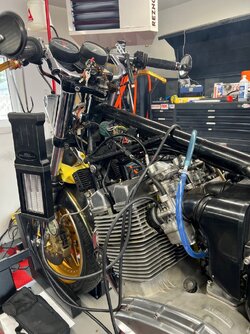
the 1200 is now running, The bike started on two cylinders despite the ignition test sequence buzzing all three plugs. Long story short, troubleshooting revealed white powdery corrosion inside the copper core spark plug wires when I removed the plug caps, and I had to redo all the coil wiring.

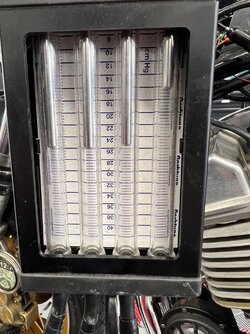
Replaced all three spark plug wires with new, vacuum balanced carbs, now running nicely on all three cylinders.

I cleaned and rebuilt the choke cable lever assembly using a new pull cable, "while I was at it......... " I flipped the rubber tips inside the choke plungers, relatively easy to get the rubbers out, tougher to get them back in....... Adjusted all three choke plungers to same length/depth to be sure all three are seating when choke is closed. Also installed all new fuel line.

I have more wiring repairs to do, but I have had enough of working on this bike for the weekend and I need to pick up some more professional quality connectors anyway......
 

Attachments

  • 1200 choke 8.jpg
    1200 choke 8.jpg
    181.9 KB · Views: 20
  • 1200 choke 7.jpg
    1200 choke 7.jpg
    199.6 KB · Views: 22
  • 1200 choke 6.jpg
    1200 choke 6.jpg
    174.2 KB · Views: 22
  • 1200 choke 5.jpg
    1200 choke 5.jpg
    101.8 KB · Views: 22
  • 1200 choke 4.jpg
    1200 choke 4.jpg
    132.9 KB · Views: 22
once I finish the rest of the wiring repairs in the front end of the bike, going to install the carbon fiber headlight shell that I have had sitting on a shelf for years.

I also have an engine alternator cover carbon fiber prototype that Boba made some years ago. It is a bit rough and needs some hand finishing and to be clear coated, may or may not get to that. Haven't dug it out yet to take photos of it.
 

Attachments

  • 1200 headlight 1.jpg
    1200 headlight 1.jpg
    167.3 KB · Views: 10
  • 1200 headlight 2.jpg
    1200 headlight 2.jpg
    182.3 KB · Views: 10
  • 1200 headlight 3.jpg
    1200 headlight 3.jpg
    132.7 KB · Views: 10
plugs, made me think. I replaced all three plugs today with new NGK B8 R, could not find any non resistor plugs to buy. Anyone think a resistor plug will make any difference?
Paul for some reason that no one seems able to explain NGK B8 ES plugs has become impossible to find at the local supply, but the NGK B8 Resistor plugs are easy to obtain. Do not use resistor caps or resistor leads with them and you should have zero problems, HTH
 
Paul for some reason that no one seems able to explain NGK B8 ES plugs has become impossible to find at the local supply, but the NGK B8 Resistor plugs are easy to obtain. Do not use resistor caps or resistor leads with them and you should have zero problems, HTH
I am using simple copper core spark plug wire I buy in bulk. The ends that go into the coils are just metal crimps over the stripped copper core. At the plug end I am using straight NGK plug caps that have a threaded spike in them that screws into the copper core of the plug wire. I have no idea if the NGK plug caps are resistor or non-resistor and don't know how to tell. Earlier today I was digging around in my spare parts boxes and found some brand-new NGK B8ES non resistor spark plugs, I gapped them up and stuck them in.

While electrickery is still not my favourite thing, my skill level now is much higher than it was several years ago, in part thanks to Cam here who gave me the instruction and confidence to wire my 1957 Gilera 150 from scratch while converting it to 12 volt and digital ignition and modern charging system. I bought proper wire strippers, proper crimpers, a heat gun, multiple sizes and colors of heat shrink, and lots of pro quality connectors. I can follow instructions and can reason my way through electrical systems and wiring diagrams now. I am still pretty slow but the result is much better than it used to be.
 
have no idea if the NGK plug caps are resistor or non-resistor and don't know how to tell.
Resistor caps have (as the name implies) a built-in resistor of about 5,000 Ω (Ohms). Non-resistor caps don't. So you only have to measure the resistance with your multimeter to tell which is what. Choose a resistance scale higher than 5 KΩ (probably 20 KΩ) and poke the meter probes in each end of the cap. It'll either read a resistance of around 5 KΩ or zero. If you get infinite resistance (open circuit) then either the cap is buggered or you're not making contact with your probes.
 
Last edited:
Resistor caps have (as the name implies) a built-in resistor of about 5,000 Ω (Ohms). Non-resistor caps don't. So you only have to measure the resistance with your multimeter to tell which is what. Choose a resistance scale higher than 5 KΩ (probably 20 KΩ) and poke the meter probes in each end of the cap. It'll either read a resistance of around 5 KΩ or zero. If you get infinite resistance (open circuit) then either the cap is buggered or you're not making contact with your probes.
Sounds so simple as I read your reply. Now, why didn’t I think of that…….:rolleyes: Will get out the multi meter when I get home. Thanks Cam
 
Back
Top