sideshow
Hero member
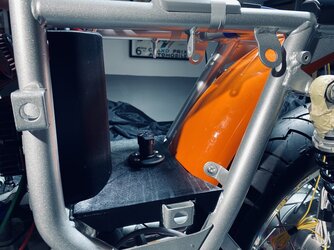
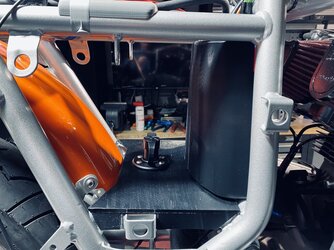
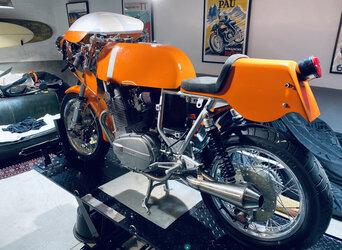
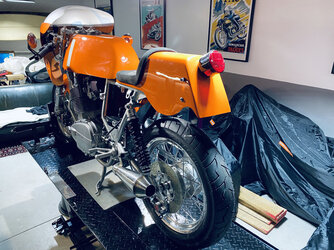
Back at it..... on the third attempt it printed correctly, it is incredibly frustrating when it doesn't print correctly the first time! , this is the shape I need for the electrical cover, I started printing the first one on Sunday, but I got a dodgy spool of filament that had overrides in it.... I didn't find that out on the first print as we had a power cut over night at my shop, which stopped the print, second failure the over ride of filament which creates a knot of a sort stopped the print Monday night around 4am . So i binned the spool into the recycling bin, and got a fresh one out. Its a 27 hour print for this , it came out really good. So tonight when I get home I will check out how it fits. next step is sorting out where I will put the fasteners , Im leaning toward a centre fastener only, smack dab in the back , you can probably make out the feet that I have designed in, so if I do go a centre fastener then the feet will stiffen the hole cover up and stop any compression in the cover when its screwed down tight .
One thing I will say about 3 d printing is its a huge learning curve to learn how to print different engineering plastics. Printing PLA is load and forget , but once you start using engineering plastics... it changes completely. Much like a lathe or anything like that you have to learn the skills to use it, and learn the characteristics of the materials you are using..... if you start down this road be prepared for a lot of frustration, but when you nail a job it is completely satisfying.
This one isn't the end product, its a prototype which may be come the plug for a mould, if I designed it correctly. You can still build print this quite light, it has only 15 % infill in it, with a honey comb structure making up the infill density
photo one is on the print bed, as it prints , you can just see the support you print at the same time as the object, which allows you to print lareg overhangs
One thing I will say about 3 d printing is its a huge learning curve to learn how to print different engineering plastics. Printing PLA is load and forget , but once you start using engineering plastics... it changes completely. Much like a lathe or anything like that you have to learn the skills to use it, and learn the characteristics of the materials you are using..... if you start down this road be prepared for a lot of frustration, but when you nail a job it is completely satisfying.
This one isn't the end product, its a prototype which may be come the plug for a mould, if I designed it correctly. You can still build print this quite light, it has only 15 % infill in it, with a honey comb structure making up the infill density
photo one is on the print bed, as it prints , you can just see the support you print at the same time as the object, which allows you to print lareg overhangs